
news
Eurozone bond markets stabilized in June, ECB expected to raise interest rates this week
Germany’s exports rose unexpectedly in April, but industrial production remained weak. Data released by Germany’s Federal Statistical Office on Tuesday showed that German exports rose 0.9% month-on-month in April, well above the 0.5% decline expected in a Reuters survey. Among them, exports to EU countries increased by 1.0% month on month, while exports to non-EU countries rose by 0.7%; exports to the United States grew by 1.8% month on month, but, affected by U.S. tariffs, remained down 12.9% year on year. Imports rose 1.2% month-on-month, while the trade surplus narrowed slightly to €14.5 billion (compared with €14.7 billion in March).
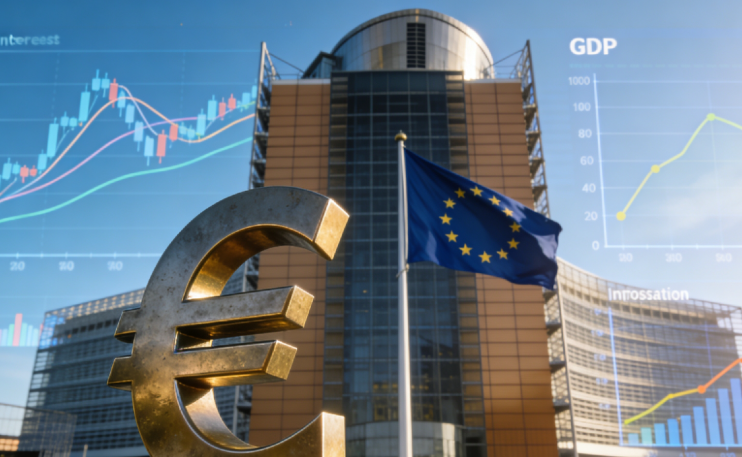
However, the industrial production data released during the same period fell short of expectations. In April, industrial production rose by only 0.4% month-on-month, below analysts’ forecasts of 0.5%. Carsten Brzeski, ING’s global head of macroeconomics, stated that this marks the first monthly increase since the outbreak of the Iran conflict, but “it is far from grounds for optimism.” According to the less volatile three-month-on-three-month data, output from February to April declined by 0.5% compared with the previous three months. Ralph Solveen, a senior economist at Commerzbank, expects that weak leading indicators point to another decline in output in the coming months, potentially pushing Germany’s economy into a mild contraction in the second quarter. Data released on Monday showed that industrial orders fell 3.8 per cent month-on-month in April, partly because companies had placed orders ahead of schedule for fear of war pushing up prices.
The eurozone bond market is stabilizing, and the European Central Bank is expected to raise interest rates this week. Buoyed by the positive news that Israel and Iran have agreed to temporarily halt direct attacks, eurozone government bond yields remained broadly stable on Tuesday. Germany’s 10-year government bond yield edged lower to 3.0502%, while a strategist at Sweden’s Handelsbanken expects yields to trade in a range of 2.9% to 3.1% over the coming months.
Market attention has shifted to the European Central Bank’s policy statement on Thursday. The European Central Bank is expected to become the first major central bank to raise interest rates since the onset of this round of the energy crisis, with the key deposit rate poised to be increased by 25 basis points to 2.25%. Investors are closely watching the central bank’s guidance on the future path of interest-rate hikes. Money market futures indicate that the market expects cumulative rate hikes of approximately 66 basis points by year-end, implying at least two, and possibly three, rate increases. Germany’s two-year government bond yield fell 2.2 basis points to 2.6795% on Tuesday, after earlier hitting a near three-week high.
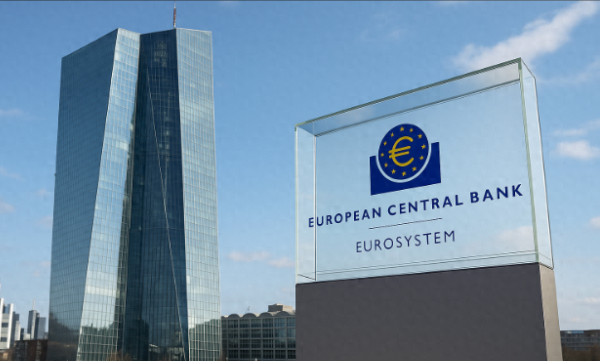
On the evening of June 11, Beijing time, the European Central Bank will announce its latest interest-rate decision. The market widely expects the European Central Bank to raise interest rates by 25 basis points at this meeting.
If the interest rate hike is expected to be fulfilled, it will be the heaviest monetary policy tightening signal since the geopolitical conflict in the Middle East is heating up-the European Central Bank will become the first central bank in the G7 member states to raise interest rates this year. Previously, similar actions by advanced economies had been limited to central banks such as those of Australia and Norway.
The root cause prompting the European Central Bank to reassess its monetary policy stance is the energy price shock triggered by geopolitical tensions in the Middle East. Previously released data showed that the eurozone’s inflation rate reached 3.2% in May, while core inflation—excluding energy and food—rose to 2.5%, well above the European Central Bank’s 2.0% target.
Meanwhile, the Bank of Japan is also considering raising interest rates. The Bank of Japan plans to raise its policy interest rate from 0.75 percent to 1.0 percent at its monetary policy meeting on June 15-16, and plans to stop reducing the scale of government bond purchases after April 2027, the Nikkei reported on June 9. In a recent public speech, the governor of the Bank of Japan said that if the upward risk of prices is greater than the downside risk of the economy, it is necessary to seriously discuss raising interest rates.
The ongoing geopolitical conflicts in the Middle East have disrupted the original pace of global central banks’ monetary policy. Medium- and long-term inflation expectations have continued to rise, forcing central banks to abandon their “patient wait-and-see” stance. Among them, some central banks have signaled a hawkish stance and even resumed raising interest rates, while others have been compelled to pause their easing cycles in order to safeguard their credibility and curb rising inflation expectations.
Recommended News
- government approval 2026-04-17
Contact Us
- Phone: 0017194050155
- Fax: 0017194050155
- 邮箱:gelcc1@outlook.com
- Mobile phone: 0017194050155
- Address: Room 500, 1234 International Avenue, Washington, D.C. 20001, USA