
news
Manufacturing’s share has been cut in half; European media: “Europe’s decline” has become an irreversible trend.
Once the bedrock of Europe’s century-long prosperity and a source of national pride, the industrial base is now mired in a structural downturn.
According to data from the International Monetary Fund, from 1980 to 2025, the combined share of the European Union’s 27 member states in global manufacturing has declined from 27.43% to 13.99%—more than halved over a 45-year period.
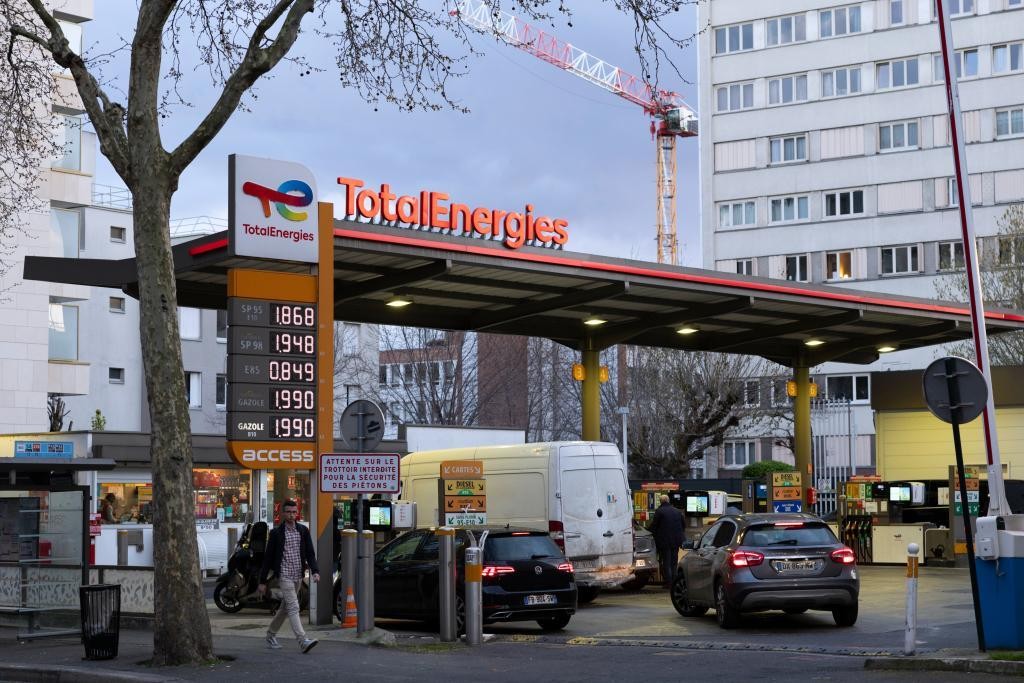
On March 9, vehicles lined up at gas stations in Paris, France, to refuel.
European media outlet *Europa Aktuell* stated bluntly: “Europe’s role in the world has diminished, and Germany’s role within Europe has also weakened. To some extent, this is both inevitable and perhaps even justified.”
The contraction of the manufacturing sector did not begin yesterday. In the 1980s, the EU’s manufacturing sector accounted for nearly 30% of GDP; by 2024, this share had fallen to 14.3%. In 2012, the European Union introduced its “reindustrialization” strategy, with the goal of raising the manufacturing sector’s share of GDP to 20% by 2020. More than a decade has passed, yet the target has not only remained unachieved but its share has further declined.
Bert Colijn, chief economist at ING, stated bluntly that the Middle East conflict is driving up energy prices and exacerbating supply-chain disruptions, leaving eurozone industrial production—particularly in energy-intensive sectors—facing new risks.
Energy is precisely the first noose tightening around the neck of European manufacturing.
Since the outbreak of the Ukraine crisis, European energy prices have soared to several times those in the United States, forcing energy-intensive industries such as fertilizers, steel, and chemicals to cut production or relocate abroad.
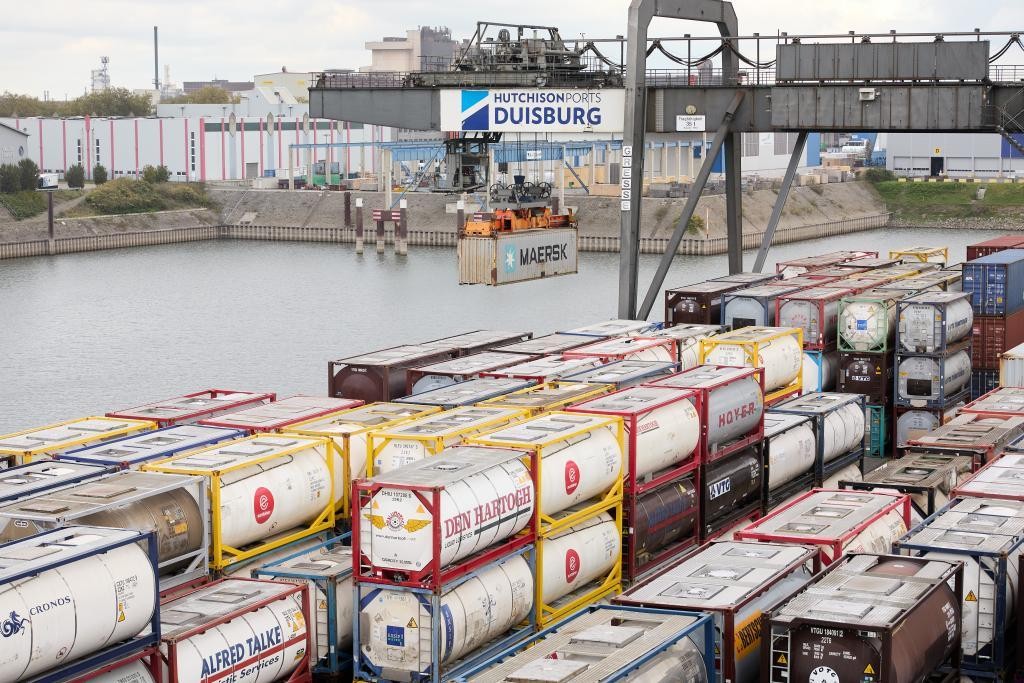
The photo shows a scene at the Port of Duisburg in Germany.
Europe’s chemical industry bears the highest energy costs worldwide, with industrial natural gas prices consistently three to four times those faced by its U.S. competitors. Between 2023 and 2024, more than 3,000 European manufacturing firms relocated their core production capacity out of the EU, with over 60% moving to China and the United States.
Germany has become a major disaster zone, while France and Italy are also witnessing an accelerated “outflow” of their steel, non-ferrous metals, and other industries.
The European chemical industry’s share of the global chemicals market has fallen to 13%.
Roxana Mânzatu, the European Commissioner for Employment, recently stated that, amid soaring energy prices, industries such as automotive, construction, metals, chemicals, and transport in the EU could lose as many as 1.3 million jobs this year.
As traditional enterprises relocate overseas, Europe is also stumbling along in emerging growth sectors. Europe has fallen behind China in both R&D investment and the pace of industrialization in clean‑technology sectors such as electric‑vehicle batteries and photovoltaics.
In its recently published “Digital Decade 2026” report, the European Commission acknowledged that Europe faces critical gaps compared with China and the United States in key areas such as foundational technologies, computing power—including artificial intelligence infrastructure—cybersecurity, and advanced digital skills.
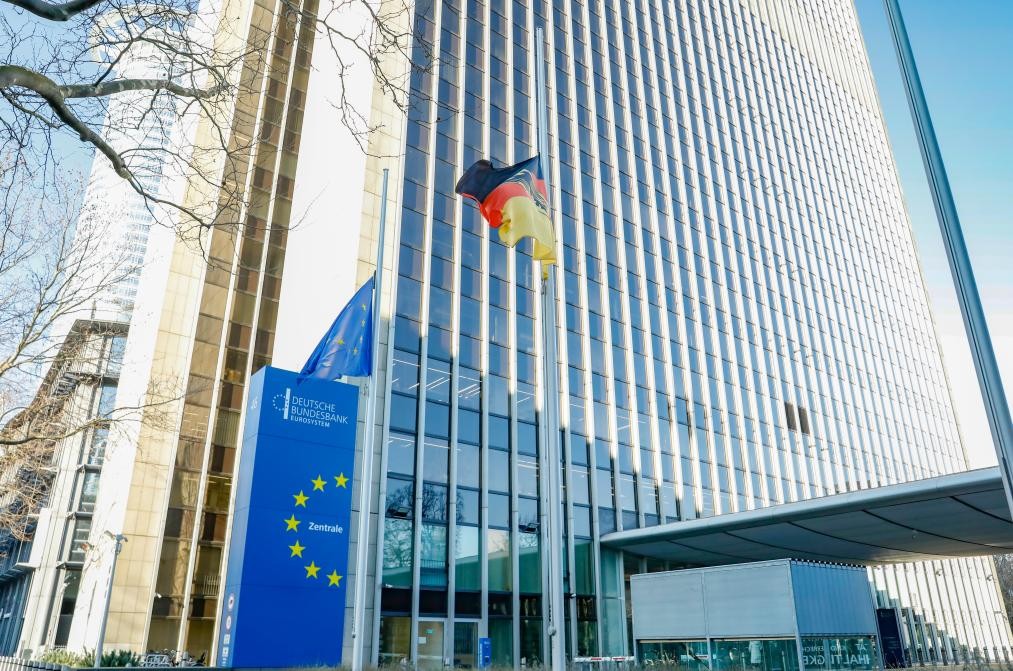
The photo shows the location ofThe headquarters of the German Bundesbank in Frankfurt, Germany.
The combined forces of sluggish innovation and an energy crisis constitute the endogenous structural root cause of Europe’s declining manufacturing competitiveness.
Faced with adversity, Brussels has prescribed protectionism.
In March 2026, the European Commission formally unveiled a legislative proposal for the “Industrial Accelerator Act,” aiming to raise the manufacturing sector’s share of GDP to 20% by 2035, while imposing restrictive measures—such as mandatory technology transfer and local content requirements—on foreign investment in key industries like electric vehicles, batteries, and photovoltaics.
Beyond the irony, even more devastating is the backlash effect of protectionism. Recently, a research report leaked in advance within the European Union stated bluntly: “If the EU continues down its current path of trade protectionism, it will not be protecting Europe—it will be eroding Europe’s own competitiveness.”
According to the report, since 2024, the EU’s additional tariffs on Chinese electric vehicles, photovoltaic products, and steel have, by the first quarter of 2026, raised manufacturing costs for Europe’s domestic industries by an average of 7.2%—not because foreign‑produced goods have become more expensive, but because European companies’ own costs have increased.
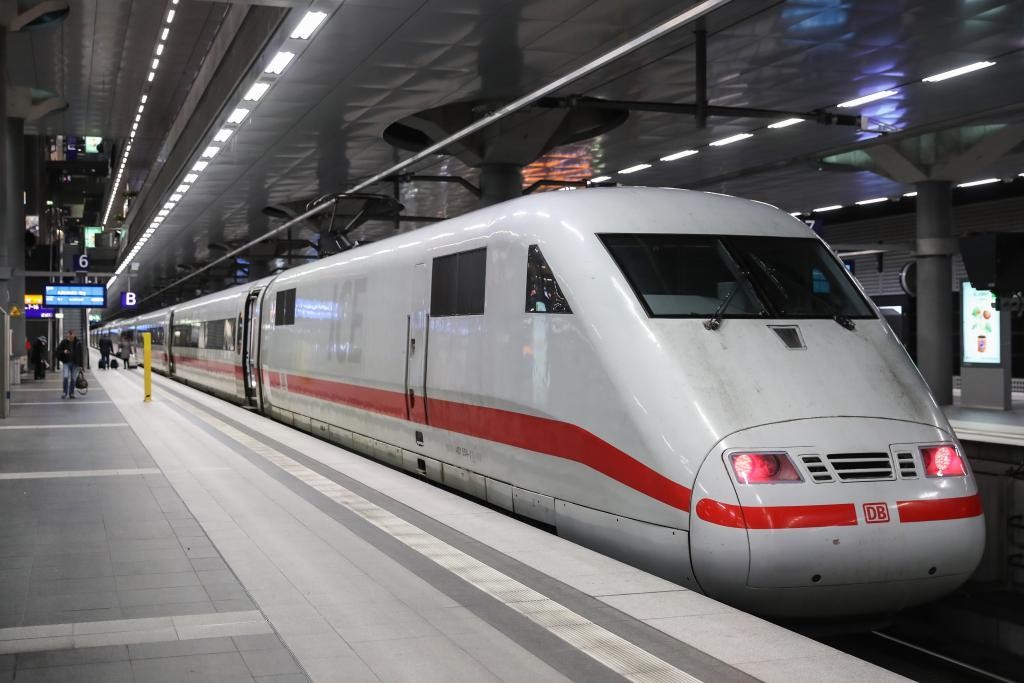
On January 18, 2018, at Berlin’s main railway station in the German capital, an Intercity-Express train was parked at the platform.
For every euro of protective tariffs, while safeguarding jobs in the protected industry, approximately 1.3 to 1.8 net job losses are incurred downstream in the supply chain. The head of Toyota’s European operations stated bluntly that excluding key international partners from “Made in Europe” rules would only “undermine future investment, employment, and technology transfer.”
Fabian Zuleeg, CEO of the Centre for European Policy, stated that the world is not becoming more multipolar but rather more fragmented, and that this trend can only be slowed down, not reversed.
The conclusion of “European Dynamics” is even more forthright: the decline and fragmentation of the European Union are inevitable, as the current European leaders enjoy neither domestic support nor the political courage to act. (The End)
Recommended News
- government approval 2026-04-17
Contact Us
- Phone: 0017194050155
- Fax: 0017194050155
- 邮箱:gelcc1@outlook.com
- Mobile phone: 0017194050155
- Address: Room 500, 1234 International Avenue, Washington, D.C. 20001, USA