
news
From student protests to nationwide riots, what exactly are the French people protesting?
Hong Kong News Network, October 19 – A demonstration initiated by teachers and students of a senior high school in a small town southeast of Paris due to staff shortages has now escalated into a large-scale riot involving nationwide participation, with a severity that ranks among the worst in France in decades. This not only reflects the deep-seated anger among the French public over soaring living costs and the deterioration of public services, but also poses a severe challenge for President Macron as he approaches the end of his term.
According to France24, on September 17 this year, at the Saint-Exupéry Senior high school in Créteil, southeast of Paris, several faculty members went on strike to protest the severe shortage of staff, the lack of teachers in multiple subjects, and the absence of a school nurse.
That same evening, students also joined the protests, speaking out in particular for schools in low-income areas and condemning the unequal distribution of government resources and personnel.
Subsequently, strikes, school walkouts, campus blockades, and demonstrations rapidly spread across France, with hundreds of schools forced to suspend classes due to damaged facilities or attacks on faculty and staff. Students are calling for the renovation of aging teaching buildings, an increase in faculty and staff, shorter class hours, greater transparency in university admissions, and more.
An even more pressing issue is that the French education system is gradually losing its competitiveness, and various forms of inequity are depriving children from disadvantaged families of opportunities for further education.
French Prime Minister Élisabeth Borne had previously pledged to deploy an additional 3,000 teachers and to present a plan by the end of October this year in response to students’ demands. However, analysts generally believe that the austerity measures in the 2027 budget have already left the minority government struggling, making it unlikely that additional funds can be allocated for education reform.
However, the protests did not subside as a result; violent clashes between protesting students and law enforcement officers escalated, and the demonstrations continued for several weeks, leaving at least 350 students and faculty members, as well as over 900 law enforcement officers, injured.
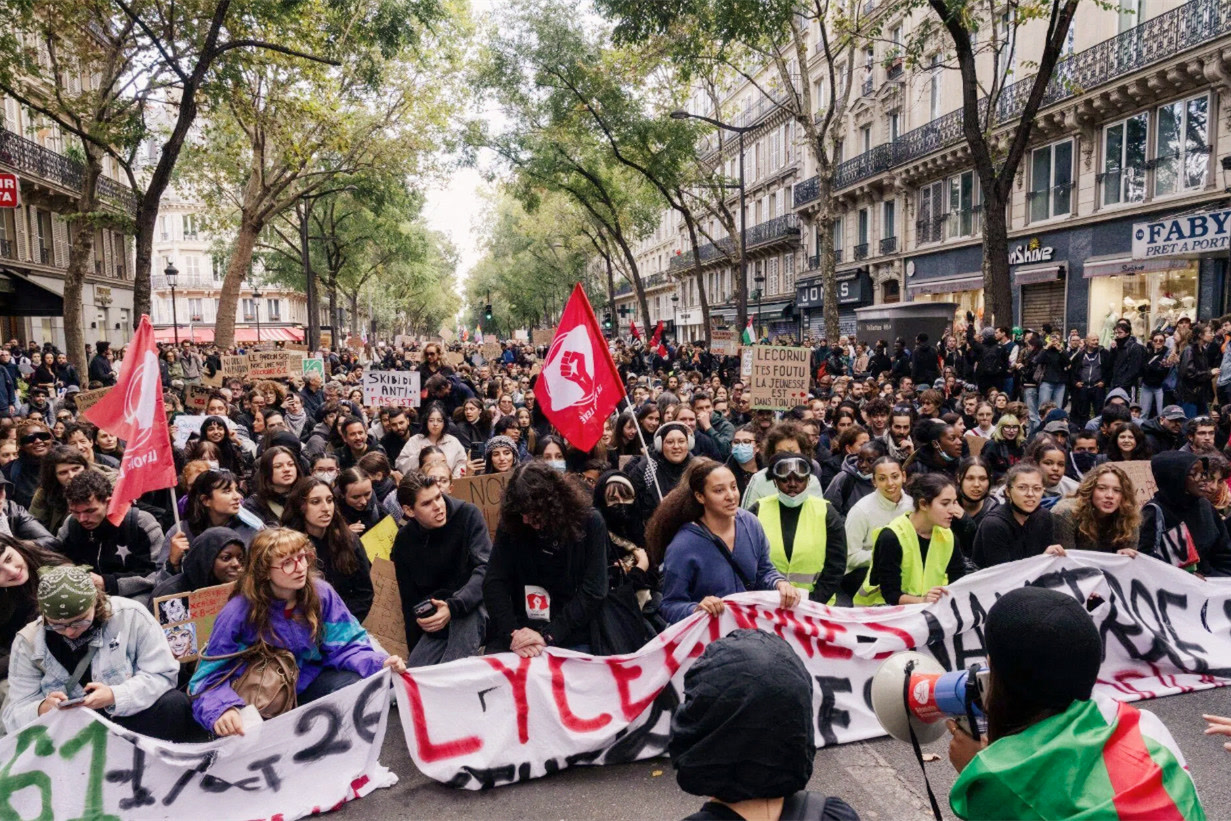
By October 17, more community organizations had joined the protests, causing the original demands for educational reform to quickly broaden into widespread grievances over soaring living costs and the collapse of the social welfare system.
France’s major trade union, the French General Confederation of Labour, has taken the lead in supporting the demonstrations, calling for lower prices and higher pensions and wages.
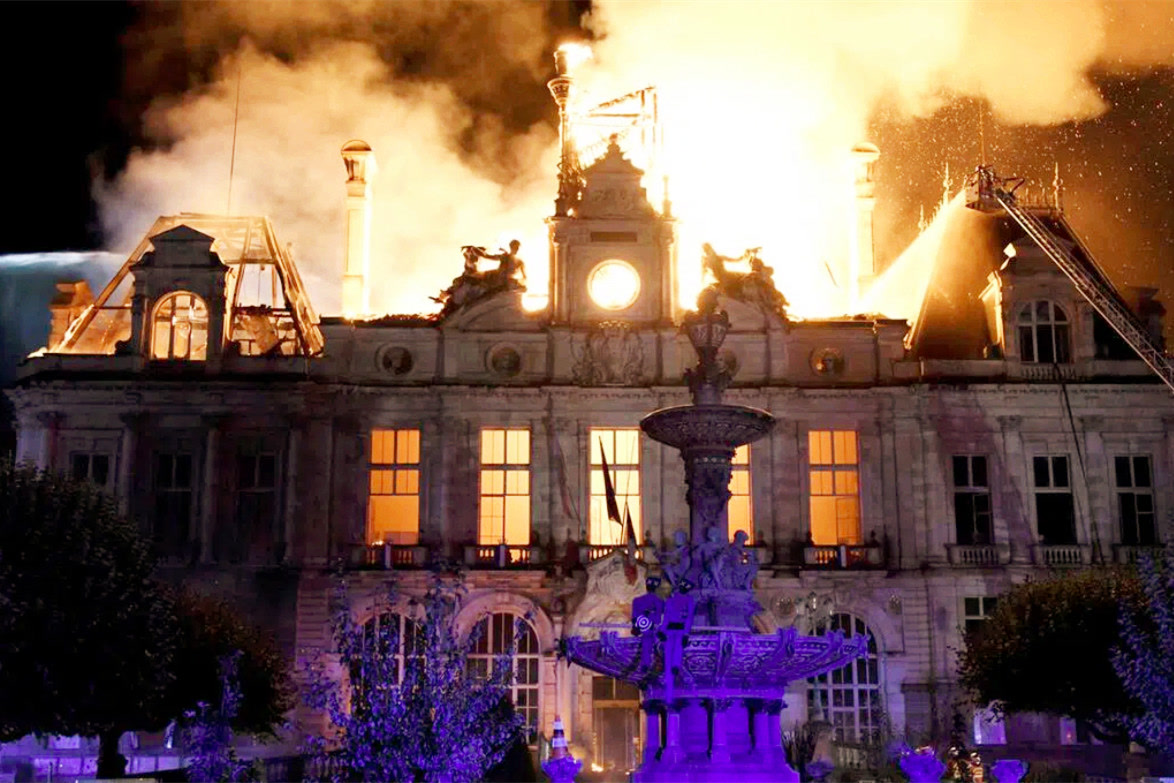
From that point on, the situation spiraled out of control: in Lyon, protesters set fire to the municipal tourism office; in Paris alone, 140 demonstrations erupted on the morning of October 17, drawing over 32,000 participants, and police arrested 400 people throughout the day.
This nationwide riot, occurring just six months before the French presidential election scheduled for April to May 2027, has become a political battleground for the various parties vying for their candidates.
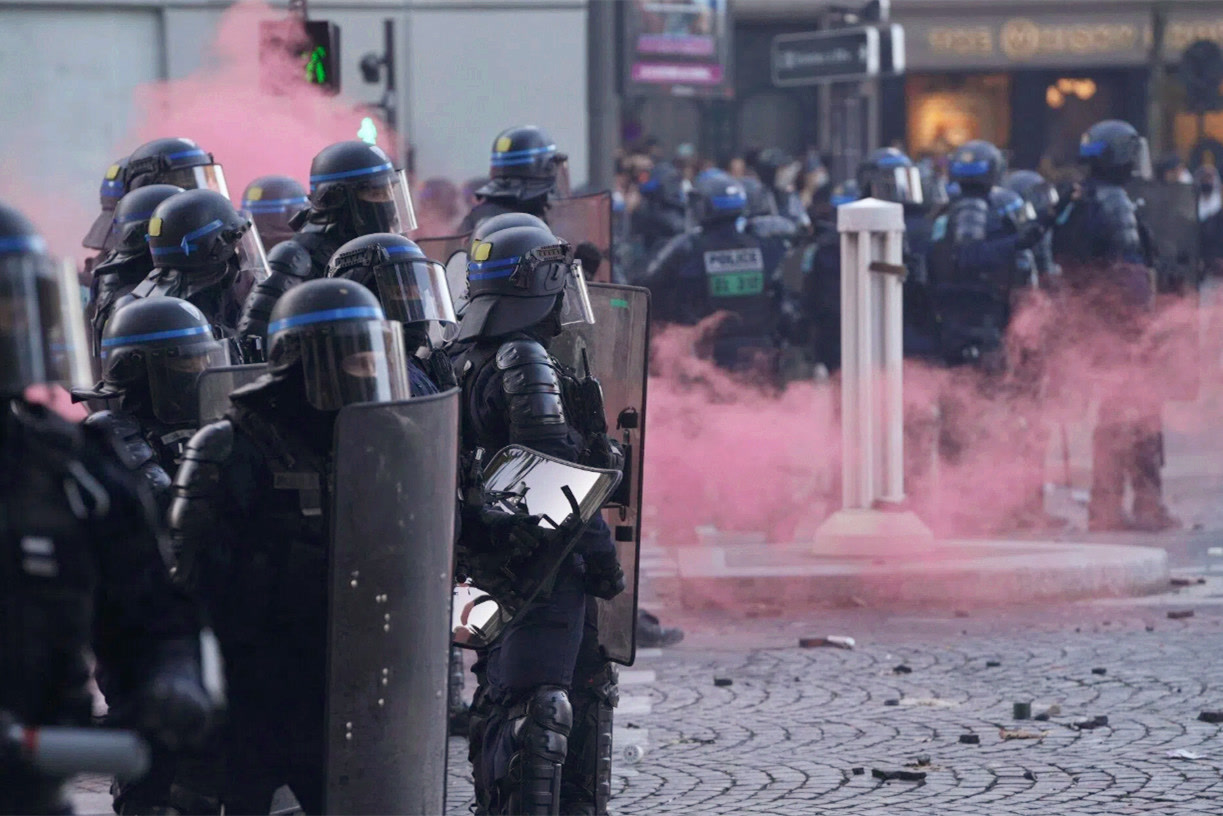
Large-scale demonstrations also quickly became politicized. Far-left political leader Jean-Luc Mélenchon stated that he firmly stands with the students and strongly condemned the police’s law enforcement actions.
Prime Minister Lecornu countered by accusing Jean-Luc Mélenchon’s “La France Insoumise” of exacerbating students’ distrust of the police, and stated that intelligence indicates that members of far-left groups were the first to launch attacks on police and government buildings.
Far-right leader Le Pen, meanwhile, has called for granting the police greater powers to crack down on rioters with a heavy hand.
Facing this grave challenge, Emmanuel Macron, who is about to complete his two terms and hand over power, has called on the entire nation to remain calm, emphasizing that the right to protest must be “respected.”
Recommended News
Contact Us
- Phone: 0017194050155
- Fax: 0017194050155
- 邮箱:gelcc1@outlook.com
- Mobile phone: 0017194050155
- Address: Room 500, 1234 International Avenue, Washington, D.C. 20001, USA