
news
The Governance Dilemma Behind the Unrest in Europe
At a time of increasing social unrest, the political landscape of Europe is also changing: the traditional parties that pursue the middle line are in trouble, and the overall trend to the right is more obvious. The greater risk for the EU is that it may become increasingly difficult for member states to form a coordinated response to economic and security challenges.
"Europe is burning!"
Over the past few days, the global media has paid close attention to the demonstrations and riots on the streets of many European countries.
In early October, large-scale demonstrations broke out in France, with more than 500000 people participating. Some of the protests turned into looting, arson and police-civilian conflicts. Protests followed in Italy, Spain, Portugal and Albania.
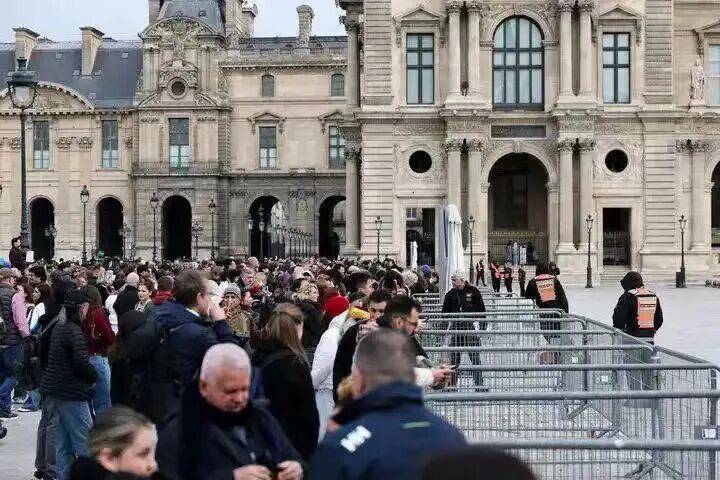
On October 19, in Paris, France, tourists gathered in front of the Louvre Museum. The entrance to the Louvre Museum was blocked by protesters on the morning of the 19th local time. The Louvre’s official website announced on the same day that the museum would temporarily close as a result. Photo source: Xinhua News Agency
Problems such as heavy housing burden, insufficient educational resources, and weak wage growth have become the focus of public dissatisfaction. High fuel and energy prices have further exacerbated the pressure on the economy and people's livelihood in some countries. Behind this is the deep governance dilemma faced by many European countries.
Protests erupted in Europe.
In the past few weeks, French high school students have continued to demand more investment in education by blocking schools and holding demonstrations to improve the problems of insufficient teachers and old school buildings, especially in low-income communities. Subsequently, organizations such as the French Federation of Trade Unions (CGT) joined, and the protest claims further expanded to the rising cost of living and public services.
At the same time, riots broke out in many parts of France. There were robberies in Paris, Marseille, Lyon and Bordeaux. A city hall built in the 19th century in Limoges was set on fire and almost completely burned down. Some schools were also set on fire. Protesters threw Molotov cocktails, police responded with tear gas, and hundreds of people were injured in the clashes.
On October 24, a new round of demonstrations broke out in many parts of France. According to the French Ministry of the Interior, about 410000 people participated in the country. The French trade union organization said about 800000 participants.
French Interior Minister Nunez told the media that according to incomplete statistics, about 1000 people had been arrested that day. Marching groups in various locations proceeded smoothly, but some organizations engaged in violent acts, such as clashing with security forces. Due to the tight deployment of security forces, the violent acts accompanying this round of protests were relatively limited in their destructive impact.
Earlier, French President Emmanuel Macron condemned the violence in the country, accusing far-left activists of trying to create chaos by attacking buildings and police. In a rare televised address, he said those involved in the looting must pay damages and those who attempted to overthrow the republic would also be held accountable.
A similar situation occurred in Spain. Madrid primary and secondary school teachers began an indefinite strike in mid-October, demanding higher salaries and better working conditions. There have also been teacher strikes in other parts of Spain this year.
In addition, the housing burden is also an important factor in the Spanish public protests. The Puerta del Sol square in central Madrid has seen tent camps for weeks protesting the high cost of housing. Earlier, 87-year-old woman Marie Carmen was expelled, and then died in hospital, causing public concern. Since then, similar protests have emerged in other Spanish cities, such as Barcelona, which has long faced the dual pressures of overtourism and tight housing supply.
According to Spanish business newspaper Expansi, the minimum monthly wage in the country is 1221 euros, while the average monthly rent for an 80-square-meter apartment is about 1130 euros. Diana Manzanares, a 20-year-old waitress in Madrid, said at the protest camp: "Most of my salary is spent on rent. My roommates, like me, are struggling to make ends meet. This is my reality and the reality that most of us who live in this city face."
Facing continued social pressure, Spain's ruling Socialist government approved a series of measures to guarantee affordable housing, but failed to win parliamentary support. The country's Prime Minister Pedro Sanchez then announced early elections for November. In the same month, Spain will also hold a general strike, which will be the country's first in 14 years.
In Italy, a protest called "Italia in Piazza" drew thousands of people. The demonstrators demanded improved employment, medical and educational conditions, expanded housing security and higher wages. Italian government data show that the country's inflation rate has risen to 4.2 in September, higher than the overall level of 3.8 in the euro zone.
The peaceful march was followed by violent riots in Turin and Bologna. Milan has also seen clashes between masked riot participants and police, looting shops and arson. Milan police said that 271 people were arrested in the two days of riots, most of them minors, and 14 security personnel were injured.
A new organization, the 17 October Movement, subsequently announced that it would hold demonstrations every Saturday at 3 p.m. in Italian cities, calling the action "sustained mobilization".
In the Albanian capital, Tirana, anti-government protests have been going on for more than a week. The conflict escalated further as high school and college students joined the anti-government campaign known as the Flamingo Movement. The movement demanded the resignation of Socialist Prime Minister Edi Rama.
Rama accused the protesters of being influenced by relevant forces and becoming ideological and radical.
Anti-corruption is one of the core demands of the Flamingo Movement. The movement takes its name from the natural habitat of local flamingos, and the Rama government previously agreed to develop a large high-end tourism project in the area, which is related to Trump's son-in-law Jared Kushner. According to information on the campaign's website, participants also demanded stronger guarantees for health care, education and public pensions.
In Serbia, protests by university students have been going on for nearly two years. Now, student groups are trying to prevent former leader Alexander Vucic from regaining power. Vucic hopes to return as prime minister after the October 25 election. The "student list" party, which is backed by young people, is considered to be in tight competition with the party led by Vucic, and the uncertainty of the election result has also heightened concerns about potential violent conflicts.
Social security system is difficult to support
The fuse of "lighting Europe" is the result of weak economic growth, rising living costs, pressure on public services and long-term accumulation of political dissatisfaction.
Douglas Yates, a professor at the American Graduate School in Paris, believes that the escalation of the riots in France is the result of a combination of factors. At first, students who were dissatisfied with the conditions of the school took to the streets, demanding that the dilapidated campus facilities be repaired and the learning environment improved. Subsequently, social discontent aroused by inflation and the cost of living issues also poured into protests, and the opposition party tried to use the public's dissatisfaction with Macron to expand its political influence, and multiple forces intertwined, eventually making the situation out of control.
In addition to political factors, the economic pressure on France is also increasing. The 2027 budget proposed by French Prime Minister Sebastian Le Kearney seeks to reduce the fiscal deficit to a more manageable level. France's fiscal deficit is expected to reach 5.4 per cent of (GDP) this year, and measures to be taken by the government include freezing the civil service pay index and tightening the compensation reimbursement policy during sick leave. At the same time, the employment and price situation has further increased the burden on families.
According to data from the French National Institute of Statistics and Economics (Insee), in the second quarter of 2026, the unemployment rate in France rose to 8.3, and the number of unemployed people reached 2.7 million; the unemployment rate of young people aged 15 to 24 was as high as 21.6. In September, French consumer prices rose 3.1 per cent year-on-year, up from 2.4 per cent in August, and energy prices rose 21.3 per cent year-on-year.
In addition, Insee data shows that the purchasing power per unit of consumption in France is expected to fall by 0.7 in 2026. It is estimated that since 2024, the loss of purchasing power to French two-child families is equivalent to a loss of 1200 euros per year in disposable purchasing power; the annual loss of single adults is about 600 euros.
Although the causes, demands and political circumstances of the riots in other European countries are different, they all reflect the same problem.
Pascal Lamy, a former EU Trade Commissioner and Director-General of the World Trade Organization, believes that the common source of turbulence at the European level is that Europe has a sound social security system, but lacks strong enough economic growth to support it.
In his view, Europe's potential economic growth rate is only half that of the United States, 1/3 of China, and 1/4 of India. The lack of growth not only restricts public finances, but also makes Europe face multiple challenges to maintain social protection, improve industrial competitiveness and continue social consensus. At the same time, energy supply risks, pressure on low-income households and Europe's limited influence on geopolitical conflicts have further exacerbated social tensions.
Andrew Kenningham, chief European economist at Capital Macro, also believes that the root of the problem is that politicians cannot give many Europeans hope that life will get better. Economic growth is slow and governments have accumulated huge debts, so there is little room to increase public spending or reduce taxes to improve the situation of people.
Foreign policy analyst Emre Diener pointed out that Europe is facing three interrelated pressures: the uncertainty of energy supply in the Middle East, the continuous decline of household purchasing power, and the weakening of people's confidence in the government's ability to ensure economic security. The superimposed effect is increasingly apparent.
Political Extreme
The political landscape of Europe is also changing at a time of growing social unrest. In some of Europe's largest and most important countries, the traditional parties that follow the middle course are in trouble. Weak economic growth, persistent inflationary pressures, high government debt, and bleak employment and development prospects for young people are driving the rise of far-right, far-left protest movements and populist parties.
In the eyes of many Europeans, the traditional center-left and center-right parties have struggled to offer substantive policy options. These parties are dominated by a well-educated political elite, but they are increasingly far from the reality of low-income groups, workers and young people. At the same time, widening fiscal deficits, increased government spending and rising interest rates have reduced the policy space for governments to respond to popular demands. Economic pressures and political disappointments have combined to further erode the credibility of traditional parties.
In this context, voters began to turn to forces outside of traditional politics. In France, Marina Le Pen, leader of the far-right National Union, leads in the presidential election polls, while Jean-Luc Melanchon, leader of the far-left party "unyielding France", ranks second. In Germany, AfD and Die Linke are attracting more and more voters.
In the coming year, Spain, France, Italy and Poland, the four most populous countries in Europe, will usher in important elections. The growth of extreme political forces will bring severe challenges to traditional political parties. Even in Italy, where right-wing Prime Minister Giorgia Meloni is in power, street protests continue, and Meloni faces competition from more right-wing camps, represented by former General Roberto Vannaci.
Alberto Alemano, a professor at the Paris Higher Business School of the European Law School, pointed out that hard-line right-wing forces have entered the governments of the Czech Republic, Finland, Slovakia, and Croatia; the Slovenian government also relies on external support from right-wing parties. At the same time, in response to competition from more extreme right-wing forces, some traditional right-wing parties are further tightening their positions, making the overall rightward trend in European politics more pronounced.
Ivan Krastev, chairman of the Bulgarian Liberal Strategy Center and a researcher at the Vienna Institute of Humanities, believes that with the approach of four important elections and the considerable attraction of the far right in European countries, European politics may usher in a major transformation. In the future, the political power of national parliaments may become more dispersed, and it will become more difficult to form stable governments.
Krastof expects that the right-wing ruling coalition may have to absorb smaller far-right parties. This also means that the latter may use its alliance status to contain the mainstream right-wing forces, making it difficult for it to get rid of its hard-line stance and move closer to the political middle ground again.
He also noted that if far-right parties do well in elections, mainstream European political forces are likely to quickly try to bring them into the normal political order. After all, if these forces continue to grow, the EU's decision-making and operation will also face greater difficulties. However, political acceptance does not mean that social contradictions have been resolved, nor does it mean that the people will have a stronger sense of security.
The upcoming French presidential election will be a key point for testing the direction of European politics. If Le Pen wins the election, its impact will far exceed French domestic politics, and may affect the operation of the European Union, the stability of the euro, NATO cooperation and European support for Ukraine.
Three Types of Crisis
And how will this rapidly spreading riots in Europe end, and will it evolve into a broader crisis?
In this regard, Emre Dina believes that the key depends on how governments respond in the coming months. The situation may develop along three paths, and the degree of impact will also vary.
Scenario 1: The government makes limited concessions and protests gradually cool down.
This is a relatively mild and easier situation to deal. In the face of continued street protests, governments may defuse the situation through limited political compromises and targeted economic measures, including negotiations with trade unions, targeted financial assistance, and improved public services.
In France, the government may take some measures to respond to public concerns about education investment and family living expenses, while exploring temporary arrangements to alleviate the impact of high energy prices. The Italian government may prioritize negotiations with trade unions, while Spain and Portugal may focus more on improving housing affordability.
These measures are difficult to eliminate the deep roots of popular dissatisfaction, but they help prevent further escalation of the situation and avoid its continuous impact on economic operations and political institutions.
Whether this scenario can be achieved depends to a large extent on the trend of the international energy market. If oil prices stabilize, shipping safety in the Strait of Hormuz improves, and negotiations between the government and trade unions and other social groups make progress, the parties are expected to have more room for compromise.
If problems such as employment, income and public services are delayed, potential discontent could build up again.
The second scenario: energy shocks intensify and economic pressures evolve into broader labor conflicts.
If the crisis in the Strait of Hormuz continues, pushing energy prices up sharply again, the situation in Europe could deteriorate further. Tightening or rising prices of diesel and aviation fuel will put additional pressure on transportation, manufacturing and logistics companies.
In the face of rising costs, companies may delay investment, reduce hiring, or pass some of the costs on to consumers. At the same time, workers whose real purchasing power has further declined may increase their demands for wage increases, and trade unions may also put pressure on the government and employers by organizing strikes in key industries.
France's transport, energy and public services sectors may be particularly vulnerable to strikes; Belgium's rail and public sector shutdowns could disrupt economic activity; Italy's ports, transport networks and industrial companies could also impact regional supply chains in the event of shutdowns; in Spain and Portugal, social movements around housing burden may be intertwined with broader demands such as wages and the cost of living.
But this does not mean that a general strike must break out in all European countries at the same time. There are obvious differences in the organizational capacity, political environment and collective bargaining system of trade unions in various countries. Therefore, it is more likely that large-scale demonstrations and strikes in some key industries will occur in multiple countries during the same period.
Once the labor conflict expands, its impact is no longer limited to public order. The combination of rising production costs and weakening consumer demand will further squeeze corporate profits, drag down economic growth and exacerbate uncertainty about employment prospects.
Governments will then find themselves in a dilemma: maintaining fiscal discipline while providing assistance to families under pressure from the cost of living.
The European Central Bank also faces difficult choices. On the one hand, a sustained rise in energy prices could push up inflation and limit the room for interest rate cuts; on the other hand, weakening economic activity will increase market demand for monetary easing. The combination of inflationary pressures and weak growth will make Europe's macroeconomic policies more difficult to balance.
Thus, energy prices, shipping costs, changes in fuel stocks, and whether unions announce coordinated labor action will all be important signals to determine whether this scenario is taking shape.
The third scenario: social unrest and political deadlock overlap each other and evolve into a deeper political crisis.
In this scenario, the issue of concern is no longer just the scale of the street protests, but whether governments can continue to effectively formulate and implement economic policies. If ongoing social unrest continues to weaken the government's ability to govern, it could further translate into a political crisis.
In this regard, France has a higher risk factor. The highly fragmented political landscape has made budget negotiations and reforms more difficult. If parliamentary disputes continue to escalate and street protests are delayed, the Government's ability to develop a credible financial programme and to win parliamentary support may be further constrained. At that time, the government will be under pressure from the financial market and the public at the same time: it will not only respond to people's demands for living costs and public services, but also try to control fiscal risks.
Other countries in Europe could face similar dilemmas. Political forces will try to turn public discontent into electoral advantages, but economic turmoil does not necessarily mean that a particular political camp benefits. The outcome of the election will still depend on the country's political system, party structure, and the issues that voters are most concerned about.
The greater risk for the EU is that it may become increasingly difficult for member states to form a coordinated response to economic and security challenges. Countries already face competing policy priorities on issues such as energy subsidies, public spending, fiscal rules and defense commitments. If domestic political pressures continue to rise, governments may be less willing to take on costly collective action.
Some countries may prioritize immediate assistance to families, while others may prioritize deficit control or meeting defense spending targets. The divergence of national policy orientations will make coordination within the EU more difficult.
Fiscal pressures from rising energy prices have pushed EU member states to discuss how to share the economic shock. In April, five EU member states called for a tax on the windfall profits of energy companies, reflecting growing concerns about who should bear the economic burden of high oil prices. Disagreements over such issues could further complicate negotiations within EU institutions and delay decisions that require broad political consensus to move forward.
These difficulties may not threaten the survival of the EU itself, but may undermine its ability to respond quickly and coherently to external economic shocks.
If prolonged social unrest were to coincide with a decline in financial market confidence, the risk would rise further. For countries with heavy debt burdens, such as France, rising borrowing costs will reduce fiscal policy space. The government not only needs to invest more money to repay the debt, but also has to deal with the growing demand for social expenditure, so the resources that can be used to stimulate the economy and ease the pressure on people's livelihood are more limited.
In this case, economic discontent and political uncertainty may reinforce each other, forming a vicious circle: public and market confidence continues to weaken, financing costs and fiscal pressures rise, and the government's policy options are further reduced, and the weak policy response may exacerbate social discontent.
However, it cannot be said that the European political and economic system is bound to collapse. European governments, central banks and EU institutions still have considerable policy tools to deal with shocks through fiscal support, monetary policy, social dialogue and cross-border coordination. The real test is whether these tools work in a timely and effective manner, finding a balance between stabilizing the economy and maintaining social trust.
Reporter Yuan Yuan
Recommended News
Contact Us
- Phone: 0017194050155
- Fax: 0017194050155
- 邮箱:gelcc1@outlook.com
- Mobile phone: 0017194050155
- Address: Room 500, 1234 International Avenue, Washington, D.C. 20001, USA