
news
After nine months of dual-use controls, Japan’s rare-earth reserves are finally on the verge of being exhausted.
This spring, Dalian Port Customs intercepted two shipments. The customs declaration form lists it as an “industrial bracket,” and it looks like a standard motor. Disassemble the shell, inside is a detachable high-performance rare earth magnet, as long as it is shipped to Japan, the magnet can be taken out completely with a screw.
It was later found out that the two were employees of Fuji Electric's Dalian plant, and Japanese Chief Cabinet Secretary Minoru Minoru admitted the matter at a press conference.
A formal large enterprise, why should employees take the risk of imprisonment entrainment rare earth?
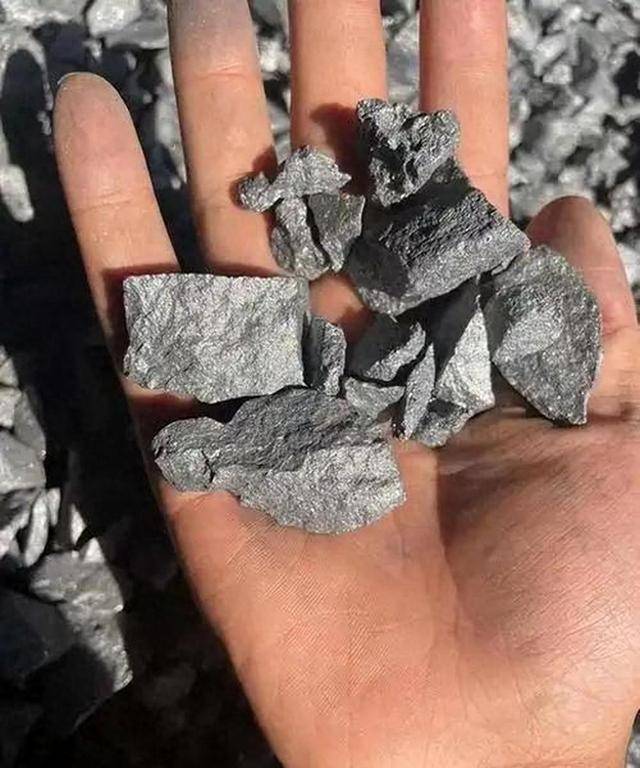
A message six months later gave the answer. Counting from the Ministry of Commerce's strengthening of export controls on dual-use items to Japan, nine months have passed and Japan's rare earth stocks are finally running out. The first to fail is a metal with a very popular name: yttrium.
According to the Financial Times, Japanese government officials and executives at trading companies have indicated that shortages could emerge as early as the end of this year. A Japanese official put it bluntly: the timeline is no longer measured in years but in months; right now, the priority is figuring out how to get through next year.
Tokyo's external statements are inconsistent. There is no imminent depletion of yttrium resources in Japan, Minoru said. However, an official of the Ministry of economy, industry and industry admitted to AFP anonymously that the export of yttrium was not only stagnant in Japan, but also in the whole world, resulting in tight supply and demand and soaring prices.
One says it’s fine, the other says it’s out of stock. Looking at the performance of Japanese companies over the past six months, the latter explanation is closer to the truth.
In June this year, Adit, a domestic dental consumables enterprise, confirmed that it had received a formal notice from Japan's Dong Cao that the supply of high-end yttrium stabilized zirconia powder to China was completely suspended, and it was not a short-term shortage, but a medium-and long-term shutdown and supply restriction. According to industry estimates, the early reserves of yttrium oxide by Japanese enterprises are only enough to maintain production for 30 to 45 days.
In other words, Japan’s inventories had already begun to dwindle as early as summer.
The amount of yttrium is not large, but its effect is very critical. It is a bit like the pinch of salt in the stew. Without it, it would not be the same. High‑performance zirconia must be doped with yttrium oxide as a stabilizer; otherwise, the powder is prone to cracking and cannot be used in the electronics and medical fields. The thermal barrier coatings on aircraft engine blades and the linings of etching equipment in chip manufacturing plants also rely on it to withstand high temperatures and resist corrosion.
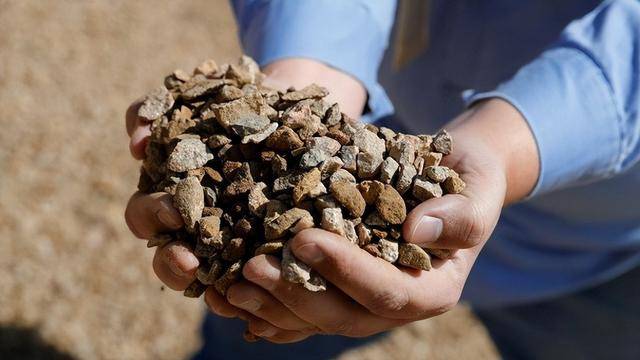
Even Japanese Prime Minister Takaichi Zaomiao himself said that yttrium is very scarce in the world and is a rare earth that is very important to Japan.
What best reveals the problem is the price. Yttria outside china is now about $1150 per kilogram, about 179 times what it was two years ago. The price in China is approximately $9. For the same one kilogram of goods, once it crosses the border, the price can be more than a hundred times higher.
The export volume has also fluctuated significantly. In September, China’s exports of yttrium oxide to Japan totaled 4,000 kilograms, compared with 51,000 kilograms in the same period last year.
In the past nine months, Japan has been trying to find a way.
The easiest thing to think of is to buy it somewhere else. In the first half of the year, Japan purchased yttrium from 12 countries and regions, compared with only three two years ago. According to the analysis of the "Oregon Group", even if the raw materials of yttrium transported through Germany, Austria and other third countries are almost all processed from China, it is still inseparable from Beijing's export license.
The seller changed and the goods came from China.
Another option is to build your own factory and then sign long-term contracts with overseas partners. Shin-Viet Chemical approved at least 35 billion yen to build a rare earth separation and refining line in Fukui Prefecture, with government subsidies of about half. Malaysia's Linus agreed to supply 75 percent of heavy rare earth oxides to Japanese industry by 2038, but it does not expect to produce yttrium for the first time until 2028.
The rare earth mud on the seabed of Nannao Island was tested at the beginning of the year by the "Earth", which is still a long way from real mass production. These methods will have to wait until the next year or even longer, and will not solve the current problem.
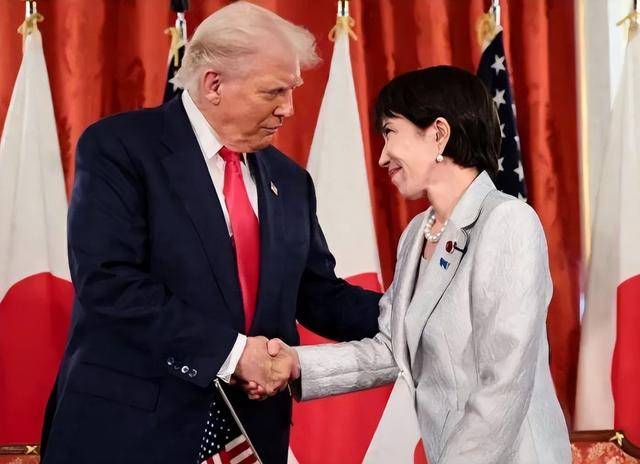
The only way to do that is to ask the United States for help. Japan has asked the US government and US companies to come forward and urge China to relax export controls on rare earths so as to avoid a serious impact on the global automobile, defense and chip industries.
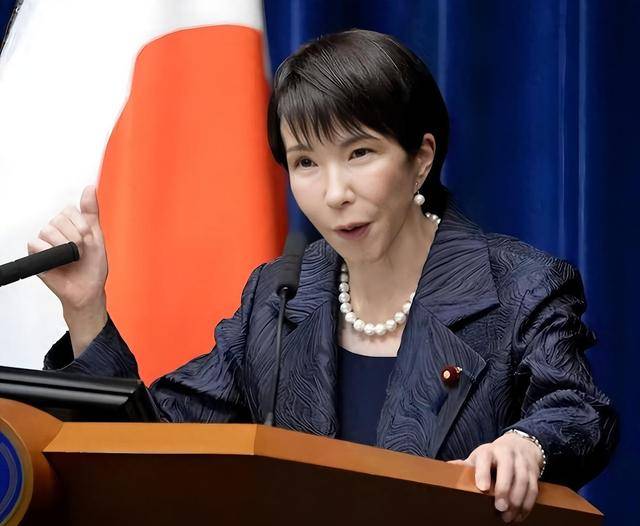
But the United States has no spare goods in its hands. There is no commercial yttrium separation plant in the United States, and no yttrium oxide was imported in May and June this year.
The treatment of the two countries is not the same. A senior US official told the Financial Times last month that China had fulfilled its rare earth commitments to the United States by about 2/3, and only gave Japan a "minimum limit". It is also imported from China. The United States has negotiated one item at the negotiating table, but the contradiction between Japan and China has not been resolved.
The cause of this contradiction is clear. This time the export examination and approval was tightened because of the improper remarks made by Gaoshi Zaomiao, which have not been corrected so far. The Ministry of Commerce's announcement at the beginning of the year stated that all dual-use items are prohibited from being exported to Japanese military users, military uses, and all other end-user uses that help enhance Japan's military strength.
After the story of Japan's request for help from the United States spread, Foreign Ministry spokesman Mao Ning said that China imposed export controls on Japan in accordance with the law in order to stop Japan's "remilitarization" and nuclear attempts. China's position on maintaining the stability and security of the global production and supply chain of key minerals has not changed, and all parties have the responsibility to play a constructive role in this regard.
Chinese tube is the use, not the entire industry. For civil applications that meet the specifications, as long as the materials are in compliance, the Chinese side will still handle the export in accordance with the law.
The United States is in such a hurry for its own reasons: the U.S. defense supply chain relies on Japanese components that use yttrium. If Japanese factories are shut down, American military companies will also be affected.
This account has long been counted by Japan's own institutions. According to estimates by the Nomura Comprehensive Research Institute, China's rare earth export control lasted for one year, and Japan's economic loss was as high as 2.6 trillion yen, and its GDP fell by 0.43.
The domestic situation is not quite the same. After Dongcao stopped supplying, downstream enterprises switched to domestic raw materials. Over the past years, domestic high-end repair raw materials are highly dependent on Japanese imports, domestic materials have been in the "replacement position", and now domestic zirconia has the opportunity to replace imports.
Looking back at the two "industrial supports" in Dalian Port, the reason is clear: the goods cannot be obtained through formal channels, the origin cannot be avoided by detouring to a third country, and the new mines on the seabed and overseas cannot be counted on for a while, so some people have the idea of entrainment.
After the rare earth turmoil in 2010, Japan spent more than ten years looking for alternative sources, and now it can only live on a monthly inventory. When Yttrium supplies will be restored hinges on how Tokyo chooses to navigate issues related to Taiwan and its military expansion.
Recommended News
Contact Us
- Phone: 0017194050155
- Fax: 0017194050155
- 邮箱:gelcc1@outlook.com
- Mobile phone: 0017194050155
- Address: Room 500, 1234 International Avenue, Washington, D.C. 20001, USA