
news
U.S. 10-year Treasury yields break through 5% to increase pressure on the Fed to raise interest rates
On the 14th, the yield on the U.S. 10-year Treasury note briefly surpassed 5% during trading, the first time since October 2023.
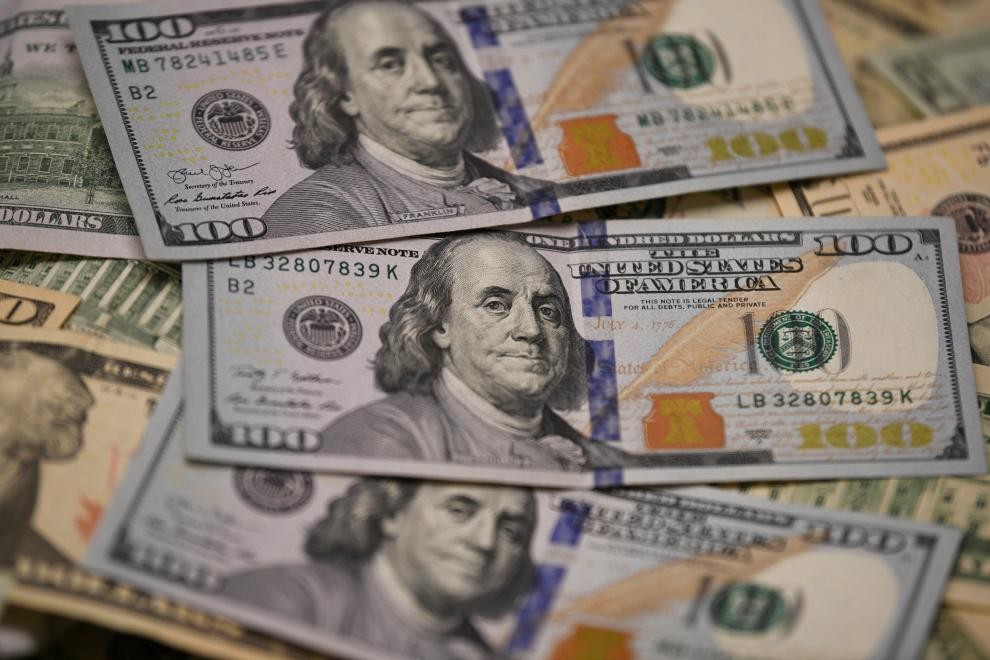
This is a U.S. dollar bill photographed in Washington, D.C.
Data show that on the morning of the 14th, the yield on the U.S. 10-year Treasury note rose, breaking through 5% to reach a high of 5.017%, up 4.3 basis points from the previous day’s closing level, before subsequently falling back below 5%.
In early trading that day, the yields on the U.S. 2-year and 30-year Treasury notes rose to intraday highs of 4.688% and 5.388%, respectively. On the 15th, the yield on the U.S. 30-year Treasury bond continued to rise, reaching as high as 5.4% during trading.
Analysts believe that geopolitical tensions in the Middle East are driving oil prices higher, intensifying market concerns about the U.S. inflation outlook. Coupled with the continued expansion of the U.S. government’s debt, these factors have collectively pushed U.S. long-term Treasury yields higher in recent weeks.
Rising bond yields mean that borrowing costs are increasing for U.S. consumers and businesses. The 10-year Treasury yield serves as a benchmark for borrowing costs across the economy, and mortgage rates are closely tied to it. Last week, the average interest rate for a 30-year fixed-rate mortgage rose to 6.76%, significantly higher than the 6.15% at the beginning of the year, putting upward pressure on the costs of home and auto purchases as well as corporate financing.
As U.S. inflation expectations rise, the market is betting that the Federal Reserve will raise interest rates. The CME FedWatch Tool indicates that the market’s probability of the Federal Reserve raising the benchmark interest rate by 0.25 percentage points this month has exceeded 90%.
Morgan Stanley’s economists have revised their forecast for the Federal Reserve’s policy, now expecting the Fed to raise interest rates by 25 basis points in both September and December.
“We expect the Federal Reserve to raise interest rates by 25 basis points at this week’s meeting, with no dissent,” said Michael Gapen, chief U.S. economist, in a research report. “Once the Fed acts, it rarely does so just once.” He predicts that after December, the Federal Reserve will pause its rate hikes as inflation slows.
Recommended News
Contact Us
- Phone: 0017194050155
- Fax: 0017194050155
- 邮箱:gelcc1@outlook.com
- Mobile phone: 0017194050155
- Address: Room 500, 1234 International Avenue, Washington, D.C. 20001, USA