
news
Global oil supply "safety valve" failure in the Middle East two-strait synchronization emergency
The situation in the Middle East is rapidly escalating. The Iran–Gulf States meeting originally scheduled for that day in Salalah, Oman, was suddenly postponed. Meanwhile, merchant vessels in the Strait of Hormuz were attacked, Saudi Arabia’s east–west oil pipeline was shut down following a drone strike, and the conflict between Yemen’s Houthi forces and Saudi Arabia has escalated. Three fronts have deteriorated in tandem within 72 hours, putting both of the Middle East’s major energy corridors under simultaneous strain.
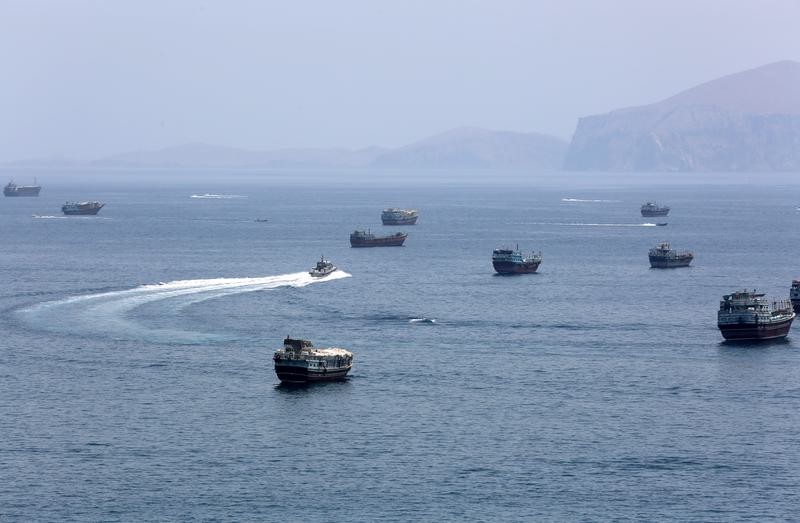
File photo: Strait of Hormuz
A considerable proportion of maritime transport volume. Since the U.S. and Israel launched military operations against Iran at the end of February this year, the Strait has been effectively under severe restrictions: Iran has imposed strict controls on passage, while the U.S. has imposed blockades and countermeasures against relevant vessels, resulting in a sharp decline in the number of ships transiting the area.
Oman, as a long-standing neutral mediator, has been actively promoting dialogue between Iran and the Gulf states. The two sides had originally planned to hold a foreign ministers’ meeting on the 14th. According to reports, the Iranian side was prepared to present a temporary shipping arrangement agreed upon with Oman, including new entry and exit routes as well as a potential fee‑collection mechanism, in hopes of alleviating some shipping pressures without fully reopening the strait. However, on the evening of the 13th, Oman’s Foreign Minister Bader Al-Busaidi announced on social media that the meeting had been postponed “in order to reach consensus.” An Iranian Foreign Ministry official stated that the postponement was decided jointly by Tehran and Muscat at the request of some countries in the region.
Bahrain has already made it clear that it will not attend, as it believes Iran previously launched attacks against it and diplomatic relations have yet to be restored; Saudi Arabia, meanwhile, has adopted a more cautious stance following the recent attack on its oil pipelines. Some analysts have pointed out that Saudi Arabia may request a postponement due to the pipeline incident. Analysts believe that the conflict has entered a phase of “reciprocal retaliation,” and it will be difficult to reach a meaningful consensus in the short term.
On the morning of the 13th, an Iranian merchant vessel was struck by an unidentified projectile near Qeshm Island and Hendekan Island in the Strait of Hormuz, resulting in at least one death and three to four injuries. The UK Maritime Trade Operations Centre has also confirmed that a vessel was struck by a projectile while transiting the strait. Iran’s officials have accused “terrorist enemies” without naming any specific parties; the U.S. side has not yet responded. This incident occurred on the eve of the aforementioned talks being postponed, further escalating tensions.
Previously, Saudi Arabia’s east–west crude oil pipeline was attacked by drones originating from Iraqi territory on the 10th and 11th. The attack caused a fire at the pump station and resulted in injuries; Saudi Arabia’s Energy Ministry announced a “preemptive shutdown” of the pipeline. The Iraqi Prime Minister’s Office subsequently confirmed that the attack originated in Maysan Province in the south and announced the removal of the relevant military commanders, while also launching an investigation. Trump publicly stated that Iran “may” have been the mastermind behind it. Following the pipeline shutdown, analysis indicates that Yanbu Port’s inventories can only sustain exports for 5 to 7 days; if repairs are not completed promptly, global crude oil supply could face a shortfall of approximately 4%. The pipeline, approximately 1,200 kilometers in length, connects eastern oilfields with the port of Yanbu on the Red Sea and serves as a crucial alternative export route for Saudi Arabia, bypassing the Strait of Hormuz.
The Yemeni battlefield is also heating up rapidly. In recent weeks, the Houthi forces have advanced along the Red Sea coast, seizing control of the port of Mocha and the strategically important Perim Island, thereby posing a threat to the Bab-el-Mandeb Strait. The Houthi side claimed that Saudi Arabia launched dozens to hundreds of airstrikes within 24 to 48 hours, while also launching missile and drone attacks on military bases and civilian facilities in southern Saudi Arabia, resulting in casualties. Yemeni government forces, for their part, have stated that the clashes between the two sides have resulted in thousands of casualties. The Red Sea route, already severely disrupted by Houthi attacks, has now deteriorated further, placing both major Middle Eastern energy corridors under simultaneous strain.
With the Strait of Hormuz constrained and Saudi pipelines shut down, oil prices and diesel prices are once again under pressure. On the 14th, at the start of Asian trading, Brent crude oil futures briefly surged above $108 per barrel, with gains exceeding 3%; New York–traded WTI crude also rose by more than 3%. Subsequently, the two major benchmark crude oil prices remained at elevated levels during European trading hours, with Brent hovering roughly between $107 and $108 per barrel, and WTI trading around $102 to $103, continuing the sharp upward momentum from last week.
Analyses indicate that the real warning sign lies in refined oil products. According to data from the American Automobile Association, on the 11th, the national average retail price of diesel in the United States reached $6.0556 per gallon, setting a new all-time record. Diesel fuels freight trucks, trains, agricultural machinery, and construction equipment, and its price increases have a much broader impact on inflation and business costs than those of gasoline. Rising energy prices may also compel central banks to reassess their monetary policies. This week, the Federal Reserve, the Bank of Japan, and the Bank of England are set to hold interest-rate meetings in succession, with markets widely anticipating that the Fed will initiate its first rate hike of the year.
Recommended News
Contact Us
- Phone: 0017194050155
- Fax: 0017194050155
- 邮箱:gelcc1@outlook.com
- Mobile phone: 0017194050155
- Address: Room 500, 1234 International Avenue, Washington, D.C. 20001, USA