
news
Comparison of oil reserves between China, the United States and Russia: 80 billion barrels in Russia, more than 70 billion barrels in the United States, how much does China have?
When searching for oil reserves on the Internet, you can often see a comparison table. Russia has 80 billion barrels, the United States has more than 70 billion barrels, and China's figures are in the back, a big difference.
Many people will frown when they see this. Whether there is enough oil in China's home is actually an open answer to this question.
OPEC issued the "2025 Statistical Bulletin" in July 2025. According to the unified proven crude oil reserves, as of the end of 2024, China will be 28.182 billion barrels, rounded to about 28.2 billion barrels.
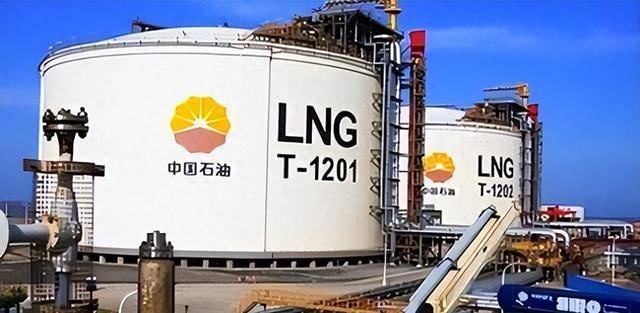
Together with the figures of Russia and the United States, China does not have an advantage. However, if we look at this table, there are statistical methods and different oil use ideas for the three countries.
A ruler to measure the family, three accounts to see
Oil reserves sound like a number, but they are divided into several categories when it comes to statistics. Proven reserves, technically recoverable reserves and resources are not the same thing. Some tables also include condensate oil and natural gas liquids.
The rulers are different, and the measured results can be tens of billions of barrels, so don't rush to arrange seats when you see large numbers.
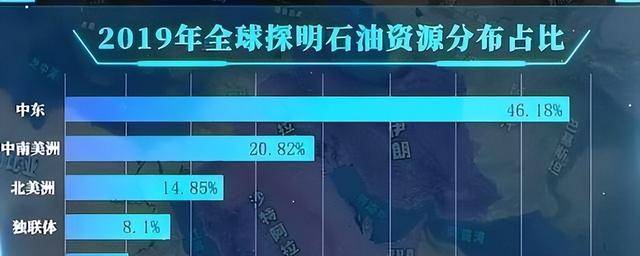
The claim of more than 70 billion barrels in the United States is usually calculated by combining crude oil, lease condensate and natural gas liquids. There are many light hydrocarbons associated with shale production areas in the United States, and the total amount will naturally go up.
If we only count crude oil, the proven reserves of the United States in the OPEC communique are 45.014 billion barrels, much less than 70 billion barrels, while Russia's 80 billion barrels are basically calculated according to the caliber of crude oil.
The U.S. Energy Information Administration's reserves report released in April 2026 also puts crude oil and lease condensate together, with the same deadline at the end of 2024.
China's official statistics use the term "remaining technically recoverable reserves". Xinhua News Agency broadcast the news on April 22, 2024. According to the 2023 China Natural Resources Bulletin and the 2023 National Oil and Gas Reserves Statistics Express, by the end of 2023, the country's remaining technically recoverable reserves of oil were 3.85 billion tons, an increase of 1.0 percent over the same period last year.
The conversion of 3.85 billion tons into barrels is about 28 billion barrels, which is almost the same as the 28.182 billion barrels given by OPEC. Domestic statistics and data from international agencies are consistent with each other, and this family account is clearly calculated.
The same report also mentioned that the newly added proven geological reserves of oil exploration in China have been stable at more than 1.2 billion tons for four consecutive years.
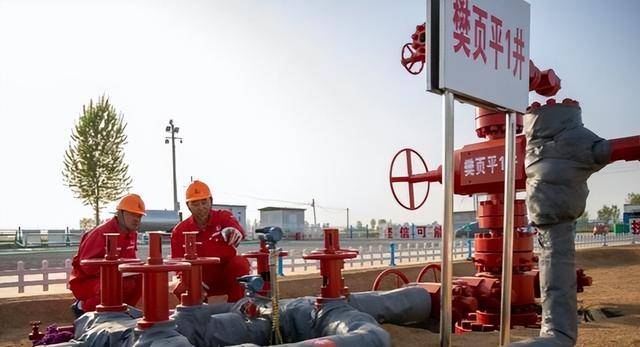
Russia guards old oil fields, U.S. bets on shale formations
Russia's oil foundation is indeed thick. On the OPEC list, it ranks behind Venezuela, Saudi Arabia, Iran, Iraq and other countries, and remains firmly in the top ten in the world.
Its main oil areas are in West Siberia and the Volga-Urals region. The West Siberian Basin has been developed on a large scale since the Soviet era and has been the backbone of Russian production for decades.
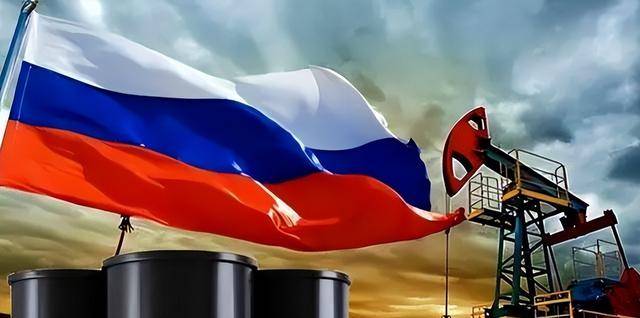
Most of these oil fields are conventional crude oil, the geological conditions are relatively clear, and the production cost is relatively controllable. There are still many places in the Arctic and Eastern Siberia with low exploration level, and the subsequent reserves may go up.
Russian Deputy Prime Minister Novak has publicly introduced that Russia's geologically recoverable oil reserves are about 31 billion tons, which can be maintained for about 62 years at the current rate of exploitation.

A lot of oil is one thing, and whether it can be sold is another. The West's restrictions on Russian energy exports have been round after round. The European market has tightened and tightened, and Russia has turned more crude oil to Asia.
Sino-Russian energy cooperation is getting closer and closer in this context. According to the statistics of the Chinese Customs, China imported about 0.108 billion tons of crude oil from Russia in 2024, and Russia has maintained its position as China's largest source of crude oil for many years.
The Sino-Russian crude oil pipeline plus maritime transportation, the two roads run together, and the energy trade between the two sides is stable and mutually beneficial. This is the fruit of the long-term friendly cooperation between the two countries.
The situation in the United States is very different. Its reserves can rise to more than 70 billion barrels, relying on shale oil.
More than 20 years ago, the United States was one of the world's largest crude oil importers. After the popularization of horizontal wells and fracturing technology, the Permian Basin on the border of Texas and New Mexico suddenly became lively.
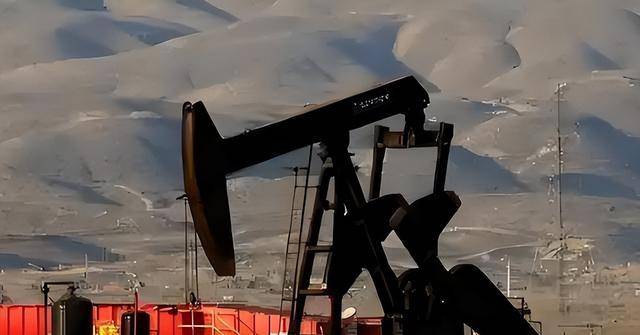
U.S. crude oil production set new records in 2023 and 2024, and remained above 13 million barrels for a long time, ranking first in the world.
Shale oil also has its own weaknesses. The output of a single well falls quickly, and it is necessary to keep drilling new wells to stabilize the output. Therefore, the US oil industry has always been very sensitive to oil prices and capital.
On March 31, 2022, the U.S. government announced the release of 0.18 billion barrels of crude oil from the strategic oil reserve, the largest release in U.S. history. The reserve then fell to a low level in decades before it was slowly replenished.
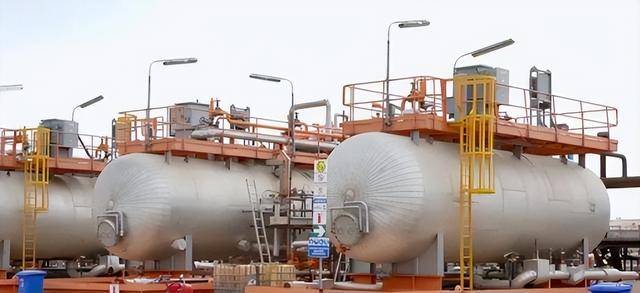
Since 2026, the international oil market has fluctuated several times due to the situation in the Middle East and changes in shipping, and every step of the U.S. adjustment in reserves and production has been closely watched by the market.
Domestic reserves to tap the potential, overseas diversified stable supply.
Back to China, 28.2 billion barrels are about 13th in the world, not at the top, but far from "no oil".
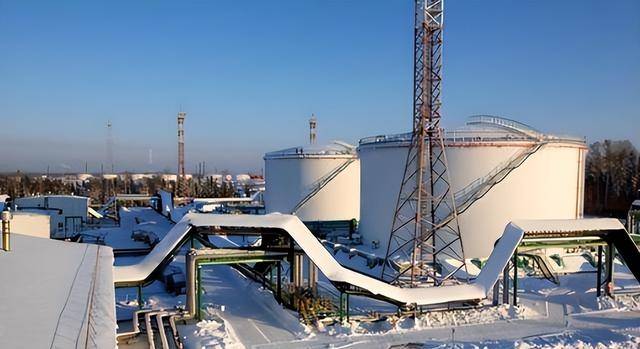
China's real pressure lies in its large consumption. As the world's largest manufacturing country, transportation, chemical industry and building materials industries are inseparable from crude oil every day.
According to data from the National Bureau of Statistics, China's crude oil output in 2024 is about 0.213 billion tons, and customs statistics show that the crude oil import volume in the same year is about 0.553 billion tons, and the degree of external dependence is about 70%.
In the face of such a situation, China is following the path of increasing domestic reserves and increasing production and overseas diversified imports, both of which are working hard.
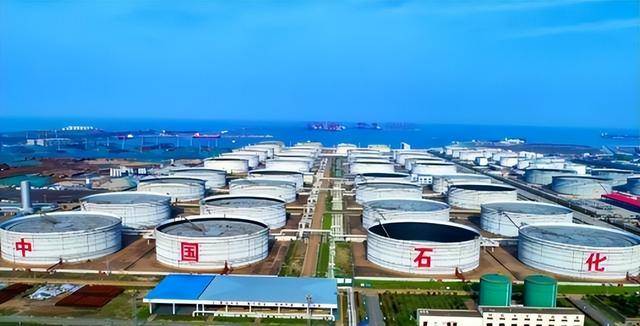
The good news of domestic exploration has continued in recent years. The Kaiping 11-4 Oilfield in the South China Sea has increased its proven reserves to a large scale, becoming the first deep-water self-operated large-scale oilfield in China. From discovery to discovery, the whole process depends on China's own team and technology.
Crude oil production rose to 0.2 billion tons in 2022, and then a little more year after year, and the decline of previous years has been steadily turned back.
Shale oil is another hard bone, Xinjiang Jimusar and Daqing Gulong is a national continental shale oil demonstration area, China's shale oil is mostly continental sediments, much more complex than the United States marine shale, deep reservoir, low permeability, foreign ready-made methods are often not acclimatized.
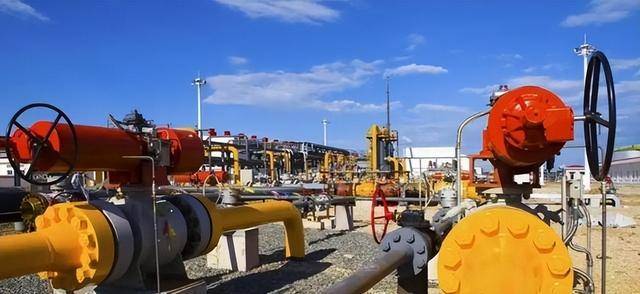
Domestic scientific research teams and oil field enterprises in drilling, fracturing, reservoir evaluation on a link to attack, slowly out of the suitable for continental shale oil development path, production from zero to a little bit up.
The underground potential is more than that. The U.S. Geological Survey mentioned in its assessment released on December 3, 2021 that the average amount of undiscovered conventional petroleum technology recoverable resources in nine geological regions in China is about 13.4 billion barrels. Not counting unconventional resources such as shale oil.
Overseas cooperation is also increasing. The three major oil companies, PetroChina, Sinopec, and CNOOC, have investment projects in Central Asia, the Middle East, Africa, and South America. Overseas equity oil has become a powerful supplement to domestic supply.

The sources of imports are also getting wider and wider. Russia, Saudi Arabia, Iraq, Malaysia, Brazil and other countries are all important suppliers. The Sino-Russian crude oil pipeline, the China-Kazakhstan crude oil pipeline, and the China-Myanmar oil and gas pipeline are several onshore channels. It is even more important when it is disturbed.
The national strategic oil reserve and the enterprise commercial reserve cooperate with each other, and when the international market suddenly fluctuates, there is a cushion in hand.
The oil consumption structure is also quietly changing. China's new energy vehicle production and sales have ranked first in the world for many years. More and more cars running on the road use electricity, and the dependence on gasoline and diesel in the transportation sector is gradually decreasing.
The amount of reserves is given by geological conditions. Whether it can be used well and whether the supply can be maintained depends on a country's overall planning ability. From 2020 to 2026, China has worked hard together to increase reserves, import, reserve and transform, and the foundation of oil supply is getting stronger and stronger.
Recommended News
Contact Us
- Phone: 0017194050155
- Fax: 0017194050155
- 邮箱:gelcc1@outlook.com
- Mobile phone: 0017194050155
- Address: Room 500, 1234 International Avenue, Washington, D.C. 20001, USA