
news
U.S. 127.5 percent tariff: Google imported 3200 pure trams from China with heavy taxes!

Upon seeing this news, my first reaction was to laugh. On the U.S. side, they keep clamoring to decouple from Chinese electric vehicles, piling on tariff after tariff until the rate has reached 127.5%.
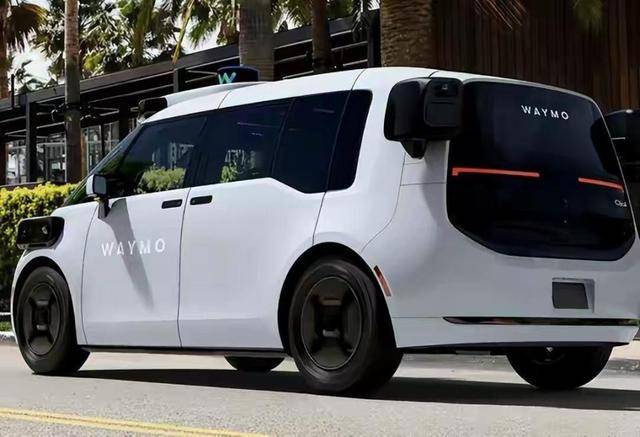
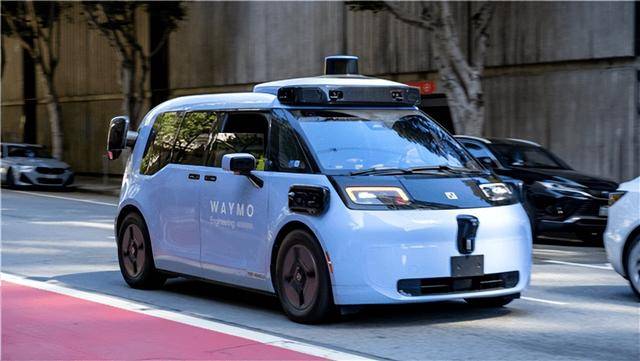
So what happened? Google’s own Waymo promptly hauled away over 3,200 all-electric vehicles from Ningbo. They say no with their mouth, but their body tells the truth.
Such a scenario would be hard to imagine in other industries, but when it comes to China’s electric-vehicle supply chain today, it somehow seems entirely natural. Control over the supply chain isn’t something you can demand—it’s earned when others, even with their wallets clenched tight and reluctantly, still have to buy.
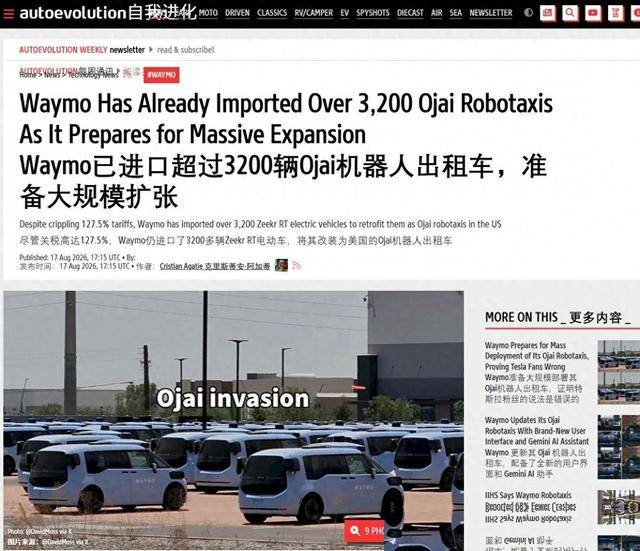
This American company is called Waymo, the self-driving division of Alphabet, Google’s parent company.
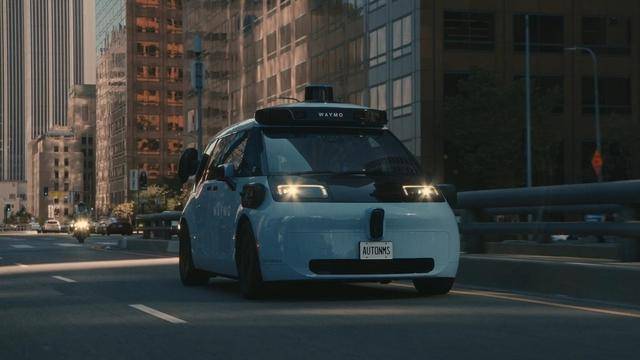
The vehicles it purchased are from Geely’s Zeekr brand, model code CM1e, and Waymo has given them the name Ojai. Customs records show that in 2026 alone, more than 2,600 such vehicles were unloaded at the Port of Los Angeles, bringing the cumulative total to over 3,200 when combined with shipments from 2024 and 2025.
Where were these vehicles shipped to? Mesa, Arizona—Waymo’s vehicle preparation facility.
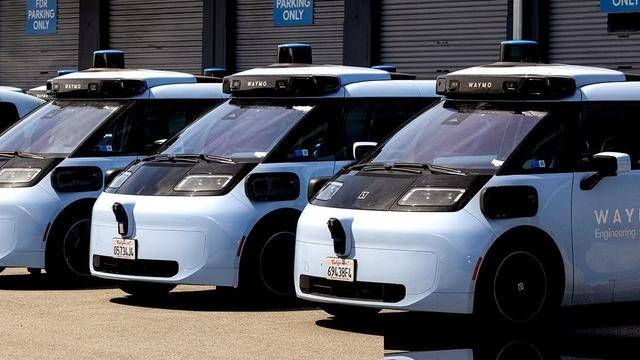
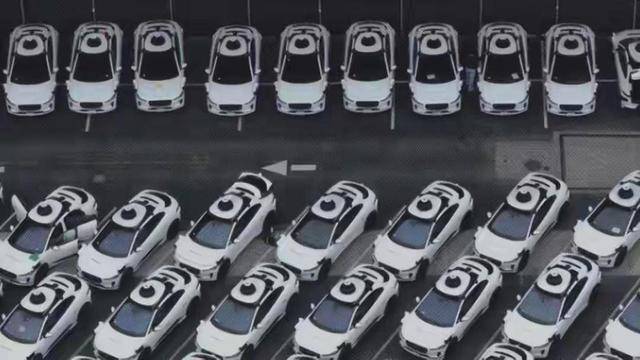
An American netizen once captured footage outside a parking lot showing over 500 Ojai vehicles lined up neatly, waiting for modifications—a truly spectacular sight. In mid-August, Forbes even published a lengthy article in which author Brad Templeton personally took several rides in the Ojai, hailing it as the cornerstone of Waymo’s next-generation fleet.
How can we overcome the hurdle of tariffs? We need to break it down and do the math in detail. On the customs declaration form, the bare-vehicle price for each car is approximately US$38,000.
With a 127.5% tax applied, the final cost jumps to around $86,500. Waymo then equipped it with its sixth-generation, in-house-developed autonomous driving hardware: four LiDARs, six millimeter-wave radars, 13 cameras, plus a computing platform—totaling about $25,000.
When all options are included, the total cost of an Ojai is around $115,000. Is $115,000 expensive? It depends on whom you’re comparing it to.
Waymo’s earlier-generation main vehicle was an electric SUV based on the British Jaguar I‑PACE, which alone cost $75,000. In the early days, its autonomous-driving hardware was both heavy and expensive, bringing the total cost per vehicle to over $200,000. In other words, after the exorbitant tariffs were imposed, the total price of the China-made Ojai is now nearly half as much.
What does this contrast reveal? It’s not that Chinese cars are ridiculously cheap; rather, the pricing of traditional European and American luxury cars is heavily inflated. Waymo’s partnership with Zeekr was actually signed quite early on.
Several years ago, the two parties had already finalized this custom project; at that time, tariffs weren’t nearly as high as they are now. During the final months of the Biden administration, tariffs on Chinese electric vehicles were raised in one go to 100%; after Trump returned to power in 2025, another round of tariffs was imposed, bringing the current rate to 127.5%.
The contract has already been signed, and the vehicles are already under production, so Waymo has no choice but to absorb the costs.
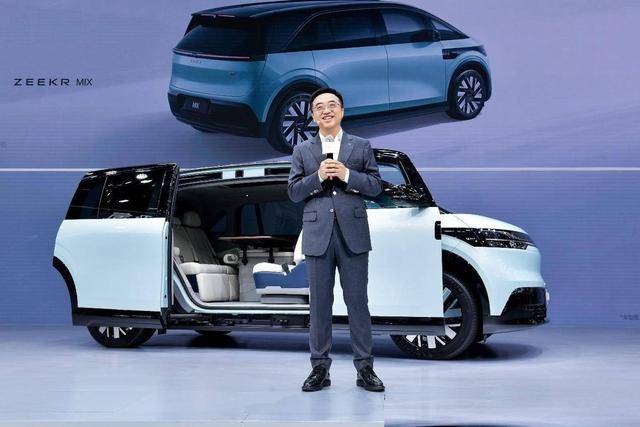
There’s also a particularly noteworthy contrast worth discussing here. Ojai’s corresponding mass-produced model in China is called the Zeekr MIX, which will be launched at the end of October 2024. At the time, Geely invested approximately RMB 7 billion in R&D and developed a dedicated SEA-M architecture for it.
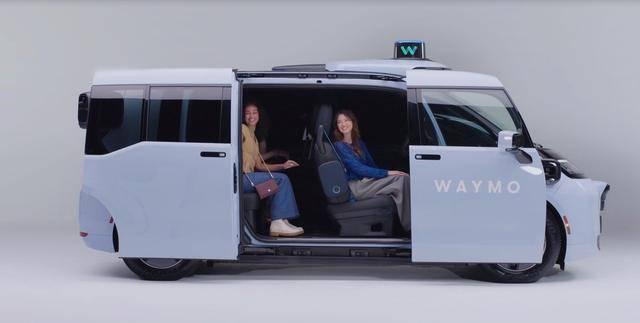
As a result, domestic sales were dismal. 373 units in the first month, followed by a steady decline.
According to data from China EV DataTracker, in June 2026, only four units of this vehicle were sold domestically, with cumulative sales hovering around two thousand units.
The reason, when you get down to it, isn’t complicated. The Zeekr MIX has a round, chubby design, and netizens have nicknamed it the “big baby bus.” No B- pillar, dual sliding doors that open in both directions, a five-seat layout, and a price hovering around 270,000 yuan.
What do Chinese families look for when buying a car? Prestige, plenty of space, and comfortable seating for the whole family—both young and old. This car is certainly avant-garde, but it doesn’t really align with household needs.
Private car owners glance at it and shake their heads before walking away. That’s where the wonder lies. The very features that Chinese consumers find unappealing about the Zeekr MIX are precisely what Waymo engineers regard as valuable.
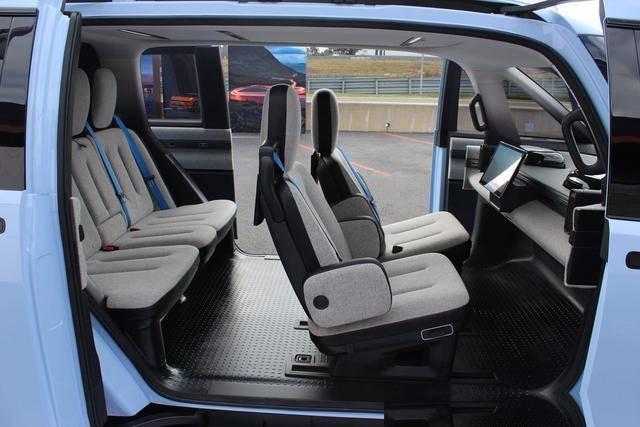
The absence of a B- pillar and the presence of sliding doors on both sides create an exceptionally spacious entry and exit area. Passengers with suitcases can step right in, and parents with children don’t have to bend or twist their bodies.

Low-floor design and an extra-long wheelbase—there’s plenty of legroom in the rear, even for crossing your legs. Steer-by-wire, brake-by-wire, and dual-redundant power supplies are the absolute minimum requirements for ensuring safety in autonomous driving.
The same vehicle model, deemed a niche product in the consumer market, has become highly sought after in the commercial‑use segment. This kind of situational dislocation is rare in business history.
It also tells us something important: China’s automotive supply chain is now highly flexible—on the same platform, it can produce both retail‑market models and customized commercial versions, all while keeping costs under control. Chinese factories can accommodate any type of vehicle you want to build—this is what truly gives their American counterparts headaches.
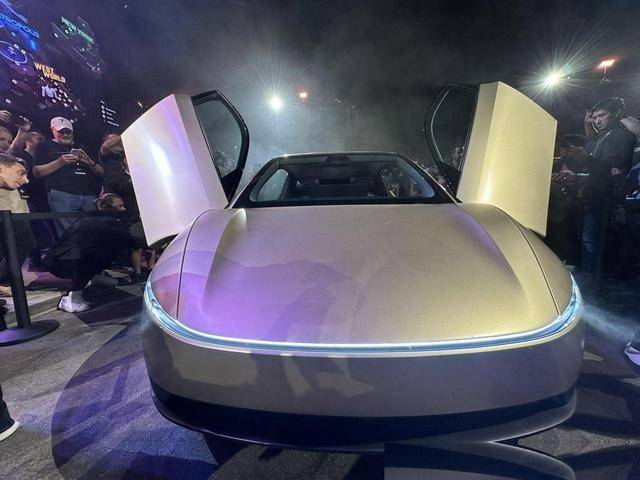
Let’s take a look at what Waymo’s competitors are up to. Tesla has unveiled the Cybercab, and Musk staged a high-profile launch event, firmly sticking to a pure-vision approach with no steering wheel and no pedals.
However, as of now, there are only just over a hundred test vehicles actually running on the road. General Motors’ Cruise, after several years of experimentation, has now exited the scene.
In contrast, Waymo’s commercial fleet in San Francisco, Phoenix, Los Angeles, and Austin combined has already exceeded 4,000 vehicles and is still on track to reach its Ojai target of several thousand. Why is Waymo so willing to spend so much money?
Two reasons. First, Alphabet has deep financial reserves, with enough cash flow to sustain its operations for another eight to ten years.
Second, industry experts have calculated that Waymo is still in the expansion and validation phase, with the cost per vehicle accounting for roughly one-third of its total operating expenses. Only once large-scale deployment is achieved in the 2030s will vehicle depreciation become the largest expense.
At this stage, spending a bit more to scale up the fleet and thoroughly validate the technology is actually the most cost-effective choice.
It’s more interesting to look at this from a distance. The origins of autonomous driving technology can be traced back to the early 2000s, with the challenges organized by the U.S. Defense Advanced Research Projects Agency (DARPA) in the Mojave Desert. Teams from Stanford University and Carnegie Mellon University built a prototype using modified vehicles.
In 2009, Google launched the Google Chauffeur project, which was the predecessor of Waymo. For the following decade and more, Silicon Valley has consistently maintained its dominant position in algorithms and perception software.
However, software and manufacturing are entirely different matters. Building software relies on dozens or even hundreds of brilliant engineers, but getting tens of thousands of vehicles onto the road with low costs and high reliability depends on the entire supply chain.
Factories, supply chains, batteries, chassis, and industrial workers—none of these can be lacking. Over the past two decades, this industrialized leg has quietly shifted from Detroit and Stuttgart to the Yangtze River Delta and the Pearl River Delta.Waymo’s decision this time effectively amounts to the U.S. industry acknowledging this fact.
The politicians, of course, are not happy.In February 2026, Senator Bernie Moreno specifically criticized Waymo’s partnership with Geely and Zeekr during a Senate hearing, calling for restrictions on the entry of Chinese-made autonomous driving hardware into the U.S. market. At the same time, Waymo’s procurement team was still waiting in line at the Port of Los Angeles for customs clearance.

Washington is making a lot of noise, while California’s ports are handling record volumes—this sense of contradiction is one of the most telling scenes in today’s China–U.S. economic and trade relationship.
Waymo isn’t putting all its eggs in one basket either.The company has indicated that its next move will be to develop a model based on the Hyundai Ioniq 5, providing the team with an additional strategic option. However, industry insiders are well aware that the Ioniq 5’s native platform was not designed for autonomous taxis, and both the retrofitting costs and operational efficiency still need to be revalidated.
What truly puts engineers’ minds at ease is this batch of CM1e vehicles that have rolled off the production line in Ningbo.
Our assessment of the future trajectory is as follows.In the short term, the U.S. government is highly likely to further escalate its measures and may even introduce more stringent component-level scrutiny targeting the robotaxi industry. In the medium term, mobility giants like Google and Uber will likely consider establishing maintenance and assembly hubs in Mexico or Southeast Asia—disassembling Chinese-made chassis for transport and reassembling them locally—as a way to circumvent tariffs through industrial relocation.
In the long term, Chinese companies such as WeRide, Pony.ai, and WenYuan Zhixing are also exporting their operational expertise to Southeast Asia, the Middle East, and Latin America.
This also offers insights for Chinese automakers.The Zeekr MIX isn’t selling well in China; it’s not the car’s fault—there’s a mismatch between supply and demand. If it changes its identity and its setting, it can become a star on the streets of Silicon Valley.
Chinese automakers need to think clearly about their next steps and shouldn’t obsess over creating one-size-fits-all models. Sometimes, a car that appears to be “specialized” in certain areas can actually achieve greater scale more easily within specific market segments.
This is a lesson learned by the Zeekr MIX, one bought at the cost of dismal domestic sales. From Taiwanese media to the automotive circles in Japan and South Korea, everyone has been keeping a close eye on this batch of vehicles lately.

The Nikkei News published an analysis in early August, saying that Waymo's purchase action put pressure on established car companies such as Toyota and Nissan. They spent decades to build up the vehicle cost advantage, by China's electric vehicle industry chain in one fell swoop.
Taiwanese semiconductor industry insiders are also discussing whether the future landscape of the autonomous driving chip industry will be reshuffled due to the rise of Chinese EV manufacturing platforms.
Back to those 3,200 vehicles. They withstand a 127.5% tax burden, cross the Pacific Ocean, and quietly park on the streets of Los Angeles and Phoenix, waiting for passengers. Every time the side door slides open, it’s like a free advertisement for “Made in China.”
Real money in the bills doesn’t lie, and industry trends don’t bend to politicians’ commands. This is probably the most practical lesson that the global automotive industry will leave us with this summer of 2026.
Recommended News
Contact Us
- Phone: 0017194050155
- Fax: 0017194050155
- 邮箱:gelcc1@outlook.com
- Mobile phone: 0017194050155
- Address: Room 500, 1234 International Avenue, Washington, D.C. 20001, USA