
news
Canada ushers in strong aid, 27 countries all vote green light! America’s prestige is fading, and it is burying itself with its own hands.
The trade war on the North American continent burned all the way from late August 2026 to mid-September. Originally, the White House's abacus was quite loud, thinking that Ottawa would have to bow before it could endure a few days to repair its economically highly bound neighbors in its backyard. The real turning point, however, was ushered in across the Atlantic. On September 9, the permanent representatives of the 27 EU countries all voted for Canada. This unexpected slap in the face of Washington has completely dragged the US-Canada conflict from the North American regional issue into the deep water area where the transatlantic order was reshaped.
Tariff hammer falls to the ground, 27 countries shine
As for the starting point of this storm, the time should be set back to August 22, 2026. On the same day, the U.S. Department of the Treasury and the Department of Commerce jointly invoked Article 338 of the Tariff Act of 1930 to impose an additional 50% import tariff on Canadian goods exported to the United States with a total value of about US $20 billion to US $28 billion. The length of the list surprised the outside world. Beer, wine, spirits, dairy products, cement, furniture, plastics, machinery, wood products and even ice hockey equipment almost cover about 5% of Canada's exports to the United States. At the same time, Canadian products were kicked out of the US federal government procurement catalog, which is a rare move in the past US-Canada economic and trade history.
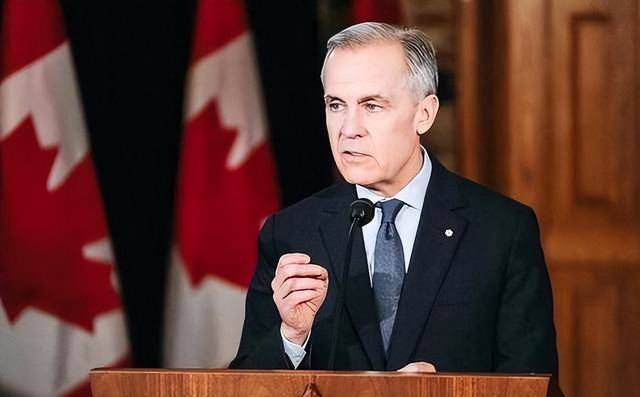
Ottawa did not choose to go soft as Trump envisioned. Canadian Prime Minister Mark Carney made a strong statement on the proposed new tariffs on July 23, pointing to the White House's violation of the Canada-United States-Mexico Agreement (CUSMA).
On the night of the tariff landing on August 22, Carney once again unveiled the "one dollar to one dollar" reciprocal countermeasure plan, and announced that it would take effect from September 8, 2026. The counter-list is quite methodical, involving about 27.6 billion Canadian dollars and about 700 kinds of American commodities. The tax rates are finely divided into three grades: 50%, 25% and 15%. Among them, steel, aluminum, dairy products and consumer electronics are listed in the highest grade, household appliances and metal derivatives are applicable at 25%, and machinery and equipment fall in the 15% grade. On September 8, Carney further delivered a televised speech to 40 million citizens across the country, giving the mobilization order to every table of workers, farmers, and business owners.
What really surprised Washington was the speed of reaction on the European side. Just hours after the U.S. imposed a ban on Canadian dairy products, alcohol and motorcycles outside U.S. customs, an important meeting in Brussels is moving forward.
On September 9, 2026, the permanent representatives of the 27 EU member states made a collective appearance in Brussels and agreed to build a deeper partnership with Canada. This progress was first disclosed by the European edition of Politika (Politico) on the same day. The European Commission and the European Council have jointly proposed a preparatory plan for the Euro-Canada Summit on October 29-30, 2026. The agenda includes science and technology, scientific research and innovation, mining of key rare metals, and the removal of trade barriers. A senior EU official, who declined to be named, used the phrase "a clear signal to upgrade the partnership.
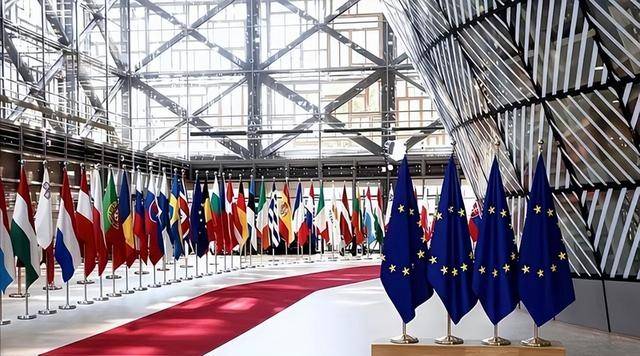
Further back, in fact, there is already foreshadowing. On March 6, 2026, the European Parliament passed a resolution with 482 votes in favor, 108 votes against, and 42 abstentions, calling for the EU-Canada strategic partnership to a higher level. Tobias Kramer, the drafter of the document and a German SPD MP, put it bluntly that in the face of an increasingly elusive Washington, Europe and Canada can only stay close together in the Arctic, Ukraine, climate governance, Greenland and other thorny agendas. Looking back at that vote six months later, it can almost be seen as a rehearsal for the endorsement of the September 9 vote.
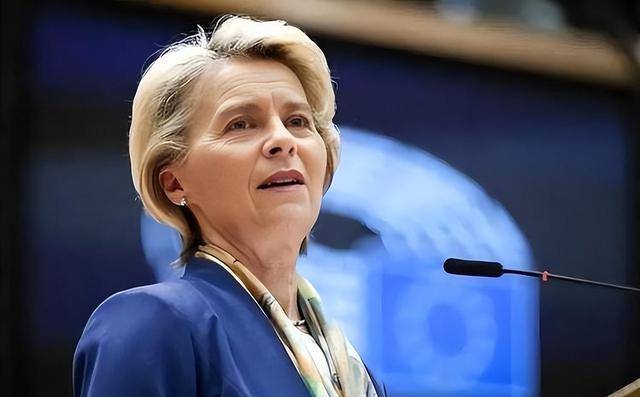
The agenda is also filling up quickly. Canadian Prime Minister Carney is scheduled to arrive in Strasbourg, France, from September 16 to 17, 2026 to attend the State of the Union address delivered by European Commission President Ursula von der Leyen and deliver a speech at the plenary session of the European Parliament. Canadian Trade Minister Maninde Sidhu was invited to Dublin, Ireland in late October to meet with EU trading partners, and US Trade Representative Jamison Greer was also on the list. The schedule is so tight that it leaves little room for any vague interpretation.
Cold lips and cold teeth in front, Europe in the back
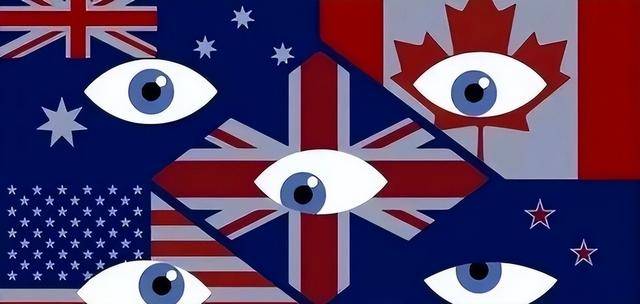
In the past, whenever there was friction within North America, Europe's usual posture was to stand idly by and watch the nose and nose. In the hierarchy of the transatlantic alliance, with Washington playing the role of one side of the order and Canada holding the title of a core member of the "Five Eyes Alliance", it is natural that Brussels does not have to stir up the White House for North American household chores. This time the wind has turned fast and fast, and even the member states that have always been labeled "pro-Trump" by the outside world have reversed their attitudes.
Open the details to see will be more meaningful. The governments of Hungary, Italy, and Slovakia have been quite restrained in their attitudes towards the Trump administration in the past two years, and have even clearly moved closer to the White House on many issues. However, in the meeting of the Standing Congress on September 9, they did not vote against Or abstained, but raised their hands in favor without hesitation. This consistency is a scene almost unseen in the EU's handling of US-related issues in the past few years, and the weight of the signal goes far beyond the single resolution itself.
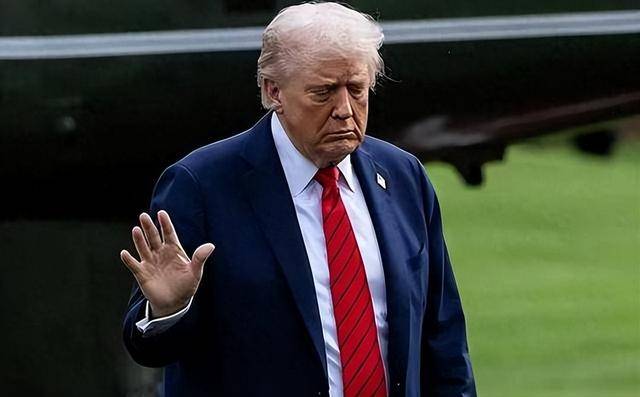
The reason why Europe dares to take the risk to declare its position is, in the final analysis, four words. Both sides of the Atlantic know what Canada is. It is not only a land neighbor of the United States, but also one of the most important partners in the Anglo-US-Canada-Australia-New Zealand Intelligence Alliance. It is also an important pillar of the integration of the North American industrial chain for decades. Just because of the differences between the trade deficit and the CUSMA terms, the White House turned against it and said it would turn over. 50% of the heavy hammers left no room for maneuver, and state-level orders such as government procurement were cut across the line. Since even allies of this level have to suffer this stick, why does Europe, across a whole ocean, feel that it will enjoy special treatment.
Looking through the experience books of Europe over the years, almost every page is written with a record of being beaten. The repeated pressure of steel and aluminum tariffs, the hanging sword of automobile tariffs, the open questioning of NATO's common defense clause, and the absurd claim of the sovereignty of Denmark's Greenland, everything is ringing the same alarm bell, tying the lifeline of national security and economy to a partner that changes when it changes. The risk is too high. This support for Ottawa is not only a moral choice for Brussels, but also a real red line for the White House. Any extreme pressure on Canada is regarded as a propaganda to the whole of Europe.
It is worth noting that Europe this time is not empty talk, but a real combination of punches. The three fronts of trade, investment and supply chain are simultaneously transfusing blood to Canada, giving Ottawa the strength to spend with Washington in the tariff war. At the same time, Brussels has shelved the approval process for some trade arrangements with the United States, and internal discussions on the use of the Anti-Coercion Instrument (ACI) have also been put on the table. Once the guy in this toolbox is revealed, some U.S. export goods, services and even intellectual property gains may be included in the counter-list. The intensity is so great that it is difficult to find a benchmark in the past script of transatlantic relations.
Extreme pressure to counter-bite, hegemony dusk has come
Pull the camera back a few months, and Europe's mentality towards Washington has actually undergone an intriguing evolution. From the consternation at the beginning of the year to the anger of spring, and then to the calmness at the end of summer, the whole process finally precipitated into today's pragmatism, and the whole process took nearly a year. This change in mindset is written in every public statement made at the top of Europe.
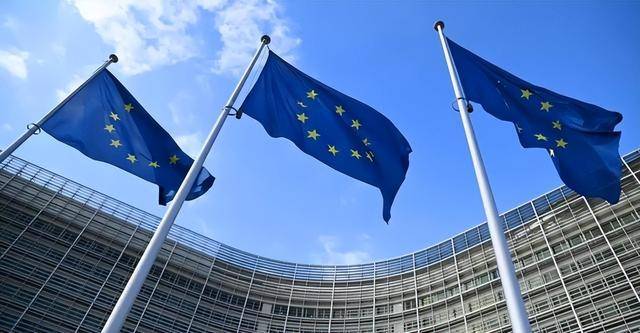
German Chancellor Friedrich Merz has said on several occasions that if Europe wants to be taken seriously again by the world, it must learn to speak the language of power. Von der Leyen has also made it clear in many public occasions that Europe must become more independent, and there is no other way. This kind of straightforward expression, if put aside ten years ago, basically would not have jumped out of the mouths of mainstream European political elites, but now it has become the consensus of Brussels.
Kramer even gave an almost cold judgment in that parliamentary debate in March. In a world shaped by a war-addicted Russia, a rising China and an increasingly volatile U.S. ally, Europe and Canada can only rely on each other.
Of course, from a realistic point of view, Europe cannot be completely cut off from Washington overnight. In the field of security, especially on the issue of nuclear umbrella, Brussels is still unable to get rid of its dependence on the United States in the short term. The inertia of the transatlantic alliance will drag on for quite some time, and the European strategic community makes no secret of this. But the property of a rift is that, once it's formed, it's hard to heal seamlessly. From the 27 countries as Canada's platform, to the continued promotion of the strategic autonomy agenda within the European Union, from the strategic awakening of the political elite, to the quiet decline of public opinion on the perception of the United States, all signs point in the same direction.

At the beginning of 2026, Carney put forward an ambitious idea, bringing the 27 EU countries, Canada, Japan, the United Kingdom, Australia, Mexico, New Zealand, Vietnam, Singapore, Malaysia and other countries under the CPTPP framework to a table to discuss the cumulative arrangement of "rules of origin", so that North America and the two major free trade circles of India and the Pacific can connect through low tariff channels. At that time, this idea still had a taste of idealism, but just half a year later, the reality was really pushed closer by him. The Europe-Canada interaction in September, the Dublin meeting in October and the Europe-Canada summit at the end of October together look like a rapidly forming "de-beautification" channel.
Trump originally thought that as long as the volume of extreme pressure was turned to the maximum, allies would kneel down one by one to admit their mistakes. But the script is stuck. Instead of bowing their heads, the allies began to huddle together in search of alternatives outside the United States, looking for that alternate channel that could bypass the White House. The "America First" that is talked about every day has finally given priority to an unprecedented isolated situation, pushing the strongest partners around one by one to the opposite. This is probably the most ironic ending way of this US-Canada trade war.
The international stage has never lacked the role of the helm, but when those allies who should not be shaken began to move quietly, a certain order of dusk was inevitable.
From the 50% tariff drop on August 22, to the Canadian reciprocal countermeasures on September 8, to the unanimous display of the 27 EU countries on September 9, in just over half a month, both sides of the Atlantic A tacit attitude adjustment was completed. The Oga summit at the end of October will give this new partnership a more specific outline, and the longer-term direction is no longer up to the White House alone.
Recommended News
Contact Us
- Phone: 0017194050155
- Fax: 0017194050155
- 邮箱:gelcc1@outlook.com
- Mobile phone: 0017194050155
- Address: Room 500, 1234 International Avenue, Washington, D.C. 20001, USA