
news
African developers: Using American AI is like being a guest; using Chinese models is like owning a home
American tech companies have long been seen as global leaders in artificial intelligence (AI). But in Africa, an unusual change is taking place: more and more local developers are choosing Chinese AI models over products launched by American companies.
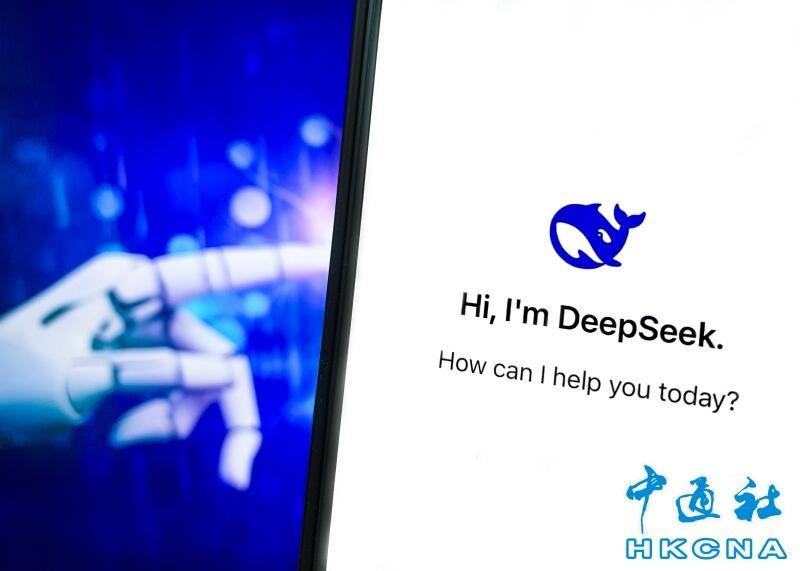
Photograph: Archives of Hong Kong China News Service
From Uganda to Kenya to Nigeria and Ghana, African technology developers are adopting China's open source AI model on a large scale, Observer.com reported on August 5, citing the New York Times. Its low cost, downloadability and modifiability enable Chinese AI technology to spread quickly in resource-limited developing countries, raising concerns in the US tech community about its global reach.
The experience of Ernest Mwebaze, a Ugandan developer, is one example.
Last year, while developing a AI system for multilingual environments in Uganda, he tested models from American companies such as Meta and Google, as well as a AI model from Chinese Internet company Alibaba.
In the end, he chose the latter.
Mwebaze said that Alibaba's AI model performs better in dozens of Ugandan languages, at a lower cost, and allows developers to customize with their own data.
The resulting AI tool "Sunflower" is now in use in Uganda, where local farmers can get weather information and farming advice in the local dialect.
The New York Times reported that in the past year, more and more African developers have turned to Chinese AI models. In Kenya, entrepreneurs are using the Chinese model to optimize legal and business services; in Nigeria, a team has developed educational tools for high school students; and in Ghana, developers are developing native chatbots.
A key reason for this trend is the open-ended development of the Chinese AI model.
The report notes that mainstream models such as OpenAI and Anthropic are mostly closed models, with users paying and not being able to freely modify the underlying model. Many AI models in China are "open source", allowing developers to download and adjust for free, and create new applications according to their needs.
The report cites data showing that Chinese open-source models account for nearly half of all AI usage in the OpenRouter of AI model platforms, up from less than 25 percent a year ago. On Face, another AI database Hugging, 19 of the 25 most downloaded open source models are from China.
For African developers, cost is a key factor.
Kenyan entrepreneur Moses Kemibaro says the combined calculation cost of the Chinese model may be 90% lower than that of the US model.
Developers describe using the Chinese AI model as "owning a home for one person", while using the American model is more like "renting a house" because Chinese products allow developers to continue to develop products based on technology.
Kenyan entrepreneur Sentai Simons developed a legal document retrieval system using the Chinese AI model and customized it by inputting about one million legal documents. The final product capacity is about 140GB, and the development and maintenance costs are about 25,000 US dollars, while the cost of using the Anthropic Claude service can exceed 1 million US dollars.
Chinese companies are also expanding their AI presence in Africa.
The report pointed out that in the past two decades, Chinese companies have participated in the construction of extensive communication infrastructure in Africa, laying the foundation for the further promotion of artificial intelligence technology. In Kenya, the data center built by Huawei has taken on some of the government's computing tasks. Chinese companies also attract local developers with free computing resources and engineering support.
The New York Times believes that Chinese AI companies are seeking a breakthrough under the US chip restrictions. Because it is difficult to compete with Silicon Valley in advanced chips and computing scale, Chinese companies choose the open AI model, hoping to expand the user ecosystem to enhance influence.
The rapid development of Chinese AI models in recent years has also reinforced this trend.
The report pointed out that by the end of 2024, the DeepSeek model will approach the top AI model with relatively low-cost performance; in July this year, the Chinese artificial intelligence company "Dark side of the moon" released a new model close to the leading level of the United States.
The report also pointed out that in Kenya and other places, the United States still has a large number of users of artificial intelligence products, and services such as ChatGPT and Claude are still widely used. Some companies also take advantage of the Chinese open source model, but deploying it to US cloud computing platforms such as Amazon and Microsoft can still benefit US tech giants.
Kenyan official John Tanui said that African countries do not want to simply choose the United States or China, but hope to benefit from the technology of both sides.
Recommended News
Contact Us
- Phone: 0017194050155
- Fax: 0017194050155
- 邮箱:gelcc1@outlook.com
- Mobile phone: 0017194050155
- Address: Room 500, 1234 International Avenue, Washington, D.C. 20001, USA