
news
With 87 billion dollars joining forces to support the market, why did the United States suddenly step in to "save the yen"?
At the end of July this year, the yen exchange rate against the US dollar was close to about 164 yen to the US dollar, reaching the lowest level since 1986. Previously, Japan unilaterally intervened in the foreign exchange market between April and May this year, with funds exceeding 11 trillion yen (about 73.6 billion US dollars), but this impact only lasted for more than a month.
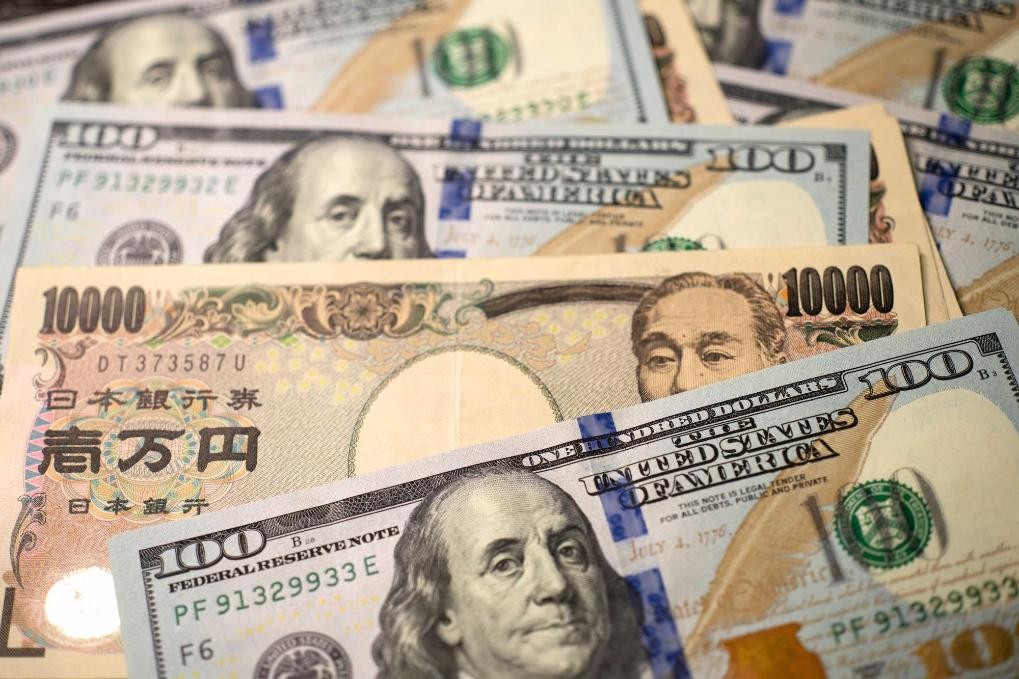
This is a photo of Japanese yen and US dollar bills taken on April 20, 2022 in Tokyo, Japan. Although the Bank of Japan raised interest rates to 1 percent in June, the highest level in 31 years, it failed to provide lasting support for a weaker yen.
The one-on-one operation has failed and Japan has no choice but to seek foreign aid. This time, the United States agreed.
It was reported that the yen rose sharply from about 162 on July 30, triggering speculation that the Japanese government may enter the market again.
The next day, the yen surged again, along with news that the United States was also involved.
According to the Bank of Japan money market data, Japan spent about $53 billion and $34 billion on its foreign exchange intervention on July 30 and 31, for a total of $87 billion (about 11 trillion yen) to buy yen. This is the first time since the Asian financial crisis in 1998 that the United States and Japan have jointly purchased the yen to curb its depreciation.
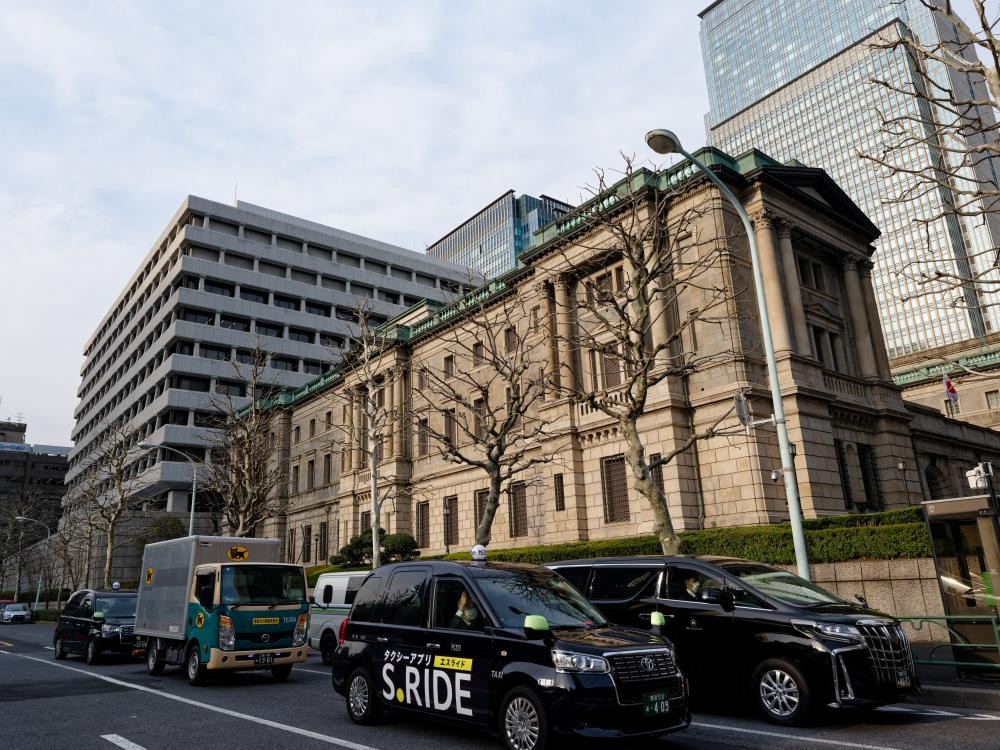
The Bank of Japan headquarters in Tokyo, Japan.
According to an earlier report by the Hong Kong News Network, Trump confirmed the operation to reporters on Air Force One on August 2: "They need some help, and we will always lend a helping hand to Japan." He added: "Japan has always been good to us-except, of course, Pearl Harbor."
The following day, the U.S. and Japanese Treasury Department simultaneously officially confirmed the joint intervention.
Trump called the move a "symbol of friendship," but the market apparently did not believe such a simple explanation. What really prompted the United States to take action was another set of data.
As of the end of May this year, Japan held $1.14 trillion billion in U.S. Treasury bonds, the largest of any country. If Japan sells U.S. debt on a large scale in order to raise funds for intervention, the consequence will be a fall in U.S. bond prices and a rise in yields. At that time, the 10-year U.S. bond yield was at its highest level since January 2025, and the 30-year was at its highest level since 2007.
Any additional selling pressure could directly push up the cost of funding for the U.S. government.
After the intervention, Beisant publicly called on the Federal Reserve to expand the size of the "Foreign and International Monetary Authority Repurchase Facility" (FIMA Repo Facility).
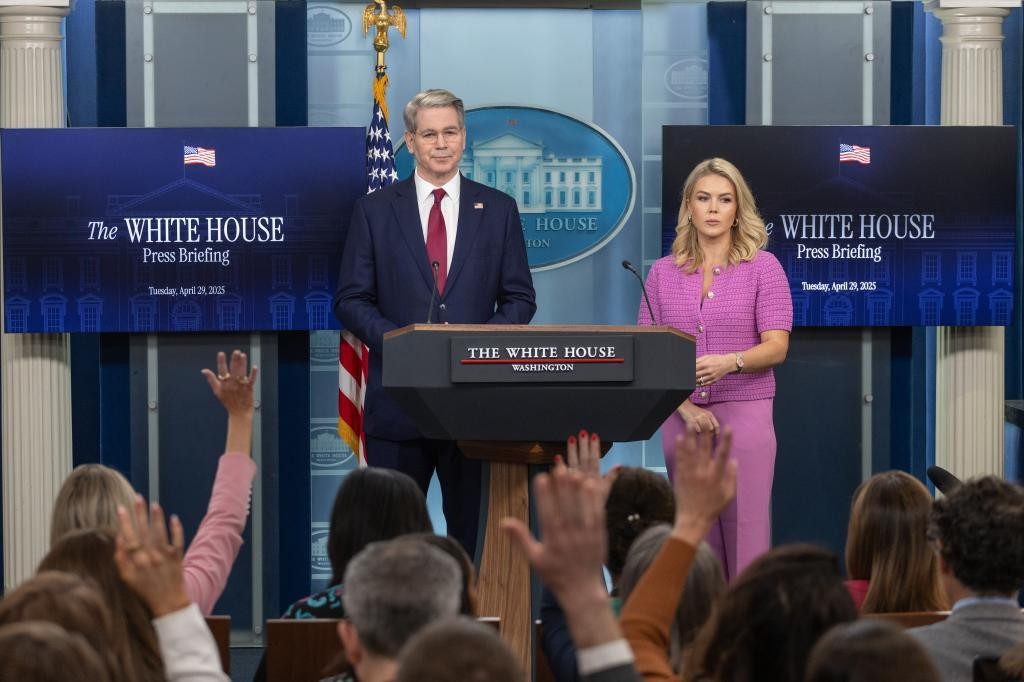
On April 29, 2025, White House Press Secretary Caroline Levitt (right) and US Treasury Secretary Scott Besente attended a press conference at the White House in Washington.
This mechanism allows foreign central banks to borrow dollars from the Fed against their holdings of U.S. debt without selling them outright. Japan's Ministry of Finance later said that after the FIMA mechanism was activated, it was "not at all worried" about the dollar funds needed for future interventions.
A deeper level of concern comes from the carry trade.
According to observers, for a long time, a large number of international institutions have borrowed low-interest yen and invested in higher-yielding US assets. Once the yen fluctuates violently, whether it is a sharp rise or a sharp fall, it may force investors to close their positions on a large scale, sell U.S. stocks and U.S. debt, and turn an exchange rate crisis into a "liquidity stampede" in the U.S. capital market ".
In August 2024, the Japanese central bank unexpectedly raised interest rates after the rapid rise in the yen, the Nikkei index plunged more than 12% in a single day, U.S. stocks fell in tandem.
The modus operandi of the United States in this intervention is also intriguing. The United States does not sell dollars directly to buy yen, but by "selling euros and buying yen.
The short-term effect of the intervention was immediate. The yen rebounded from near 164 to a 155 range, hitting a near three-month high.
A woman holding a parasol walks on a street in Osaka, Japan, on July 10, 2025. Xinhua News Agency Data Map
according to reports, japanese finance minister kitayama said that "further coordination and intervention will continue without hesitation in the future";
Bezente also stated that "if necessary, we will not hesitate to participate in further joint interventions in the future".
However, the market is generally skeptical. Japan's $more than 70 billion drop in April lasted just over a month.
As long as the Japan-US interest rate differential remains huge, Japan's fiscal expansion expectations remain unchanged, and the situation in the Middle East pushes up the cost of energy imports, the structural weakness of the yen will be difficult to fundamentally reverse.
Ma Wei, an assistant researcher at the Institute of American Studies of the Chinese Academy of Social Sciences, pointed out that the short-term impact is more significant, but the long-term impact is questionable. Former Bank of Japan official Takeuchi also said that intervention alone would not provide a lasting and significant boost to the yen.
Recommended News
Contact Us
- Phone: 0017194050155
- Fax: 0017194050155
- 邮箱:gelcc1@outlook.com
- Mobile phone: 0017194050155
- Address: Room 500, 1234 International Avenue, Washington, D.C. 20001, USA