
news
U.S. Threats to Cut Off Trade with Spain Experts Analyze Limited Actual Impact
(reporter li yanzhou)On July 8, local time, during the NATO summit in Ankara, the capital of Turkey, US President Trump accused Spain of being a "bad partner" of NATO and said he would "cut off all trade with Spain". Analysts believe that compared with other European economies, Spain has a relatively stronger ability to withstand pressure on Trump's economy, so the actual impact of related threats may be more limited.
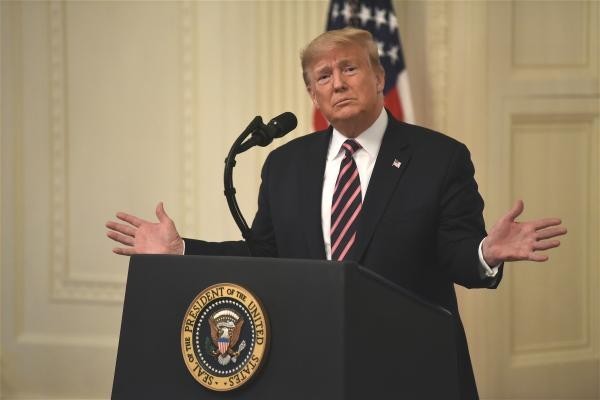
President Trump of the United States. Hong Kong China News Agency Information Map
During his meeting with German Chancellor Mertz at the White House that day, when talking about the response of NATO countries to the US missile strike against Iran, Trump said: "Spain's performance is very bad. "He also said that he had instructed Finance Minister Besente to" cut off all dealings with Spain ".
Ding Chun, director of the Center for European Studies at Fudan University in Shanghai, was interviewed and analyzed by the Hong Kong China News Agency. Spain has become Trump's "number one target" this time, mainly because two things "stepped on the red line": First, military expenditures are "not up to standard". Trump asked NATO allies to raise defense spending to 5 percent of GDP, but Spain explicitly refused, agreeing only to 2.1 percent as previously agreed. The second is military "non-cooperation". In the recent U. S. military campaign against Iran, Spain has denied the United States the use of its military bases.
Ding Chun believes that Spain's adherence to principles is not deliberately against the United States, but a principled difference on military expenditure and sovereignty. Accepting 5% of military spending means that the Spanish government is facing tremendous financial pressure, affecting people's livelihood and people's trust in the government; and opening military bases will be involved in conflicts with Iran and harm national interests.
In the face of Trump's tough stance, the Spanish Prime Minister's Office issued a statement pointing out that Spain has a long-term trade deficit with the United States, and the economic ties between the two countries are mainly established by private enterprises, not led by the government. In addition, as part of the EU's customs union and unified trading system, no EU member state can be treated separately by the United States.
Spain is the world's largest exporter of olive oil and also exports auto parts, steel and chemicals to the United States.
However, Spain is relatively less dependent on the US market. According to the data, in 2025, Spain's exports to the United States accounted for only 4.9 per cent of its total merchandise exports, with a scale of about 18 billion million euros, significantly lower than Italy's share of exports to the United States (10.7 per cent) and Germany's share of exports to the United States (9.9 per cent). At the same time, U.S. exports to Spain are worth about 23 billion million euros, or about 1.2 percent of total U.S. exports.
"Spain's 'calm' response has its cards: first, it plays the economic card: it points out that the United States has a trade surplus with Spain, and if it really wants to cut off trade, the United States will lose even more. The second is the EU card: it emphasizes that it is a member of the EU, and trade issues cannot be targeted alone, with the backing of the entire EU. "Ding Chun said.
Miguel Otero, a senior researcher at the Royal Institute of El Cano in Spain, told the media that the threat made by the US president against Spain is "unlikely to become a reality".
Recommended News
Contact Us
- Phone: 0017194050155
- Fax: 0017194050155
- 邮箱:gelcc1@outlook.com
- Mobile phone: 0017194050155
- Address: Room 500, 1234 International Avenue, Washington, D.C. 20001, USA