news
CCG deeply participated in the 11th Delphi Forum in Greece to build a bridge between China and foreign countries

On April 22, 2026, the four-day 11th Annual Meeting of the Delphi Economic Forum was held in the Greek city of Delphi. With the theme of "The Shock of the New" (The Shock of the New), this forum focuses on the new reality brought about by rapid technological progress, the continued spread of the climate crisis and the evolution of the geopolitical landscape, focusing on the development of relations between Europe, the United States and the Middle East. change. With more than 200 meetings, 25 closed-door meetings and 6 round-table discussions, the forum is the largest world-class event in Europe except Davos.

As a Chinese partner of the Delphi Economic Forum, the Globalization Think Tank (CCG) co-sponsored a special CCG seminar on the theme of "Promoting Global Governance Reform and Responding to the Challenges of the 21st Century. At the same time, Wang Huiyao, founder and chairman of the Globalization Think Tank (CCG), and Miao Green, co-founder and secretary-general of CCG, participated in a number of seminars, including "Trade-offs in the Trade War: A Year and a Half Assessment of Trump's Tariff Policy" and "Reshaping Europe in a Fragmented Global Economy.

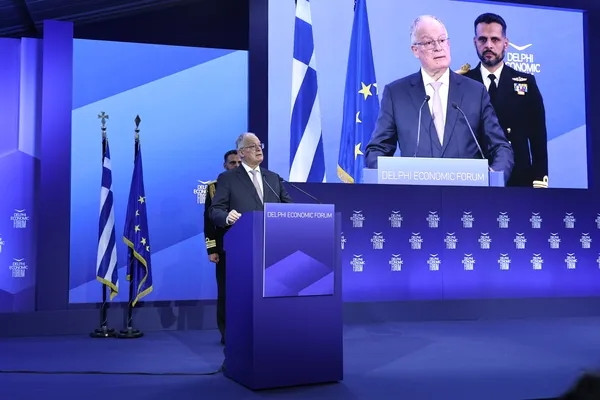
More than 1200 speakers from governments, international organizations, academia and business will analyze the deep forces of change reshaping the world landscape, high-level participants included President of the European Council Antonio Costa (Antonio Costa), President of the European Council Antonio Costa (Antonio Costa), Secretary-General of the Organization for Economic Cooperation and Development (OECD) Mattias Coleman (Mathias Cormann), President Constantinos Zolas (Konstantinos Tasoulas), Prime Minister of Greece Kiriakos Mittakis (Kyriakos Mitsotakis), President of the Republic of Estonia Alar Karis, Prime Minister of Albania Ezorama former President of Turkey Abdullah Gül, former Prime Minister of the Russian Federation Mikhail Kasyanov, former Prime Minister of Italy Paolo Gentiloni, first President of the Council of Europe, former Prime Minister of Belgium Herman Van Rompuy, former President of the Council of Europe Charles Michel, former Deputy Prime Minister of Austria Wilhelm Molterer, former Prime Minister of Austria Sebastian Kurz, former Prime Minister of Israel Prince Albert II of Monaco wait.
Wang Huiyao was invited to participate in the "Trade-off of Trade War: A Year and a Half Assessment of Trump's Tariff Policy" theme seminar.
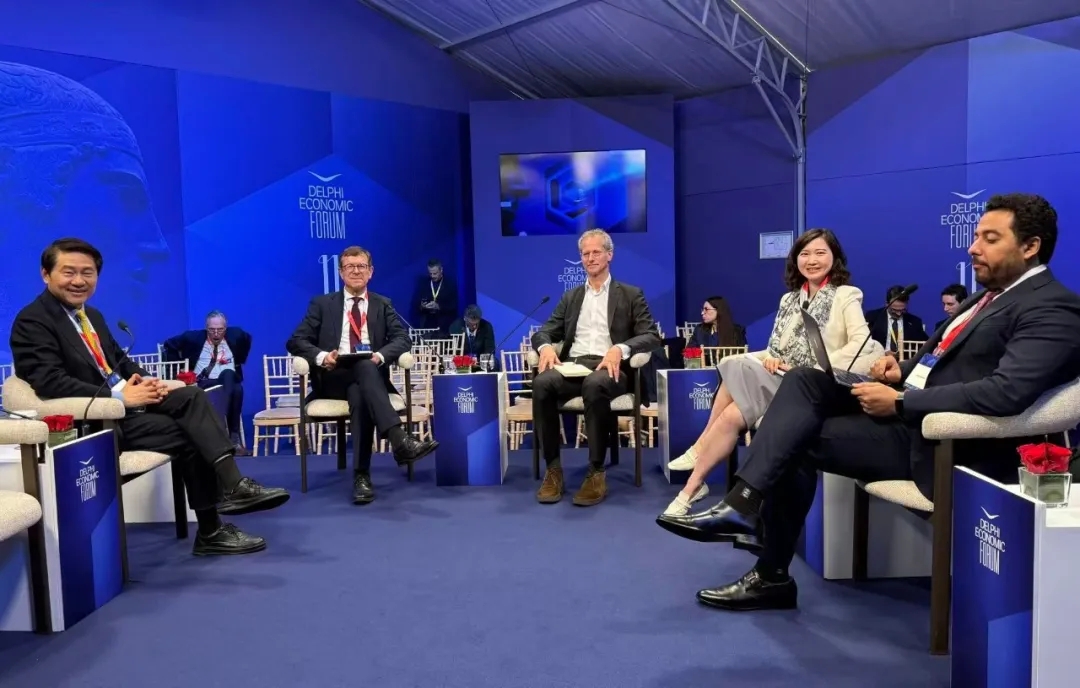


Wang Huiyao, founder and director of the Globalization Think Tank (CCG), held a seminar on the theme of "Trade Trade-off: A Year and a Half Assessment of Trump's Tariff Policy, with the former British Minister of Commerce and Trade Gregory Hands (Greg Hands), the Swedish National Trade Council Director-General Anders Ahnlid (Anders Ahnlid), the London School of Economics and Political Science professor Iain Begg (Iain Begg), the United States Paul E Dans law firm head Paul Dans (Paul Dans) to participate in the discussion, the event was hosted by Simon Nixon, a columnist for the Greek daily Kathimerini. The guests had in-depth exchanges on topics such as global trade trends, trade surplus and balance, trade policies and frictions, trade negotiations and bilateral mechanism construction, multilateral trading system and global governance, and focused on WTO reform and the role of regional mechanisms such as CPTPP in the reconstruction of global economic and trade rules.

CCG Chairman Wang Huiyao said in his speech that the U.S. economic and trade policies represented by tariffs in the past year have not been as effective as expected and have also caused disruptions to the global economy. The economies of China and the United States are highly interdependent and difficult to separate. Dialogue and cooperation should replace confrontation and "decoupling". The current interaction, including the exchange of high-level visits, has released a positive signal that the two sides can enhance the stability and predictability of the relationship by establishing a bilateral trade and investment mechanism and setting up "guardrails" and "bottom lines.

In terms of trade rules, he pointed out that in the past 80 years, under the framework of multilateral mechanisms such as the Bretton Woods system and the World Trade Organization, the global economy and trade have achieved leapfrog development. A return to unilateralism or simple bilateral arrangements would lead to a regression of the system. At present, we should focus on rebuilding trust and strengthening system construction. While promoting WTO reform, we can also explore alternative paths such as "WTO minus one" to maintain the operation of the global trade rule system.
In terms of international cooperation, he believes that trade wars and tariff conflicts are only phased "detours" in the process of globalization. In the long run, countries will realize that interdependence is irreversible, and confrontation will only bring common losses. The global division of labor remains solid, such as Apple Inc. Manufacturing in China and achieving high value-added benefits in the United States reflect the complementary relationship between manufacturing and services. All countries should promote the formation of a more balanced global economic structure, realize complementary advantages, and build an open, inclusive and cooperative international economic system.
In promoting China's accession to the CPTPP, he pointed out that the mechanism can play an important complementary role as a "mini WTO. China has applied to join and is willing to promote docking in accordance with high-standard rules. If more middle powers, including China, can participate together, it will help maintain and upgrade the multilateral trading system and promote the development of globalization to a higher level.
In terms of building mutual trust, he emphasized that the key to the current global economic and trade conflicts lies in insufficient trust and ideological differences. The thinking of "risk removal is decoupling" should be abandoned, and differences should be resolved through dialogue and institutional cooperation. Countries should treat Chinese investment with a more open attitude. As Chinese companies are more willing to "go global", it will help alleviate trade imbalances in a good international environment. Ultimately, by enhancing mutual trust and cooperation, we can promote the development of global trade, benefit all parties including the "Global South", and achieve mutual benefit and win-win results.
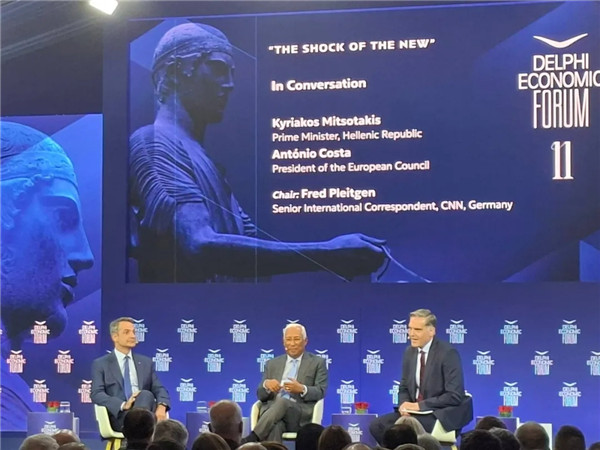
Wang Huiyao and Miao Green Invited to Attend the 11th Delphi Forum in Greece
Miao Green was invited to attend the theme dinner of the Delphi Forum in Greece to discuss with the big guests where Europe is going.

On the evening of April 23, 2026, Miao Lu, co-founder and secretary general of CCG, was invited to attend a seminar dinner with the theme of "reshaping Europe in a fragmented global economy, in-depth discussions and exchanges were held with former Italian Prime Minister and former head of economic affairs of the European Commission (Paolo Gentiloni), Drozdiak William, invited senior researcher of the Atlantic Council (Atlantic Council), Marco Buti, professor of the European University College in Italy, and Nadal Belda, Alberto, secretary of economic affairs of the Spanish people's Party, on hot topics such as global economy, multilateral governance and China-EU cooperation. The seminar was moderated by Paul Taylor, Senior Visiting Fellow at the European Policy Centre (EPC) and columnist for The Guardian.

In response to the host's questions on the risk of global economic fragmentation and the dilemma of China-EU cooperation, Miao Green pointed out that China-EU cooperation stems from the mutual needs of both sides and has the distinct characteristics of two-way mutual benefit. At present, the two sides are each other's second largest trading partners. China-EU trade has contributed 3.95 per cent to the economic growth of the euro zone, and the value of cooperation is very significant. She emphasized that the EU is the most important pole in a multipolar world. Europe's maintenance of strategic autonomy is not only conducive to the steady development of China-EU relations, but also helps China to better play its role in a multipolar world.

In response to disputes such as overcapacity that European society is concerned about, Miao Green said that the essence of trade is based on the exchange of comparative advantages, and China-EU cooperation has always been mutually beneficial and symbiotic. She proposed that the two sides should continue to maintain the continuity of economic and trade cooperation. China will further expand domestic demand and increase localized investment in Europe. In the future, the two sides can restart communication related to the China-EU Comprehensive Investment Agreement and jointly build new energy vehicles. Brand, jointly develop third-party markets, and steadily advance the negotiation of free trade agreements, and rationally resolve capacity disputes through diversified cooperation.
Miao Green believes that in the context of multi-polar development, multilateralism is an inevitable choice for global development, and China and the EU share common demands on many international issues. In the future, the two sides can deepen cooperation in emerging industries and other fields, jointly enhance the competitiveness of European industries, and ultimately achieve two-way win-win and common development.
CCG held a special forum on global governance at the Delphi Forum in Greece.
On April 23, 2026, the Globalization Think Tank (CCG) and the Delphi Economic Forum successfully held a special CCG seminar on the topic of "Promoting Global Governance Reform and Responding to the Challenges of the 21st Century.

Wang Huiyao, Founder and Chairman of CCG, Miao Green, Co-Founder and Secretary General of CCG and Founder of International Young Leaders Dialogue (GYLD), David Lubin, Senior Researcher of Global Economy and Finance Project of Chatham House, and Ahmed Aboudouh, Director of China Studies of UAE Policy Center and Associate Researcher of Chatham House, attended the seminar, we will conduct in-depth exchanges around the current difficulties and future directions of global governance, and jointly discuss how multilateral mechanisms can respond to global challenges such as climate crisis, WTO innovation, technological competition, and development imbalances, and put forward targeted recommendations. The seminar was moderated by Christoph Mashal von Biberstein, chief diplomatic correspondent of the German Daily Mirror (Christoph Marschall von Bieberstein).

During the seminar, Wang Huiyao expressed cautious optimism about the development of global governance in the light of the practice of global trade governance. He and David Rubin's views are different, highlighting the key role played by the World Trade Organization (WTO) in the past-even if the United States tries to paralyze its appellate body, nearly 80% of global trade still operates according to WTO rules, and this system is an important support for global economic prosperity and lifting billions of people out of poverty. He took China as an example to illustrate that as a beneficiary of the WTO, China has contributed nearly a 1/3 of the world's GDP growth in the past two decades, which is a vivid manifestation of the effectiveness of global governance.

In response to the many challenges facing the current WTO, Wang Huiyao proposed that on the basis of the efficient operation of the Regional Comprehensive Economic Partnership Agreement (RCEP), the Comprehensive and Progressive Trans-Pacific Partnership Agreement (CPTPP) can be built into a "mini WTO". ", to undertake functions that the WTO cannot complete, and at the same time provide a platform for China and other emerging economies to benchmark international rules. He pointed out that at present, the world is in a transitional period from a unipolar pattern to a multipolar pattern, and emerging multilateral mechanisms such as the expansion of the BRICS and the Shanghai Cooperation Organization should play a greater role in global governance. China, the European Union, Japan, Australia and other medium-sized powers need to work together to fill the power vacuum in global governance. In addition, Wang Huiyao stressed that the World Health Organization (WHO) is also an excellent example of global governance. China has always supported its work. Even if the United States withdraws from relevant cooperation, China will still donate US $0.5 billion to help WHO play its role. At the same time, China recently initiated the establishment of the World Data Organization and the establishment of the International Mediation Institute in Hong Kong, which are continuing to enrich the supply of global public goods and highlighting the responsibility of great powers.

In his speech, Miao Green reviewed the development of global governance and pointed out three key conditions for the efficient operation of global governance: deep cooperation among global powers, the existence of common global challenges and threats, and clear and unified action objectives and division of responsibilities among all parties. She cited the performance of the Group of Twenty (G20) during the global financial crisis as an example to illustrate that the coordination of major powers is the core of the role of global governance, and the rise of indigenous nationalism will seriously hinder the effectiveness of governance. She believes that one of the core contradictions facing global governance is that the governance mechanism lags behind the reality of development, and the reform of the United Nations is imminent, but at the same time, we must adhere to the core hub position of the United Nations, otherwise the world will accelerate towards division.
Talking about the key direction of global governance in the future, Miao Green said that WTO reform is of vital importance, and the recent achievements of the 14th WTO Ministerial Conference on subsidies, e-commerce, investment facilitation and other issues in developing countries have injected strong impetus into its continued operation. She stressed that countries and emerging economies in the global south are rising rapidly, but their voice and voting rights in the International Monetary Fund (IMF), the world bank and other institutions are still seriously insufficient. Therefore, it is an important task of global governance to reform these institutions and amplify the voice of developing countries. She pointed out that the BRICS expansion mechanism is a high-quality model for future global governance, focusing on infrastructure financing and livelihood assistance in developing countries, which is different from the four-party security dialogue, the five-eye alliance and other mechanisms that bind military confrontation, and can provide more voice channels for developing countries.

Miao Green further pointed out that the future of global governance should abandon ideological opposition, relying on the "voluntary alliance" model, focusing on specific issues to build a special cooperation mechanism. She said that if all issues are tied to national security and defense competition, the global order will continue to be fragmented, and international cooperation will not be carried out; and human history has always been able to solve development problems in exploration, and the rise of emerging economies will eventually Promote the development of the global governance system in a fairer and more efficient direction.
CCG held a special forum on global governance at the Delphi Forum in Greece.

The Delphi Economic Forum seeks to attract leaders from across the political, economic, business and academic sectors to work together to address emerging challenges, influence national and regional agendas, and promote policies for sustainable and socially responsible growth in Europe, the wider Eastern Mediterranean and Greece. The forum was sponsored by the then president of Greece, Katerina Sacraloplou. The annual meeting of the Delphi Economic Forum is the organization's flagship event, held annually in the ancient Greek city of Delphi. It brings together top leaders from all fields with the aim of sparking dialogue, inspiring change and turning conversation into action.

The 11th Delphi Economic Forum brought together government and former government executives, company executives, think tank personnel and media reporters from many countries around the world, and guests from all walks of life gathered to discuss economic and development issues. Konstantinos Tasoulas, President of the Hellenic Republic, Alar Karis, President of the Republic of Estonia, Edi Rama, Prime Minister of Albania, Paolo Gentiloni, Prince Albert II of Monaco, Abdullah Gül, former President of the Republic of Turkey, Mikhail Kasyanov, former Deputy Prime Minister of the Russian Federation, Wilhelm Molterer, Sebastian Kurz, former Prime Minister of Austria, Ehud Olmert, Secretary-General of the Organization for Economic Cooperation and Development of Mathias cormann), European Council President Antonio Costa (Antonio Costa), European Commission Executive Vice President and Competition Commissioner Teresa Ribera, European Commission Economic and Productivity Commissioner Valdis Dombrovskis, European Commissioner for Mediterranean Affairs Dubravka Suica, European Commissioner for Enlargement Marta Kos, European Commission Fisheries and Oceans Commissioner Costas Kadis, European Commissioner for Transport Apostolos Tzitzikostas, Eurogroup President Kyriakos Pierrakakis, Greek Prime Minister Kyriakos Mitsotakis, Greek Deputy Prime Minister Kostis Hatzidaki, Greek Foreign Minister Georgios Gerapetritis, Greek Foreign Minister Georges Gerapetritis, Greek Environment and Energy Minister Stavros Papastavrou, Greek Finance Minister Kyriakos Pierrakakis, Greek Infrastructure and Transport Minister Christos Dimas, Greek Rural Development and Food Minister Margaritis Schinas, Greek Social Cohesion Minister Domna Michailidou, Greek Justice Minister Giorgos Floridis, Greek State Council President Michail Pikramenos, Greek Supreme Court President Ioanna Klapa, Greek Prime Minister National Security Secretary Thanos Dokos nikos Hardalias, Minister of Attica Region of Greece, Fanis Spanos, Minister of Central Greece Region of Greece, Panagiotis Tagalis, Mayor of Delphi City of Greece, Nemanja Starovic, Minister of European Integration of Serbia, Ferit Hoxha, Minister of European and Foreign Affairs of Albania, Zoran Dimitrovski, Deputy Minister of Foreign Affairs of North Macedonia, Ivan Ivanišević, Deputy Minister of Foreign Affairs of the Republic of Moldova, First Deputy Prime Minister and Minister of Kosovo, Glauk Konjufca, National Security of Armenia secrieru of the Advisory Stanislav, Alberto Nadal Belda, Secretary of Economic Affairs of the Spanish People's Party, Dragan Vuković, Ambassador of Bosnia and Herzegovina to Greece, Steve Bannon, former Chief Strategic Adviser of the White House, Stournaras Yannis, Governor of the Central Bank of Greece, Laura Kövesi (Laura Kövesi), Chief Prosecutor of Europe, Tsomokos Symeon, Founder and Chairman of the Delphi Economic Forum, Herman Foundation, former Chairman of Belgium herman Van Rompuy, former president of the Council of Europe, Charles Michel, Stavros Andreadis, president of the board of directors of the Greek Theofano Foundation, Panagiotis Roilos, president of the European Cultural Center in Delphi, Greece, Loukas Tsoukalis, professor of the Paris Institute of Political Science and president of the Greek Foundation for Europe and Foreign Policy, Maa gorzata Bonikowska, president of the Polish Center for International Relations, Mark Speich, secretary general of the German Adenner Foundation (Royal Institute for International) Bronwen Maddox, CEO and Director, David Lubin, Senior Fellow, Global Economics and Finance Program, Chatham House (Chatham House), UK Alvin Graylin, Senior Research Fellow of the Asia Society Policy Research Institute, James M. Lindsay, Distinguished Senior Research Fellow of Mary and David Boyce of the American Council on Foreign Relations (CFR), William Drozdiak, Special Invited Senior Research Fellow of the Atlantic Council (Atlantic Council), Li Cheng, Founding Director of the Center for China and World Governance Research (CGCW) of the University of Hong Kong, Ian Lesser, Distinguished Research Fellow and Presidential Advisor of the German Marshall Foundation of the Austrian Institute of Arts, Misha Glenny ian Lesser, Distinguished Fellow and Presidential Advisor to the German Marshall Foundation, Alexander Gabuev, Director of the Carnegie Russian Eurasian Center, Germany, Kristi Raik, Director of the Estonian Center for International Defense and Security, Anastasia Popova, Vice President of the Khodorkovsky Foundation, Sylvie Matelly, Director of the Jacques Delors Institute, France, Zsolt Darvas, Senior Fellow, Brussels Institute, Senior Fellow, Senior Visitor, European Policy Center, Paul J. Senior Vice President James M. Lindsay, Head of China Studies, UAE Policy Centre, Associate Research Fellow, Chatham House Ahmed Aboudouh, Associate Director, Rongding Consulting Camille Boullenois, Director, Education, Health, Social Security Europe and Central Asia, World Bank Rutkowski Michal Jones, Head of European Foreign Affairs and Development Policy, European Development Policy Management Centre, Belgium Alexei Jones, Professor of International Political Economy, Institute of European Universities, Florence, Italy, Global Executive Master's Academic director Georgios Papaconstantinou, Eulalia Rubio Barceló, Senior Research Fellow of the Jacques Delors Institute in France, Schaal, Director of Global Relations and Cooperation of the Organization for Economic Cooperation and Development and Richard of the "Serpa" Andreas, Varuni Dayaratna, Senior Vice President of International Programs of the National Public Opinion Research Center of the University of Chicago, Eric Alter, Dean of the Anwar Gargash Diplomatic College, Krishna Kumar, Executive Vice President of the National Public Opinion Research Center of the University of the University of the University of Chicago, Marco Buti such as heavy guests to participate in the seminar.

As a Chinese partner of the Delphi Economic Forum, CCG has been invited to attend many conferences and actively participated in many heavyweight seminars. In April 2025, Wang Huiyao, the founder and chairman of the Globalization Think Tank (CCG), and Miao Green, the co-founder and secretary-general of CCG, were invited to attend the 10th Greek Delphi Forum, and participated in the seminars with the themes of "China's Century: Fact or Myth" and "Cold War 2.0? Sino-US Struggle for hegemony. In April 2024, Wang Huiyao, founder and chairman of the Globalization Think Tank (CCG), attended the 9th Greek Delphi Forum and participated in the theme seminar "The Reshaping of World Order Will Have to Wait: The Pursuit of Peace.
Recommended News
- government approval 2026-04-17
Contact Us
- Phone: 0017194050155
- Fax: 0017194050155
- 邮箱:gelcc1@outlook.com
- Mobile phone: 0017194050155
- Address: Room 500, 1234 International Avenue, Washington, D.C. 20001, USA