
news
Middle East crisis escalates, nearly 700000 people displaced in Lebanon
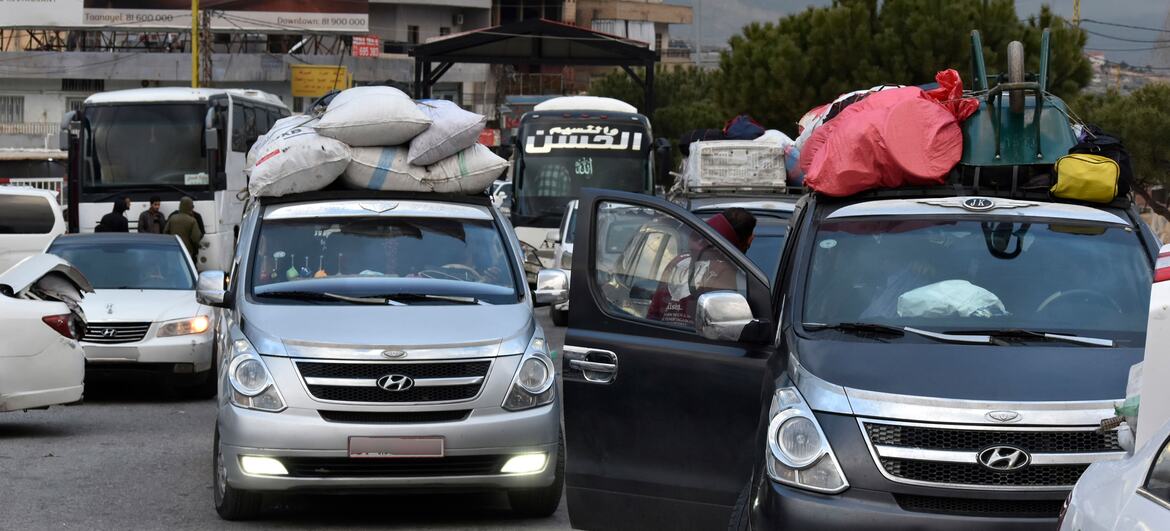
As the war sweeping across the Middle East enters its 10th day, UN agencies said on Monday that the entire region is experiencing large-scale population displacement, while food and fuel prices are rapidly soaring, which could exacerbate hunger and hardship faced by the most vulnerable groups.
The United Nations Children's Fund pointed out thatIn Lebanon alone, nearly 700000 people have been forced to leave their homes, including about 200000 children. In previous rounds of escalation, tens of thousands of people have been displaced.
This latest development occurred after the recent escalation of the situation - Israel and the United States launched attacks on Iran, and the Iranian military subsequently launched counterattacks in multiple areas of Israel; At the same time, multiple Gulf countries were hit by Iranian missiles and drones, and after Hezbollah joined the war, Israel also launched attacks on Hezbollah targets in Lebanon.
suffer heavy causalities
In the latest report,United Nations Office for the Coordination of Humanitarian AffairsAccording to reports, in the first eight days after the start of the war, 294 people have died and over 1000 have been injured in Lebanon.
The Office for the Coordination of Humanitarian Affairs quoted Lebanese authorities as saying that on Saturday, March 7th, the Israeli army caused 41 deaths and dozens of injuries in an operation in the eastern Lebanese town of Nabicht.
The organization also pointed out that in addition to strengthening airstrikes in multiple provinces of Lebanon, Israel has issued its third evacuation order since the outbreak of the war, covering all areas south of the Litani River; At the same time, this is also the second evacuation order issued for the southern suburbs of Beirut.
Civilian casualties continue to rise
The Israeli health department reported over the weekend that approximately 2000 people have been injured in Israel since the outbreak of the conflict on February 28th; On Monday, a missile landed in central Israel, causing one death.
Iranian authorities have stated that the war has resulted in the deaths of at least 1330 Iranian civilians against the backdrop of ongoing attacks by Israel and the United States.
Meanwhile, Bahrain authorities announced on Monday that an Iranian drone attack in the early hours of the same day resulted in over 30 injuries; Qatari officials condemned the killing of two civilians in Saudi Arabia.
The ever-increasing humanitarian needs
The international community is deeply concerned about the impact of ongoing war on civilians. UN humanitarian affairs chief Fletcher warns that countries such as Afghanistan and Pakistan may face broader secondary impacts - areas where there is already enormous demand.
He pointed out that at the same time, the international community's attention to existing crises such as Sudan, South Sudan, and Ukraine is "further pushed to the back", and all parties continue to ignore international law and international institutions established to prevent conflicts, including the United Nations.
The Strait of Hormuz Crisis
On Monday, due to the rise in crude oil prices, fuel prices at gas stations rapidly increased, indicating the deep economic uncertainty caused by the war. UN agencies also pointed out that the shipping, energy, and fertilizer markets are being impacted by "severe global supply chain disruptions".
The attacks on shipping have almost brought trade in the Strait of Hormuz to a standstill. This narrow waterway carries nearly one-fifth of the world's oil transportation volume and also transports a large amount of commercial goods.
On Friday, a ship was attacked in the Strait of Hormuz, resulting in the death of at least 4 sailors and serious injuries to 3 others.
At the same time, drone attacks on Omani ports have raised new concerns and increased the cost of chartering ships to transport to the area.
according toInternational Maritime OrganizationAccording to the data, approximately 20000 sailors are still stranded in the Persian Gulf.
World Food ProgrammeThis conflict has had a direct impact on food security in the Middle East. A significant proportion of global fertilizer supply needs to be transported through the Strait of Hormuz. If this channel is interrupted, it may lead to reduced supply and crop yields, thereby pushing up global food prices.
Concerns about food security
The World Food Programme emphasized that before the outbreak of the war, the level of food insecurity in Lebanon was already high, and the situation in Iran was similar. Local households had limited ability to cope with further shocks.
The World Food Programme pointed out that in Gaza, food prices have risen significantly due to Israel's closure of key aid crossings. Despite the reopening of the Kerem Shalom/Kareem Abu Salim ports, food prices remain high.
The agency warns that if access continues to be obstructed, the World Food Programme may be forced to reduce food rations for approximately 1.3 million people to only 25% of their daily needs. Without reliable humanitarian access, the fragile gains made after the ceasefire may be reversed.
In the face of prolonged transport time and chain delays in the delivery of humanitarian supplies, WFP and its partners are increasingly using suppliers and transport routes via Türkiye, Egypt, Jordan and Pakistan, as well as land transport routes between the United Arab Emirates and the eastern Mediterranean coastal areas.
The World Food Programme also pointed out that despite disruptions to flights and shipping, its humanitarian hub in Dubai is still operational.
Recommended News
- government approval 2026-04-17
Contact Us
- Phone: 0017194050155
- Fax: 0017194050155
- 邮箱:gelcc1@outlook.com
- Mobile phone: 0017194050155
- Address: Room 500, 1234 International Avenue, Washington, D.C. 20001, USA