
news
U.S. Danger to Sign Arctic Security Agreement
U.S. President Trump, Danish Prime Minister Fraser Rickson and Greenland Home Rule Prime Minister Nelson will jointly sign an agreement to strengthen security in the Arctic and North Atlantic regions at 10:30 a.m. local time at the United Nations headquarters in New York on the 22nd. According to comprehensive foreign media reports, the signing marks Trump's tough claims around the world's largest island for nearly two years since he returned to the White House in 2025, temporarily ending in a tripartite document. Although the document has not yet been made public, the statements of the three parties are obviously different.
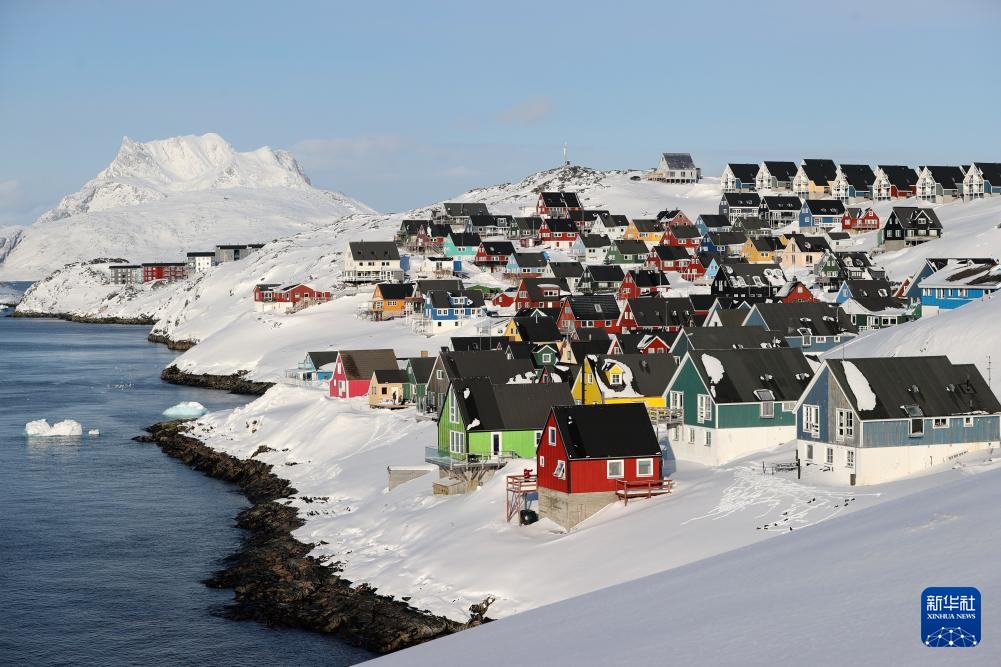
The picture shows the view of Nuuk, the capital of Greenland, a Danish autonomous territory.
agreement of each speaking his own words
In announcing the agreement on a social platform on the 18th, Trump said that the United States had obtained "permanent control over Greenland's security and other needs" and that in the future, without the written approval of the United States, U.S. opponents would not be allowed to establish bases, deploy military forces or make sensitive investments on the island; Secretary of State Rubio said that Greenland would permanently belong to the North American strategic defense area in the future.
The Danish side is clearly conservative. Fraser Rickson stressed that the agreement recognizes the sovereignty and territorial integrity of the Kingdom of Denmark, as well as the right of the people of Greenland to self-determination; Greenland Prime Minister Nielsen said that the arrangement takes into account the interests of the three parties.
The New York Times quoted a U.S. military official as saying that under the agreement, the U.S. military is "cooperating" with Denmark and Greenland, rather than having control; the report also said that Trump "exaggerated" the newly acquired power of the United States. Danish and Greenland officials have expressed strong opposition to the U.S. request during months of closed-door negotiations.
Reuters quoted three people familiar with the matter as saying that the text of the agreement has not yet been made public and the details will not be finalized until the signing. The US plans to reopen a military base in southern Greenland and establish a military presence at a base currently used by Denmark on the east coast of the island. In other words, the outside world is still "reading the air", and the real terms have yet to be announced.
Why Greenland?
From a military point of view, Greenland is located at the intersection of the Arctic and the North Atlantic, above the so-called Greenland-Iceland-UK gap (GIUK gap). During the Cold War, this channel was a key line of defense for NATO to contain the Soviet Navy and protect the North Atlantic waterway. After the end of the Cold War, it was once marginalized, but with the return of great power competition and the increase of military activities in the Arctic, the GIUK gap has once again become an important node in the strategic planning of NATO and Russia.
The Pitofik space base in the northwest of the island is a core asset. It originated from the 1951 US-Denmark "Greenland Defense Agreement". It is stationed in the 12th Space Early Warning Squadron and has a runway of about 3 kilometers. It is a key node of the North American Air Defense Command's early warning and the US "Golden Dome" missile defense system. At the height of the Cold War, the United States operated as many as 50 military bases and radar stations there.
In addition to military factors, resource competition is another important motivation for the United States to covet Greenland. Several assessments show that Greenland has proven reserves of about 1.5 million tons of rare earth oxides, ranking eighth in the world, and has rare earth deposits in the forefront of the world, such as Kwanefeld and Tambriz, as well as key minerals such as lithium, graphite, copper and nickel. As the ice melts, the Arctic waterway can save 9 to 15 days of voyage compared to traditional routes, and the commercial and strategic value rises in tandem.
The rift in NATO
What is really worth paying attention to is the alliance contradiction reflected in this agreement. Trump proposed to "buy the island" in his first term, which was denounced as "absurd" by Fraser Rickson. After returning to the White House in 2025, he once claimed that he would not rule out "military or economic coercion" to seize control, triggering a strong backlash from Denmark and European allies. The Danish government has set up so-called "night guards" to monitor Trump's remarks, and the military has even been reported to have made plans to respond.
The attitude of Greenlandic society has always been clear. In the March 2025 parliamentary elections, the Democratic Party, which advocated "slowly advancing independence", became the largest party with about 29.9 percent of the vote. The then party leader Nielsen stated that "we don't want to be independent tomorrow, we want to lay a good foundation"; Polls show that about 85% of residents oppose the integration into the United States. The Danish Foreign Minister also stressed at the time that Greenland would remain part of the Kingdom of Denmark.
Recommended News
Contact Us
- Phone: 0017194050155
- Fax: 0017194050155
- 邮箱:gelcc1@outlook.com
- Mobile phone: 0017194050155
- Address: Room 500, 1234 International Avenue, Washington, D.C. 20001, USA