
news
Japanese firms make big bets on India, cold water attack by British press
-- The BBC reported on the 1st that under the continuing geopolitical tensions, Japanese companies are betting heavily on India to deal with the "China risk" and accelerate their entry into this South Asian country. However, the report also pointed out that India's business environment is still a headache.
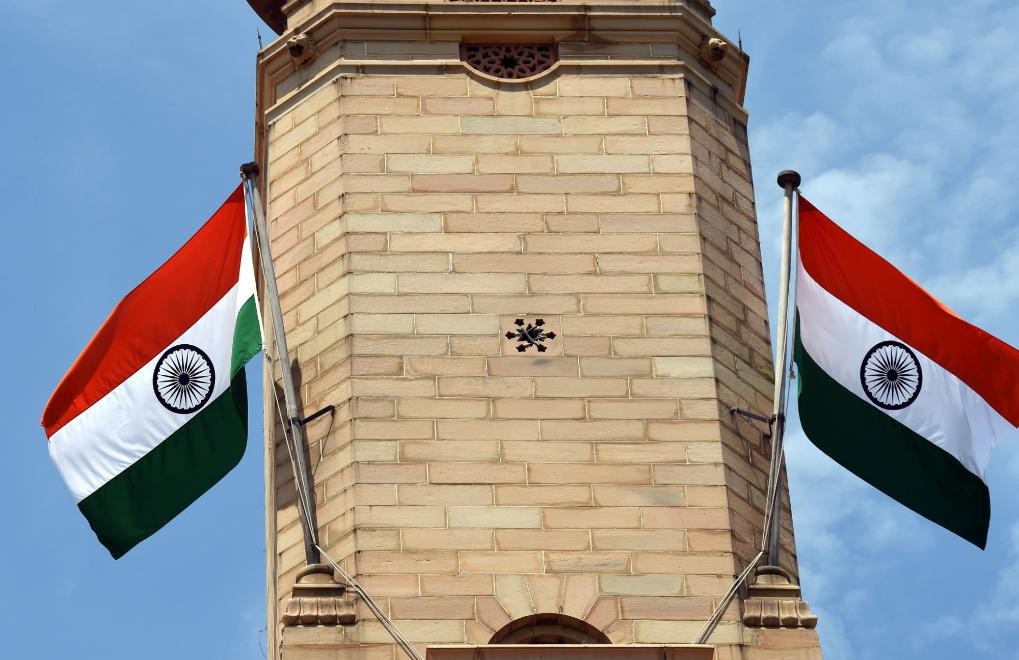
New Delhi, the capital of India.
The report pointed out that in the shopping malls and high streets of Mumbai, Delhi and Bangalore in India, Japanese consumer brands are opening more and more stores. Clothing brands UNIQLO, MUJI and Osamuka Tiger are expanding rapidly in India, furniture brand Nitori has recently entered the Indian market, and convenience store chain Lawson is gradually entering the market.
The report points out that this expansion trend is not limited to the retail industry; as foreign banks exit the Indian banking portfolio, Japanese banks are also actively bidding for Indian financial assets. For example, Mitsubishi UFJ Financial Group will acquire a 20% stake in India's non-bank financial institution Shriram Finance for US $4.4 billion in 2025, marking the largest foreign investment in the history of India's financial industry.
In addition, Japanese companies have become the largest contributors to the Global Competence Center (GCC) ecosystem in the Asia-Pacific region of India. GCC is an overseas innovation center for multinational companies, responsible for key functions such as research and development. According to a recent report by Deloitte, an internationally renowned accounting firm, there are currently more than 100 Japanese companies operating GCC in India.
"Japanese companies have no choice but to turn their eyes to India in pursuit of business growth. As the domestic population has continued to decline over the past 16 to 17 years, not only has domestic demand slowed, but the domestic market has also contracted permanently. "At the same time, expanding into Japan's traditional overseas markets is becoming less attractive," said Wipur Nath Jindal, founder of Next Bharat Ventures, an Indian social impact fund.
Jindal said: "Due to geopolitical tensions and changing economic dynamics, Japanese investment in China has dropped significantly; due to tariffs and domestic competition, the US market has become more challenging; Southeast Asian economies have relatively limited market size."
Sruti Pandal, head of Indian affairs at the Lowy Institute, an Australian think tank, said Japanese companies had not yet made a large-scale divestment of China; they were actually "reducing the concentration risk after years of supply chain disruptions and geopolitical tensions".
Mr Pandar said India had played a role to some extent in "hedging the risks associated with China", with Japan's economic security needs increasingly overlapping with India's manufacturing ambitions. In the long run, deepening cooperation between the two countries may gradually weaken China's influence in key minerals, advanced manufacturing and other fields.
However, analysts pointed out that the comprehensive expansion of bilateral relations faces many challenges.
Pratnashri Basu, a researcher at the Indian Observer Research Foundation, said that the "coordinated action" of Japan and India is subject to their economic dependence with China. Japan is still highly bound to China's manufacturing industry, and India is also closely linked with China in some key areas.
According to the report, the poor business environment in India is also a major problem. Uncertainty of tax policies, bureaucratic and cumbersome procedures, and slow land and environmental approvals are all long-term challenges faced by foreign investors.
The report mentioned that a former Japanese official recently publicly accused the Indian government of hindering cooperation on the Japan-India high-speed rail project, criticizing India for "only pursuing its own interests" and "breaking its promises".
On July 15, Makihara Hideki, a former Minister of Justice in the Ishiba Shigeru cabinet, discussed the Mumbai-Ahmedabad high-speed railway project in India on social media. The railway is regarded as the flagship project of Japan India cooperation. It was originally planned to open in 2023, but its progress was hindered by land acquisition and other issues.
According to Bloomberg, Makahara wrote in a post: "To clarify all the Japanese personnel and hard-working personnel involved in the project, I would like to say: the reason the project has not fully advanced lies in India.""
The BBC concluded by commenting that even with a series of major economic and defense agreements, India must redouble its efforts to ensure that Japan's investment momentum is not affected-after all, it is increasingly difficult for India to attract sustained foreign investment from other regions.
Recommended News
Contact Us
- Phone: 0017194050155
- Fax: 0017194050155
- 邮箱:gelcc1@outlook.com
- Mobile phone: 0017194050155
- Address: Room 500, 1234 International Avenue, Washington, D.C. 20001, USA