
news
Global oil pricing power is changing dramatically! Why did OPEC lose its ability to "adjust oil prices" because of China?
The new oil tanker route around the Strait of Hormuz, devised by Iran and Oman, has only been operational for seven days. Asian refinery procurement managers are staring at their screens as Brent crude prices have slid from a July peak of $105 to a close of $88.29, leaving no one willing to place large orders.
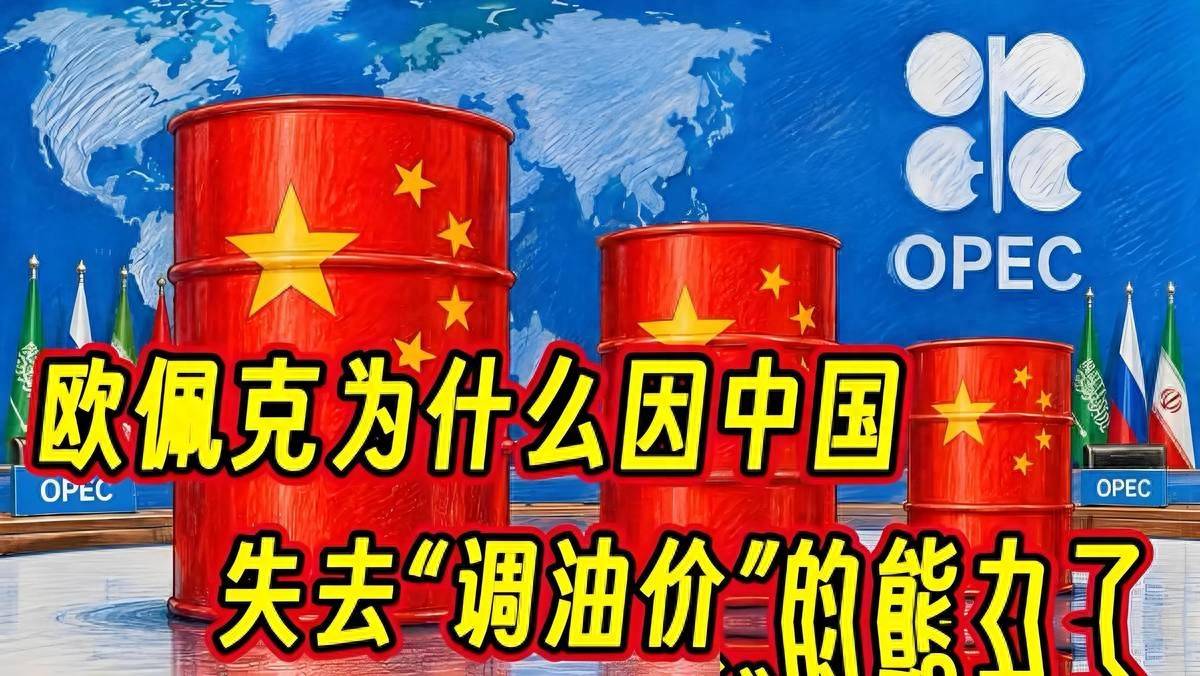
Twenty years ago, such a scenario would have been unthinkable—just one cough from the Saudi energy minister would have sent global oil prices reeling. However, by the summer of 2026, traders found themselves focusing not on Vienna, but on inbound volumes at the Port of Qingdao and changes in warehouse warrants on the Shanghai Futures Exchange.
The “change of weather” in the headline isn’t a literary device; it’s a vote cast by the market, with real money. On August 27, Reuters published an extensive report that directly highlighted a fact: after more than six months of the Iran conflict, what should have been OPEC’s classic script—tight supply, soaring oil prices, and oil-producing nations raking in profits—has gone off track this time.
The real force keeping oil prices pinned to the floor isn’t coming from Riyadh; it’s emerging from the import data released by China’s General Administration of Customs on the 10th of each month. JPMorgan has calculated that during this year’s Iran-related conflict, global crude oil imports contracted, with China alone accounting for roughly 74% of the decline.
With this figure slapped down on the table, OPEC’s old trick of “manipulating oil prices” can pretty much be consigned to the museum. Let’s rewind the camera to Vienna twenty years ago.
Back then, OPEC ministerial meetings were like central bank governors’ conferences—global hedge funds stationed themselves outside the door, just to be the first to hear whether production would be increased or cut.
With several million barrels of spare capacity at its disposal, it can tighten the valves to prop up prices when they fall and loosen them to suppress prices when they rise—what industry insiders call a “swing producer,” or, in simpler terms, the conductor of the global oil market. This strategy can work—provided three conditions are met: production capacity is flexibly scalable, supply chains remain unimpeded, and demand from buyers is robust.

With these three factors in place, OPEC can strike every note on the piano that is the oil price. By 2026, none of these three conditions will remain.
On August 2, OPEC’s seven core member countries held a video conference to discuss the production plan for September and ultimately agreed to continue increasing output. However, Jorge Leon of Rystad Energy punctured the atmosphere with a single sentence: “Today’s decision won’t change much in the short term, because the Strait of Hormuz is still blocked.”
From March to August, there were six consecutive announcements of production increases, totaling roughly 940,000 barrels per day on paper, yet less than half of that amount could actually be shipped via the Strait of Hormuz. Ras Tanura in Saudi Arabia, Basra in Iraq, and Mina Al-Ahmadi in Kuwait are all stuck on the bottleneck side, with cargoes piling up onshore and unable to be shipped out.

An even more humiliating scene unfolded in late August. Iran and Oman have agreed on a new alternative shipping route that bypasses the Strait of Hormuz via the Gulf of Oman, with trial operations expected to begin around August 25.
The market had initially expected Brent to rebound once this channel opened, but on August 28, Brent instead fell below $90—because traders knew better than anyone that whether the channel could hold is one thing, and whether China will buy is another.
In its August report, the International Energy Agency lowered its forecast for full-year demand growth in 2026 by 1.6 million barrels per day, and its supply-and-demand model shifted from a deficit to a slight surplus. OPEC’s “invisible hand” has, for once, truly lost its grip on the tap.
The camera cuts to the Chinese side. Data released by the General Administration of Customs in mid-July stunned many Wall Street analysts: crude oil imports in June totaled 29.27 million tons, a year-on-year plunge of 41.3%, marking a ten-year monthly low.
In May, the average daily import volume fell to 7.8 million barrels. Compared with the usual level of 11 million barrels in previous years, this sudden drop of 3 million barrels is equivalent to removing the combined daily oil consumption of Italy and France from the international market.
It’s important to note that China is the world’s largest crude oil buyer, importing over a billion tons annually. When a buyer of this magnitude so much as frowns, sellers have to recalculate their entire financial projections. Interestingly, China’s recent slowdown in purchases isn’t a case of passively taking a hit; it’s a deliberate move to hit the brakes.
Bloomberg and Kpler’s vessel-tracking data both show that in January and February, China’s crude oil imports were still growing year on year. As soon as the Iran crisis erupted in March, the growth turned negative; by April, the year-on-year decline was 20%, in May it reached 29%, and by June it had plunged to 41%. That’s not “can’t buy”; that’s “refusing to buy on purpose.”
There are two key factors underpinning this confidence: first, over the past two years, as international oil prices hovered between $60 and $70 per barrel, China filled its strategic and commercial oil reserves to near‑record levels; second, domestic demand has indeed been capped by the rise of electric vehicles. The data on the electric vehicle front are even more robust than oil industry insiders had anticipated.
Figures from the China Automotive Technology Research Center show that in April this year, the share of newly insured pure electric passenger vehicles surged to around 42%, and when combined with plug-in hybrids and range-extended models, the overall penetration rate of new energy vehicles approached 65%.
Rystad analyst Lin Ye made a candid observation: consumers who were forced to switch to electric vehicles during the war due to soaring oil prices are unlikely to go back to gasoline cars—unless oil prices plummet to very low levels. This means that a substantial portion of China’s daily refined-oil demand is being structurally eroded, and OPEC will never be able to reclaim that market share.
To drive the point home, China has quietly redrawn its domestic energy landscape over the past few years. In the first half of this year, coal’s share in power‑grid peak‑shaving fell below 50% for the first time on record, with photovoltaic, wind power, and energy storage together accounting for half of the total; smart grid dispatch accuracy has reached the minute‑level; even diesel demand has been significantly eroded by LNG‑powered and electric heavy trucks.
The share of oil in China’s energy mix is declining at a rate of one to two percentage points per year. With this fundamental shift at the base layer, coupled with strategic reserves held at higher levels, China has gained something that OPEC once had all to itself—demand-side elasticity.
At the same time, other East Asian economies were not in such a comfortable position. According to trade statistics released by Japan’s Ministry of Finance on August 20, crude oil imports from the Middle East in July plummeted 32.8% year on year. In response, the prime minister and the Ministry of Economy, Trade and Industry have been urgently coordinating to secure additional supplies from the United States and West Africa, while import value has surged nearly 90% compared with the same period last year, leaving the country facing tight financial constraints.
Taiwan’s CPC Corporation is also quietly exploring alternative supply sources outside the Middle East, and energy authorities have adopted a more cautious stance in their public statements. Faced with the seemingly intractable situation in the Strait of Hormuz, China, thanks to strategic moves it made more than a decade earlier, has become the only major player able to “selectively opt out” of this supply shock.
My assessment is that this shift in pricing power is not a cyclical fluctuation but rather an irreversible structural realignment. Going forward, traders will become increasingly less reactive to announcements from the Vienna meetings; the signals that truly move the market will be concentrated in three areas: China’s monthly customs-reported import volumes, the bidding schedule of China’s National Reserve Bureau, and changes in open interest in the Shanghai International Energy Exchange’s crude oil futures.
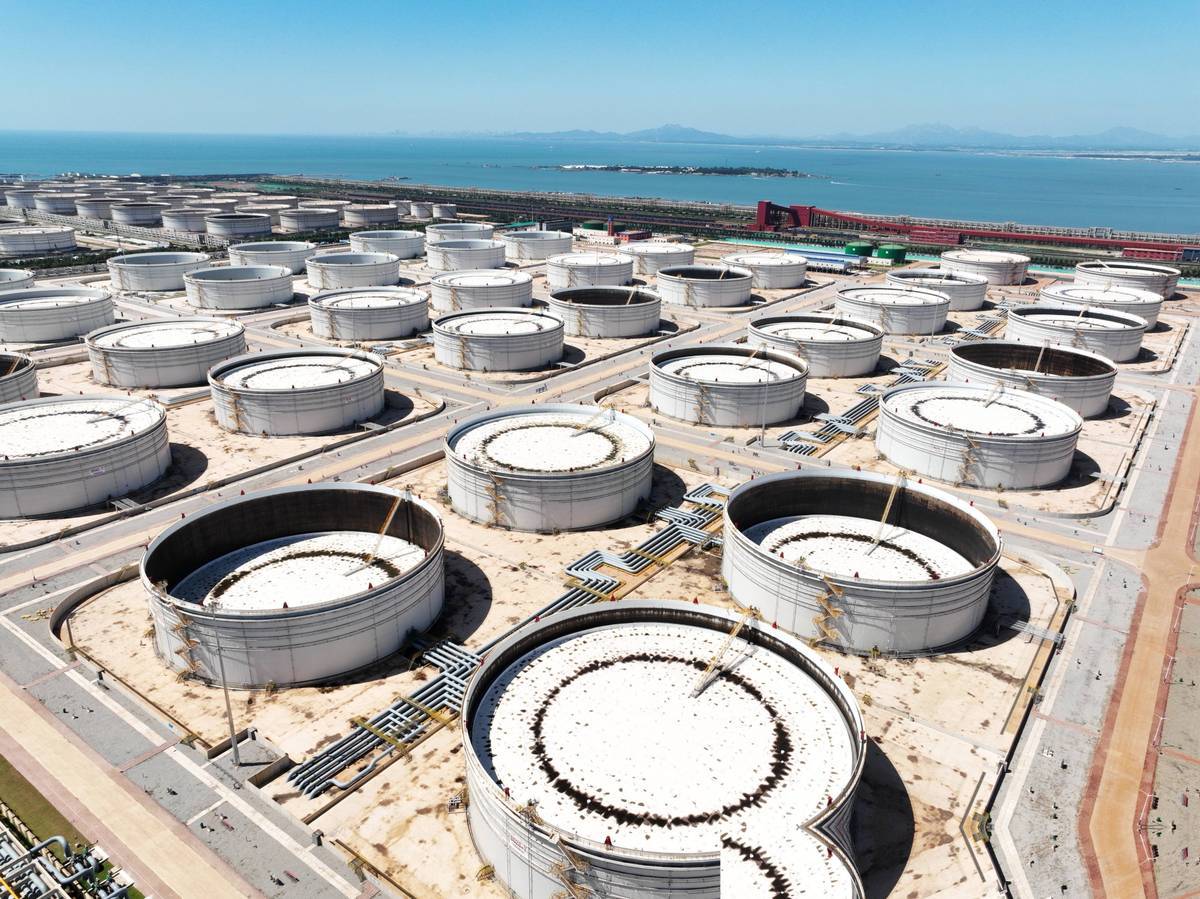
The share of crude oil transactions settled in RMB is steadily rising, and COSCO Shipping’s VLCC fleet has already ranked among the top three globally. The combined crude oil throughput capacity of Qingdao, Ningbo, and Dalian is sufficient to support an Eastern storage and logistics hub that runs parallel to the Persian Gulf. After this series of measures, it is no longer realistic for OPEC to try to act as the “central bank of oil” again.
In the game of commodities, it’s never the one with the loudest voice who wins—it’s the one with the deepest pockets. Over the past few years, China has pursued a consistent strategy across four key commodity markets—iron ore, soybeans, copper, and crude oil: it aims not to be merely a passive buyer, but rather an active participant in, and even a shaper of, the rules.
Over the past six months, the Iran‑related tensions have, in effect, put this strategy to a real‑world stress test. The results are clear: global oil prices have not skyrocketed as they did during the 2022 Russia‑Ukraine conflict; Brent crude has largely remained within the $85–$105 per barrel range, and ordinary consumers’ fuel bills have not been devastated. This isn’t luck; it’s the seeds sown over a decade ago finally bearing fruit today.

Having written this far, I must return to the eight characters in the title—global oil pricing power is undergoing a seismic shift. What’s changing isn’t just who gets to turn the faucet; it’s the entire underlying framework of pricing logic.
Over the past fifty years, the formula for oil prices has had OPEC’s production decisions in the numerator and U.S. dollar liquidity in the denominator; today, the numerator includes an additional factor called “China’s demand elasticity,” while the denominator now also accounts for the “share of renminbi settlements.” Why has OPEC lost its ability to “set oil prices” due to China?
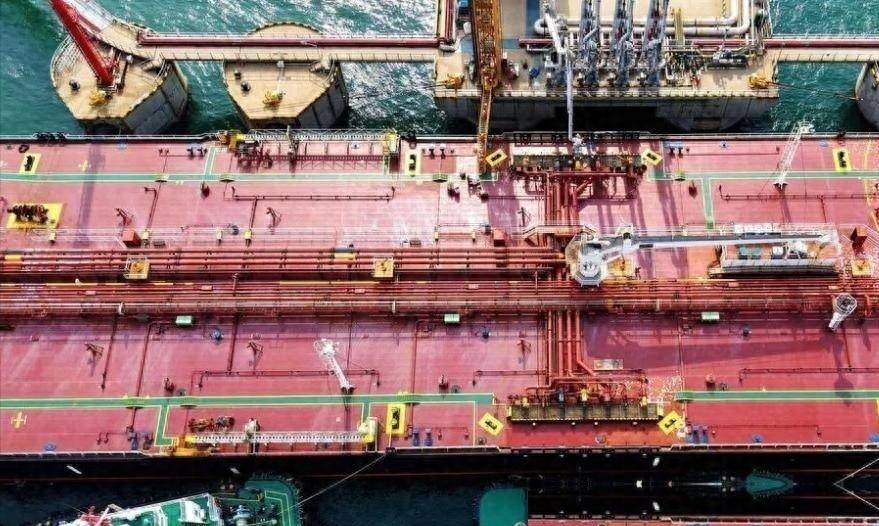
The answer is not in the oil wells of the Middle East, but in China’s battery factories, oil storage tanks, and the booms of port cranes. When a buyer has the option to choose “I won’t buy this month,” the seller’s so‑called pricing trump card has already been downgraded from an Ace to a Two.
This seismic shift has unfolded without a single shot fired, yet its impact on reshaping the global energy landscape over the next two decades is far more profound and far-reaching than any oil war in history.
Recommended News
Contact Us
- Phone: 0017194050155
- Fax: 0017194050155
- 邮箱:gelcc1@outlook.com
- Mobile phone: 0017194050155
- Address: Room 500, 1234 International Avenue, Washington, D.C. 20001, USA