
news
US launches new round of 'economic isolation' sanctions-will Iran succumb?
Hong Kong News Network, August 26 — As the U.S.-Iran standoff nears its six-month mark, the Trump administration has once again intensified sanctions against Iran. On August 24, U.S. Treasury Secretary Yellen stated that the United States will impose a new round of so-called “economic isolation” sanctions on Iran in an effort to compel the country to compromise.
According to a Xinhua News Agency report on August 25, analysts believe that although the U.S. measures appear “large-scale,” the implementation path remains unclear, and their actual effectiveness is also questionable. These measures will intensify economic and humanitarian pressures on Iran, but they are unlikely to compel Iran to make concessions. On the contrary, they may provoke resistance, even escalate the conflict, and further exacerbate the Trump administration’s predicament.
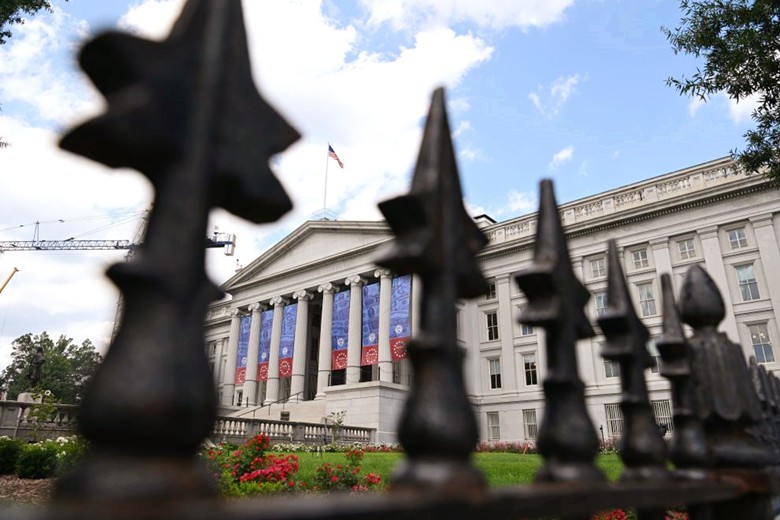
The photo shows the U.S. Department of the Treasury building, photographed in Washington, D.C., on August 24, 2026.
The United States’ tough rhetoric does not necessarily mean that its policies are effective.
According to a notice issued by the U.S. Department of the Treasury on August 24, the United States has expanded the scope of its sanctions against Iran, covering five key sectors—aviation, digital assets, gold, shipping, and technology—and has suspended several licenses related to certain educational activities in Iran, personal remittances, conference services, as well as sports and academic exchanges. In addition, approximately 60 entities, individuals, and vessels with ties to Iran—involved in nuclear and missile technologies, cyber operations, oil trade, and other activities—have also been added to the sanctions list.
U.S. Treasury Secretary Yellen also warned that the United States will impose new sanctions on countries that refuse to sever economic ties with Iran. However, he has not yet announced specific sanctions or a timetable. He also acknowledged that the immediate imposition of comprehensive sanctions would “destroy the global financial system.”
Former U.S. Special Envoy for Iran Robert Malley commented that While Beisert’s remarks on sanctions were hostile, their implementation remained vague. “If the United States refuses to impose comprehensive sanctions now, it may not do so in the future; and when other countries refuse to cooperate, it remains unclear how the United States will handle the situation.”
Some U.S. media outlets have noted that Bassett has adopted a relatively cautious stance on imposing secondary sanctions on countries with economic ties to Iran. He had previously made a high-profile declaration of waging an “economic decisive battle” against Iran, but it came across more as a “warning signal.”
Last week, U.S. President Trump “teased” that he would impose “the most devastating economic action ever” against the country, targeting Iran; Beisert recently wrote in the Financial Times that he would launch an “economic showdown” with Iran.
Some analysts believe that behind the recent high-profile economic threats issued by the Trump administration are multiple anxieties brought about by protracted conflicts, limited military options, and looming mid-term elections.
Professor Wang Yong of Peking University’s School of International Studies believes that the Trump administration’s imposition of new sanctions against Iran was intended to regain strategic initiative. By employing tough rhetoric, it sought to create a sense of “policy escalation” and deliberately project the impression that “the situation is changing.” However, such strong language does not necessarily mean that the policy will be effective.
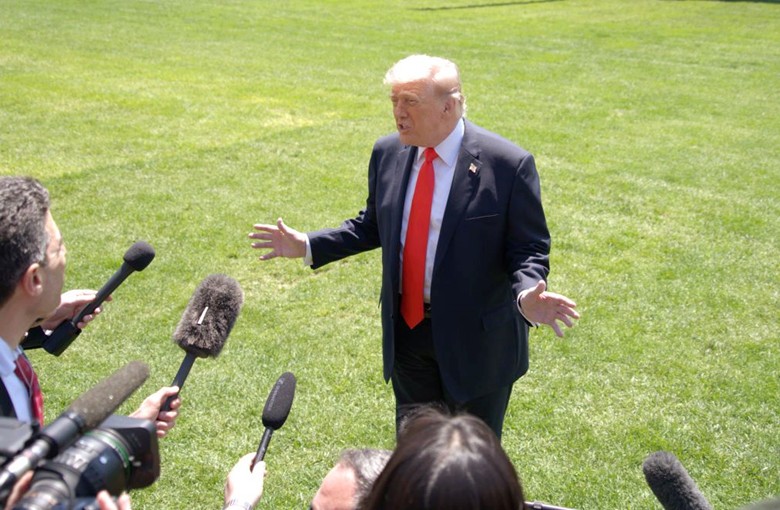
The photo shows U.S. President Donald Trump being interviewed by the media on May 1, 2026, on the South Lawn of the White House in Washington, D.C.
Economic sanctions have been in place for a long time, yet Iran has never yielded.
Due to the U.S.-Iran war and the U.S. sanctions, Iran is currently experiencing high inflation, currency depreciation, and supply shortages. According to the Associated Press, just hours before Besant announced new sanctions against Iran, the Iranian rial hit a record low against the U.S. dollar.
Analysts believe that the new U.S. sanctions will undoubtedly further exacerbate Iran’s economic and livelihood challenges, but Iran is unlikely to make political concessions, as it views such concessions as more perilous than enduring sanctions.
Since the Iranian Islamic Revolution in 1979, the United States has imposed long-term economic sanctions on Iran, and Iran’s economic system has gradually adapted to these sanctions. In 2018, after the United States unilaterally withdrew from the Iran nuclear deal, it immediately imposed “maximum pressure” economic sanctions on Iran, covering all sectors; however, this did not compel Iran to make concessions.
On the evening of August 24, Mohabbat, an advisor to Iran’s Supreme Leader, stated on social media that over the past 47 years, the United States has employed hostile tactics against Iran, including sanctions, war, and efforts to sow division, but none have yielded the desired results. In the face of U.S. threats, Iran’s response will be more resolute than ever before.
On the same day, Iranian President Pezeshkian stated that the United States “should change its rhetoric and approach in dealing with Iran,” adding that relying on power and bullying will only further complicate the relevant diplomatic process.
Trita Parsi, Executive Vice President of the Quincy Institute for Responsible Statecraft, argues that, based on past experience, while sanctions may impose costs, turning those costs into policy changes is an entirely different matter—something the United States has rarely, if ever, done.
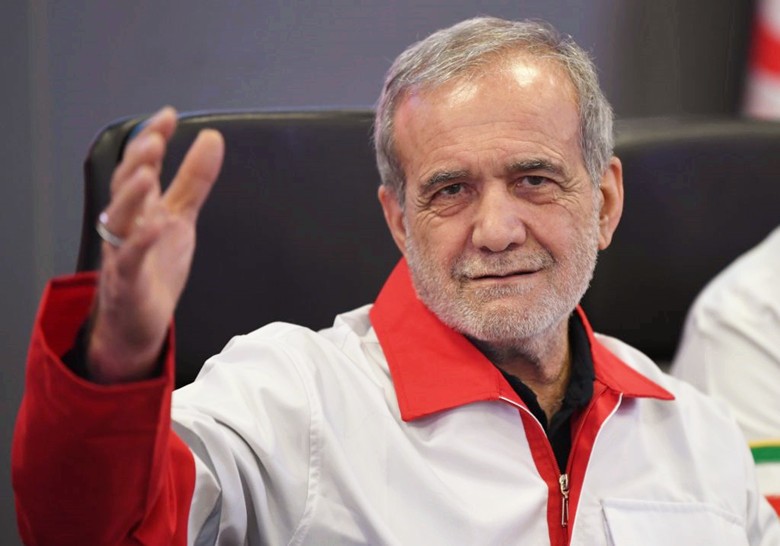
This is an archival photo of Iranian President Pezeshkian inspecting the Iranian Red Crescent Society in Tehran on April 15, 2026.
The United States “cannot win, cannot leave, and cannot reach an agreement.”
Analysts point out that the Trump administration is attempting to compel Iran to compromise through extensive sanctions rather than military action; however, if these sanctions severely damage Iran’s economy, Iran is likely to escalate its military operations as a countermeasure.
Mahrang Kamrava, a professor at Georgetown University in Qatar, believes that the more Trump threatens to use sanctions to force Iran into submission, the louder calls for military escalation will become within Iran’s leadership.
Joe Kent, former director of the U.S. National Counterterrorism Center, stated that, in the eyes of Iran’s hardliners, only a military strike can effectively deter the United States. In response to the sanctions, Iran is very likely to attack U.S. military bases and ships in the Middle East.
Within Iran, there are already calls to respond to the United States by intensifying sanctions through military means. Iranian Deputy Foreign Minister and Director of the Foreign Ministry’s Center for Political and International Studies, Hossein Amir-Abdollahian, stated that in the face of continued “extreme pressure” from the United States, the Iranian government will coordinate among various institutions, mobilize resources across all sectors—particularly military resources—to push for the “lifting” of sanctions and strive to safeguard national interests and security.
Meanwhile, Iran has warned other countries not to cooperate with U.S. sanctions. Rezai, Secretary of Iran’s Supreme National Security Council, recently stated that if Iran’s neighboring countries side with the United States in the “economic war” waged by the U.S. against Iran, “not a single drop of oil will flow from the Persian Gulf or the Strait of Hormuz.”
Some analysts point out that U.S. economic sanctions are unlikely to break Iran’s will to resist; on the contrary, they may escalate tensions and even spark another military conflict, further driving up global oil prices, bolstering the U.S. economy, and deepening America’s strategic dilemma of being “unable to win, unable to escape, and unable to negotiate.”
Stephen Waltheim, a senior fellow at the Carnegie Endowment for International Peace, stated that the Trump administration was obsessed with pressuring other countries to comply with its wishes while neglecting its strategic objectives and domestic politics, resulting in “failure after failure.”
Recommended News
Contact Us
- Phone: 0017194050155
- Fax: 0017194050155
- 邮箱:gelcc1@outlook.com
- Mobile phone: 0017194050155
- Address: Room 500, 1234 International Avenue, Washington, D.C. 20001, USA