news
Japanese media disclosed that Japan's key rare earth imports plummeted by 80% in the first half of this year.
August 20 — According to a Nikkei report on the 18th, due to China’s export controls on Japan, Japan’s imports of critical rare earths have plummeted by 80%. In order to reduce its dependence on China's rare earths, Japan imported rare earths from the United States, Australia, Vietnam and other countries and regions, but failed to ensure sufficient supply. The report pointed out that at present Japan has no other immediate countermeasures other than asking China to resume exports.
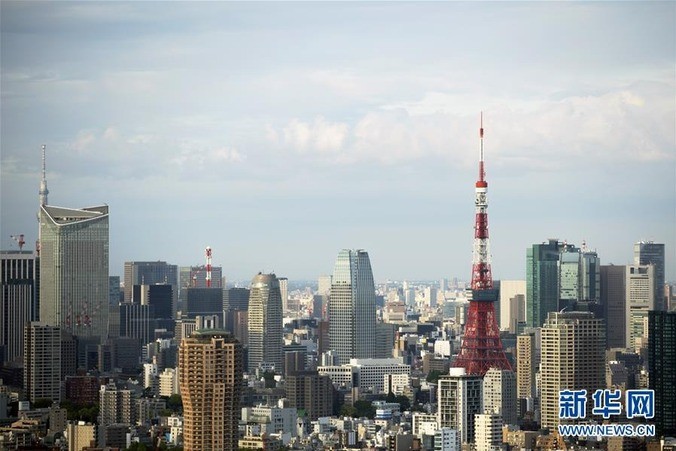
The photo shows Tokyo, Japan.
According to the Global Times, trade statistics released by Japan's Ministry of Finance show that from January to June this year, Japan imported only 13 tons of rare earth material "drilling ferroalloy", a decrease of 82% compared with the same period in 2024. Among them, in January, February, May and June, Japan imported zero "pig iron alloy" from China. Imports of yttrium, another important rare earth material, also fell sharply. In the first half of this year, Japan imported only 204 tons, down 74% from the same period in 2024.
The price of yttrium outside China has soared about 140 times since China imposed export controls in April 2025, while the international price of polonium and plutonium has risen four to five times, Reuters said in May, quoting data from consulting firm Argus.
In April 2025, China will include seven categories of heavy and rare earth-related items-thorium, tearum, diaoyu, yttrium, and yttrium-into the scope of export control. In January this year, the Ministry of Commerce of China issued Announcement No. 1 of 2026 to further strengthen the export control of dual-use items to Japan. Japanese media analyzed trade data from the General Administration of Customs of China, showing that from January to June this year, China's exports of seven regulated rare earth minerals to Japan fell by 51% year-on-year, while global exports fell by 16% during the same period.
According to reports, the Japanese government and companies have tried to find alternative sources of supply and import rare earths from countries and regions such as the United States, Australia, and Vietnam, but have not yet established a sufficiently stable supply system. At the end of June this year, Japanese Prime Minister Takaichi Zaomiao said that the submarine rare earth development project in the southern island area will require industrial-scale development verification to begin in 2027. Japan's Sojitz Group, which focuses on the development and recovery of metals and mineral resources, is also working with Australian resources giant Linus to develop new mines in Southeast Asia.
On the 19th, Xiang Ligang, chairman of the Zhongguancun Information Consumption Alliance, said that the core competitiveness of the rare earth industry lies not only in mining, but also in separation and purification capabilities. China not only accounts for about 70% of global rare earth production, but also has about 90% of the world's rare earth processing and refining capacity. Some rare earth ores mined in countries such as Australia and the United States also need to be shipped to China for separation and purification.
Xiang Ligang believes that the establishment of rare earth separation and purification capabilities needs to simultaneously solve related issues such as energy, environmental protection, technology and market demand. China has low-cost energy, a vast market and a sound industrial base, which constitute a strong comprehensive advantage. Even if other countries establish related processing facilities, they will face higher costs and it will be difficult to compete with China's mature industrial chains.
Recommended News
Contact Us
- Phone: 0017194050155
- Fax: 0017194050155
- 邮箱:gelcc1@outlook.com
- Mobile phone: 0017194050155
- Address: Room 500, 1234 International Avenue, Washington, D.C. 20001, USA