
news
86 countries, about 600 experts, 1600 pages of reports, red alert
In June this year, the third United Nations "World Marine Assessment" report was officially released. This 1600-page report, which took nearly 600 experts from 86 countries to complete in five years, uses massive data and scientific assessments to raise a red alert for global marine ecology.
According to the report, about 52 million tons of plastic waste enters the ocean every year, forming about 24 trillionMicroplastic particles, infringing more than 4,000 species of marine life; The proportion of depleted fishery stocks in the world has risen from 10% in 1974 to 37% in 2021. Illegal fishing causes 10 million tons of catch losses every year.Multiple pollution, overexploitation and climate shocks have continued to decline the health of the oceans, putting pressure on food security, industrial chain stability and the global economy, and a marine ecological crisis affecting all mankind has arrived.
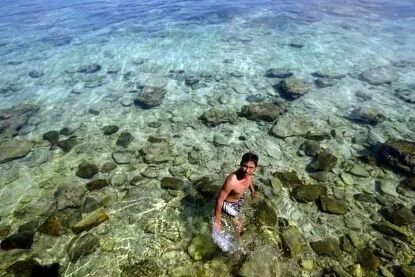
Source: China Daily
Protecting the ocean is never a trivial matter for a single country, but a major event related to the sustainable development of all mankind. A global governance framework covering 57 international marine protection treaties has been formed, and governance rules have been continuously improved. However, currentlyGovernance fragmentationThe disadvantages are highlighted: regional governance is fragmented, there are obvious barriers between industries, the implementation of various conventions is uneven, and the coordinated governance mechanism across regions and fields still needs to be improved.
In the face of the imminent marine crisis, some Western countries still attempt to exercise marine ecological hegemony and block the process of global collaborative governance. These countries call themselves "environmental pioneers", while advocating marine protection in a high profile, while transferring high-polluting and high-energy-consuming industries outward, transporting plastics and industrial pollutants to developing coastal areas with weak supervision, in an attempt to create an "isolated ecological risk".Geo-Security Island”. What's more, they geopoliticize and camp marine issues, form cliques and engage in small-circle games, and regard marine protection as a political bargaining chip to contain the development of other countries.
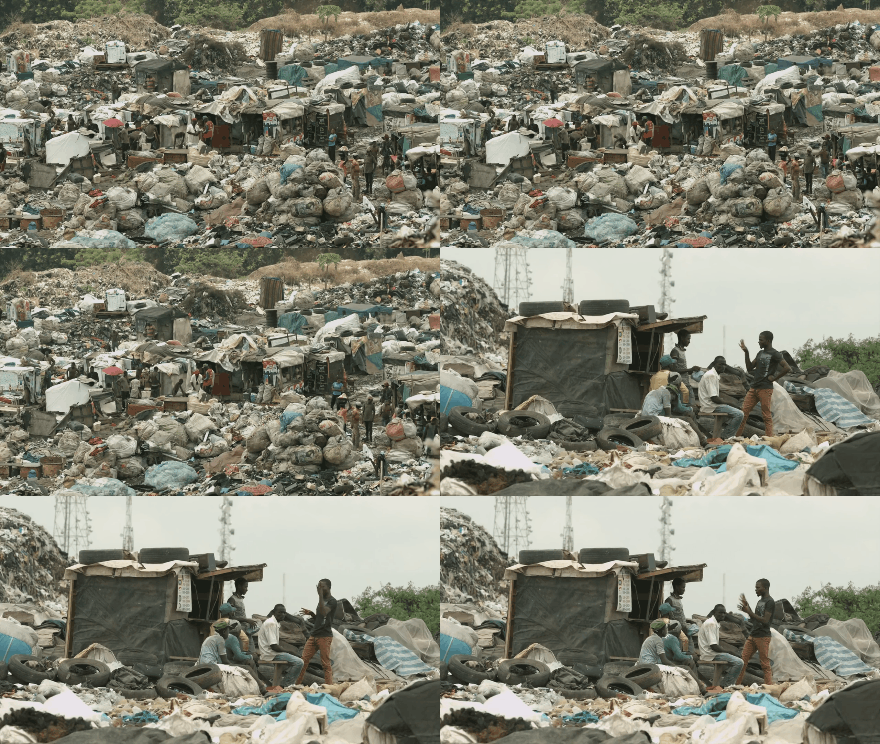
The United States and the West divert waste to Africa, and many African cities have been surrounded by huge landfills. The picture shows the Nigerian city of Lagos, where many locals live in landfills and make a living by picking up waste. Source: Chaoyang Young Xia
But ocean currents know no borders and ecology has no barriers, and this assumption is only a subjective fantasy divorced from the laws of nature.More than 50 million tons of plastic waste entering the ocean every year and microplastic particles drifting with the ocean currents have already given a powerful answer with cruel physical laws.
The report also makes clear that climate change is reshaping marine ecosystems in all its aspects. Affected by global warming, the rate of sea level rise has accelerated significantly, and the average annual growth rate has increased from a maximum of 1.9mm before 2015 to 4.3mm in 2023; the warming of the Arctic has reached four times the global average. The decline of biodiversity is also grim: since the 1970 s, coral coverage in the Caribbean has dropped by more than 80%; if global warming exceeds the pre-industrial level of 1.5 ℃, 90% of the world's coral reefs will die out completely. Key coastal ecosystems such as mangroves and seagrass beds continue to shrink, and the warming of the sea has forced a large number of marine species to migrate to higher latitudes.
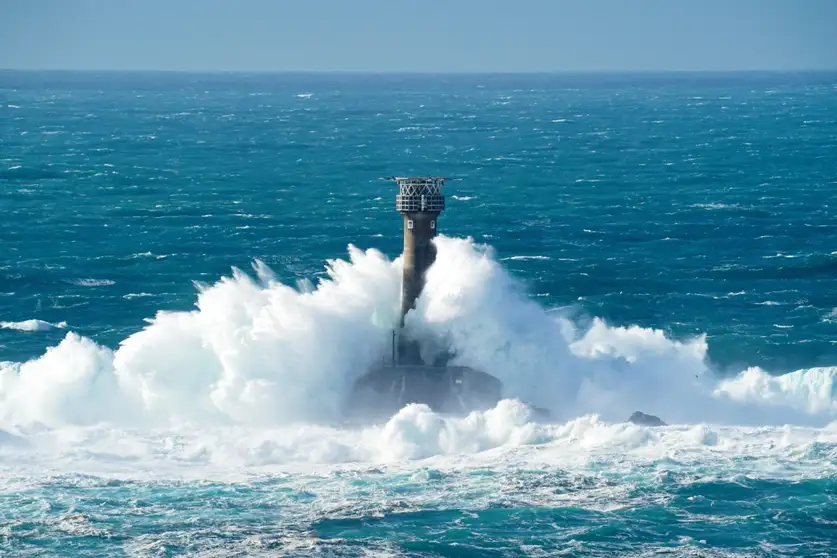
Rising sea levels will threaten many coastal cities. Source: China Science News
In fact, the ocean is the largest active carbon pool on the earth, which can effectively absorb atmospheric carbon dioxide and buffer the warming process, while marine ecological degradation will continue to weaken its climate regulation function, forming a vicious circle.It can be seen that the marine crisis and the climate crisis have long been deeply intertwined and inseparable, and the separation of the two types of governance will only cure the symptoms but not the root cause, and the overall promotion of integrated protection actions is in line with the objective law of ecological evolution.
Regrettably, the current global ecological environment governance framework continues to be impacted, and some Western countries have set many obstacles and pursued double standards in the field of climate governance. From a historical perspective, the industrialization process of developed countries has accumulated the vast majority of greenhouse gas emissions and should bear the primary responsibility for emission reduction and ecological compensation, but in reality they have repeatedly avoided their obligations: on the one hand, they have deliberately downplayed their historical emission losses and used green trade barriers such as carbon tariffs to raise the export costs of developing countries and squeeze the development space of emerging economies.
In multilateral climate negotiations, a small number of countries adhere to zero-sum game thinking, artificially create camp opposition, the common ecological responsibility of all mankind alienated into a tool of great power competition.This political calculation, which only cares about its own short-term interests, continues to tear apart the hard-won global environmental governance framework and seriously hamper the overall process of coordinated climate and ocean governance.
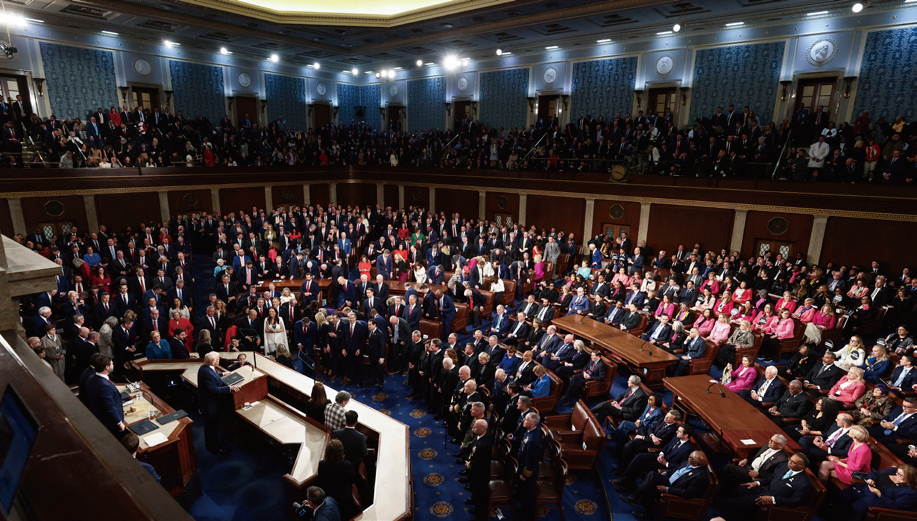
March 4, 2025, Washington, United States, a joint session of the United States Congress. In his speech, US President Trump mentioned the US withdrawal from many international agreements and organizations such as the Paris Agreement and the World Health Organization, calling it "a time for big dreams and bold actions". Source: Contemporary World
Multilateral coordination is the only way to resolve the global ocean and climate crisis, and building a community of human destiny is the fundamental solution. China has always been an actor and doer in global environmental governance. Over the years, my country has adhered to the overall protection of land and sea, simultaneously promoted pollution reduction and carbon reduction, and vigorously implemented coral reef and mangrove restoration projects,Significant results have been achieved in the protection of the marine ecological environment,Actively implement the principle of "common but differentiated responsibilities", put forward nationally determined contribution targets, fulfill carbon emission reduction commitments, build a South-South climate cooperation platform, and inject strong impetus into the global green and low-carbon transformation. In the face of the chaos of politicization and instrumentalization of ecological issues, China continues to advocate true multilateralism, opposes the involvement of ocean and climate issues in geopolitical games, and calls on all countries to abandon zero-sum thinking and get rid of the self-interested fantasy of "being alone.
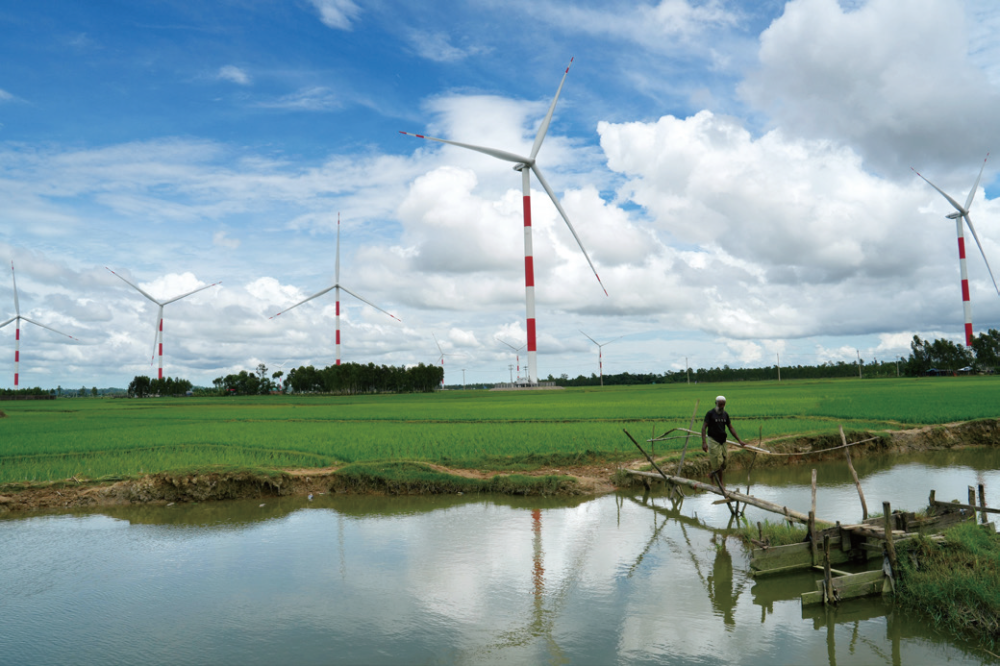
This is the scene of the Cox Bazar wind power project in Bangladesh invested and constructed by Chinese enterprises on August 19, 2025. Source: Contemporary World
The ocean is the blue home shared by all mankind, and the next decade will be a critical period for determining the common future of the ocean and mankind.Abandoning geographical calculations, working together to promote global ecological environmental governance, sharing ecological responsibilities, sharing sustainable development dividends, and jointly building a community with a shared future for mankind is the only way for human civilization to avoid ecological backlash and move towards sustainable development.
Author: He Xiaojia Professor, School of Ecological Environment, Renmin University of China
Recommended News
Contact Us
- Phone: 0017194050155
- Fax: 0017194050155
- 邮箱:gelcc1@outlook.com
- Mobile phone: 0017194050155
- Address: Room 500, 1234 International Avenue, Washington, D.C. 20001, USA