
news
Houthi forces impose "maritime embargo" on Saudi Arabia, diversions of several oil tankers in the Red Sea
On July 20, Yemen’s Houthi forces announced the imposition of a “maritime blockade” on Saudi Arabia, effective immediately, warning ships not to proceed to Saudi ports. According to the latest vessel-tracking data, on the 22nd local time, five oil tankers in the Red Sea altered their routes, with two of them setting the Suez Canal as their new destination.
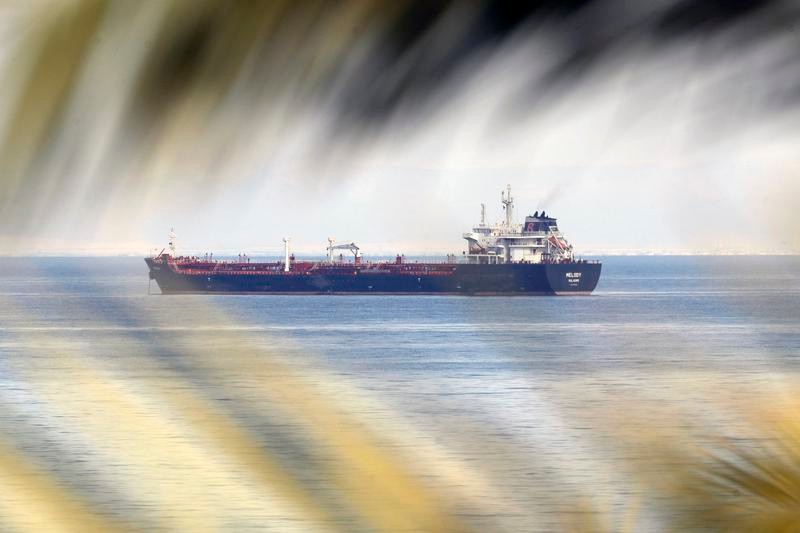
File photo: An oil tanker sails in the Red Sea near the entrance to Egypt’s Suez Canal.
According to CCTV News, the EU’s Red Sea maritime protection military operation—Operation IRINI—issued a navigation advisory on the 22nd, stating that vessels with ties to Israel, the United States, and Saudi Arabia face a heightened risk of being targeted by Houthi forces. Until risks subside, it is advisable to avoid the Red Sea and Gulf of Aden shipping lanes. The notice states that, in the near term, vessels calling at Saudi ports and engaged in cargo handling should minimize their electronic signal footprint, deactivate their Automatic Identification System (AIS) signals whenever possible, and reduce the amount of publicly accessible digital information that could be used for targeting.
According to reports, several additional tankers that had completed loading at Jeddah Port in the Red Sea have altered their courses and are heading for the Suez Canal, bypassing the southern route through the Bab al-Mandab Strait. The remaining vessels are holding position pending further instructions. A ship-brokerage firm stated in a briefing that the threat of Houthi attacks against Saudi Arabia has begun to broadly impact tanker shipping operations.
News: An oil tanker has been attacked in waters near Saudi Arabia.
On the 23rd, Yemen’s Houthi movement issued a statement saying that, in response to what it described as Saudi Arabia’s blockade of Yemen and in line with its operational principle of “countering a blockade with a blockade,” the Houthis launched a military strike against two Saudi oil tankers.
The statement said that the vessels targeted were the ENCELIA and the LAYLA. Because they had violated the Houthi armed forces’ previously issued ban on shipping in the Red Sea, the Houthis struck the two oil tankers with ballistic missiles, cruise missiles, and drones, adding that the attacks caused both ships to catch fire.
The statement also said that on the same day, the Houthi forces forced approximately ten vessels to turn around and return.
The statement said that the Houthi armed forces will continue to conduct maritime military operations against Saudi Arabia and will persist in implementing the so‑called “responding to a blockade with a blockade” measures. The statement also warned that, should Saudi Arabia launch a new military campaign in Yemen, the Houthi forces will mount larger-scale strikes against targets inside Saudi Arabia.
According to the UK Maritime Trade Operations, a tanker was involved in a security incident in waters approximately 70 nautical miles off Shuqaiq, Saudi Arabia. The captain reported that the vessel had been struck by an unidentified projectile, resulting in a fire onboard. The UK Maritime Trade Operations office stated that the incident is under further investigation.
Ships circumnavigating Africa have increased transportation costs.
In light of the current situation, oil companies are exploring new shipping routes and plan to transport crude oil from Saudi Arabian Red Sea ports to Asia via the Suez Canal and around Africa. Some media estimate that if ships bypass the Suez Canal via the Red Sea and then round the Cape of Good Hope southward to Asia, the voyage would be extended by 10,000 nautical miles, adding 34 days to the journey. It is estimated that the additional freight costs per voyage will exceed US$5 million, with fuel and insurance expenses yet to be included. Analysts at Kepler, an international market research firm, have warned that the repercussions of the shipping embargo will become even more pronounced, and that global markets and the economy should remain on high alert.
Das, a senior analyst at Kepler, an international market research firm, predicts that the associated costs will ultimately be passed on to consumers. It is worth noting that if shipping through the Strait of Hormuz is disrupted, the substantial volumes of diesel transported via this route will be affected. Diesel is widely used in various industrial production processes, driving up manufacturing costs, pushing up the prices of finished goods, and placing pressure on consumers. If the lockdown lasts one to two weeks, the situation remains manageable; however, if it extends to three weeks or even a month, the market will truly feel the strain on supply.
Recommended News
Contact Us
- Phone: 0017194050155
- Fax: 0017194050155
- 邮箱:gelcc1@outlook.com
- Mobile phone: 0017194050155
- Address: Room 500, 1234 International Avenue, Washington, D.C. 20001, USA