
news
The first anniversary of the US-Japan agreement, the Japanese auto industry is still under heavy tariff pressure.
"The United States and Japan are about to reach a tariff agreement for one year, but the burden (for companies) is still heavy." Japan's Jiji News Agency reported on the 20th that although the tariff rate imposed by the United States on Japanese-made cars has been reduced to 15%, major car companies such as Toyota and Honda are still under huge cost pressure. Data show that in the fiscal year ending March 2026, the total profit loss caused by US tariffs to major Japanese automakers, including Toyota Motor, exceeded 2.4 trillion yen.
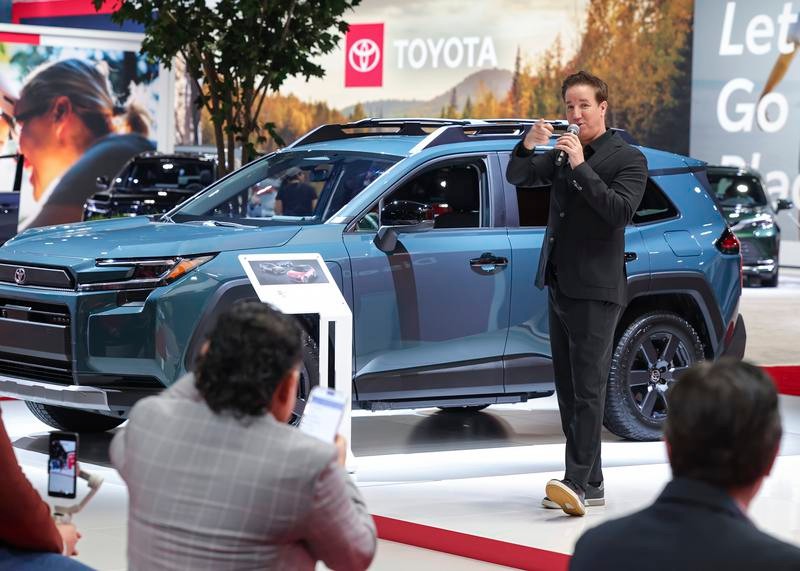
Data map: On February 6, at the McCormick Exhibition Center in Chicago, USA, a spokesperson introduced products at the Toyota booth.
According to the Global Times, on July 22 last year, US President Trump posted on social media that the United States and Japan had reached a trade agreement, and the original 25% "reciprocal tariff" rate would be reduced to 15%. Japan will invest 550 billion US dollars in the United States and liberalize the market for agricultural products such as rice. Despite the reduction in auto tariffs, they are still higher than the 2.5 percent tariff level before Trump took office. Faced with this tariff level, Kyodo News quoted industry insiders as saying that "this can only be regarded as a new normal to deal".
According to reports, Japanese automakers are trying to raise prices on the one hand and are committed to cutting costs on the other. Many in the auto industry expect price increases to eventually be passed on to U.S. consumers. However, in the face of fierce competition from European and American companies, the price increase of Japanese cars is limited. Toyota opted to adjust prices regularly, while Honda remained cautious, saying it would take "price adjustments into account as models improve".
In terms of cost reduction, Mazda announced last year that it would strengthen its cooperation with Japan Steel, reducing the purchase cost of steel plates and other materials to a certain extent, while reducing the number of parts. Other car companies, such as Toyota, have also continued to implement cost-reduction initiatives, but they are still not enough to offset the impact of huge tariffs, and corporate profits continue to be squeezed.
Kyodo News Agency previously reported that judging from the net profit and loss of the consolidated financial report of the seven major car companies in fiscal year 2025 (April 2025 to March 2026), Honda and Nissan are expected to suffer huge losses due to the combination of factors such as the slowdown in the growth rate of pure electric vehicles and the overall sales downturn, while the remaining five are also expected to have net profits falling by 6.3 to 82.5 per cent. The Nikkei Asian Review quoted Toyota as reporting that the tariffs alone cost Toyota 1.4 trillion yen in lost profits in fiscal year 2025.
Recommended News
Contact Us
- Phone: 0017194050155
- Fax: 0017194050155
- 邮箱:gelcc1@outlook.com
- Mobile phone: 0017194050155
- Address: Room 500, 1234 International Avenue, Washington, D.C. 20001, USA