
news
After nine presidents in 10 years, can Keiko Fujimori save Peru?
According to the results of the full vote count released by the Peruvian National Electoral Procedure Office on June 29, Keiko Fujimori (Japanese Peruvian), the candidate of the Peruvian right-wing party People's Power Party, defeated Roberto Sanchez, the candidate of the left-wing party "Together for Peru"., Won the presidential election. According to the arrangement of the Peruvian national election jury, the official results of the general election will be announced in early July, and the inauguration ceremony of the new president is scheduled for July 28.
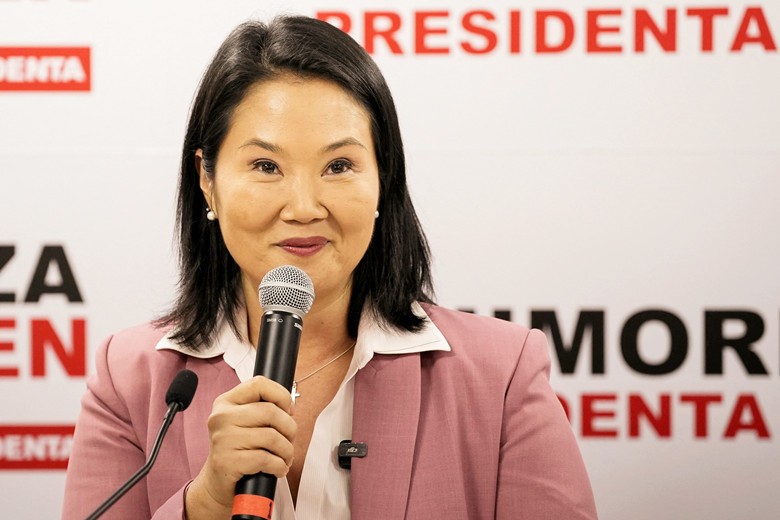
On June 29, 2026, Keiko Fujimori (Japanese-Peruvian), the candidate of the People's Power Party, a right-wing party in Peru, won the presidential election.
Keizi Fujimori, 51, is the daughter of former Peruvian President Alberto Fujimori (Peruvian of Japanese origin). Analysts believe that Keiko Fujimori’s campaign platform centered on “order and security” resonated with Peruvian voters, particularly those in urban areas, making it one of the primary factors behind her victory. However, given Peru’s current multifaceted socio‑economic challenges and the legislature’s checks on the president, Fujimori’s prospects for governance are fraught with difficulties. From a regional perspective, Fujimori’s victory this time will further consolidate the ongoing “rightward shift” in Latin America’s political landscape.
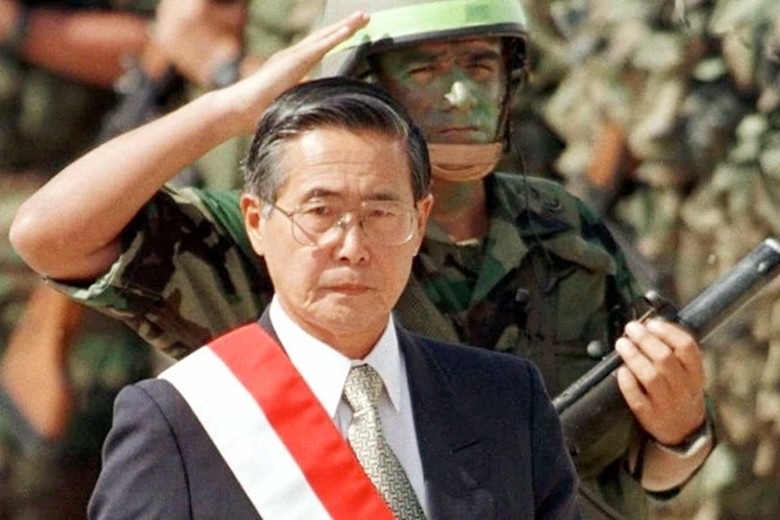
Former President of Peru Alberto Fujimori (Peruvian of Japanese descent). Network Data Map
The positions of the elect are highly polarized, reflecting the fissures in Peruvian society.
Judging from the trend of polls during the election period, Fujimori and Sanchez have similar support rates, and the election situation on both sides continues to be stalemate.
In the first round of voting in the Peruvian presidential election in April this year, Fujimori and Sanchez led other candidates with 17.19 and 12.03 percent of the votes, respectively, and entered the second round of voting. According to Peru’s electoral law, the candidate who receives the most votes in the second round is directly elected president.
On June 7, Peru held the second round of voting in the presidential election. On June 23, the preliminary results of the second round of voting updated by the Peruvian National Electoral Procedure Office showed that Fujimori's lead was difficult to reverse, but Sanchez refused to recognize the results of the vote count and filed allegations of fraud.
Affected by this, the results of all votes counted in the election were not officially announced until June 29. Fujimori surpassed Sanchez with 50.135 percent of the vote (49.865 percent of the vote) and won the election.
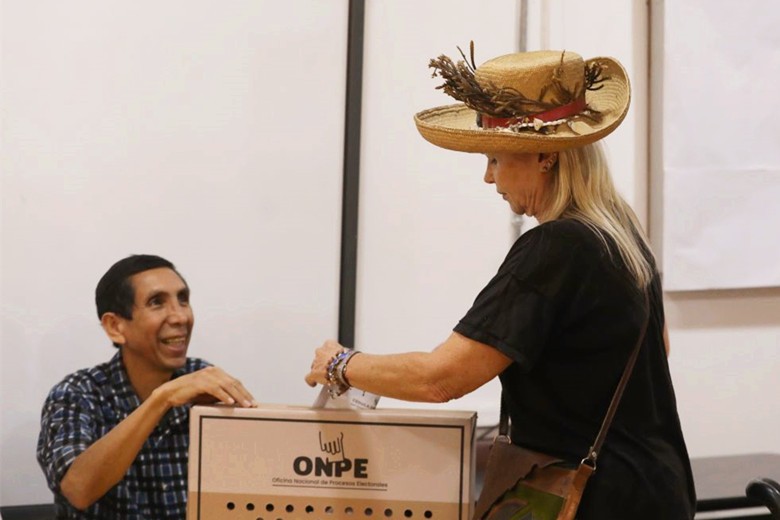
Voters vote in Lima, Peru, on June 7, 2026.
The distribution of votes between the two sides showed a clear pattern of opposition between urban and rural areas. Fujimori has obvious advantages in the capital Lima, coastal cities and overseas voters, while Sanchez dominates in the southern plateau, inland rural areas and indigenous communities.
Some analysts pointed out that Fujimori advocated the continuation of market-oriented and investment-stimulating economic policies, and supported the adoption of tougher measures to combat crime, which met the concerns of urban voters on economic growth, social security and other issues, and provided a boost to his victory.
However, Alejandro Mehia, a professor at the National University of San Marcos in Peru, said that the stalemate between the two candidates and the similar vote rate reflected the high degree of polarization of voters' positions and the cracks in Peruvian society.
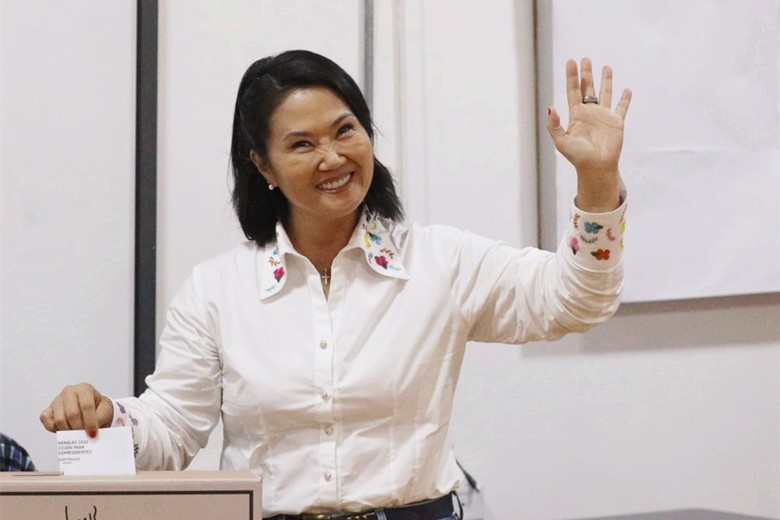
On June 7, 2026, Keiko Fujimori participated in the second round of voting in the presidential election in Lima, Peru.
Nine presidents in 10 years, Fujimori's administration faces triple challenges
Experts generally believe that Fujimori Keiko's future ruling road faces multiple challenges.
First, the political environment continues to be volatile. Since 2016, Peru has changed eight presidents, including the newly electedkeiko fujimori,There have been nine presidents in less than 10 years. AtKeiko FujimoriPreviously,No elected president can serve out a five-year term. Frequent regime changes have also plunged Peru into a vicious circle of "permanent election and ungovernable.
Alejandro Meja, a professor at the National University of San Marcos in Peru, said that the continued political turmoil has increased the political dominance of the Peruvian Congress, and the new government may have to consolidate the foundation of governance by establishing a communication and cooperation mechanism with the opposition.
Second, the security situation is long-term grim. In recent years, there has been a high incidence of murder, kidnapping and drug dealing in Lima, Trujillo and Callao Port, and illegal mining is intertwined with drug trafficking and money laundering to form a black industrial chain. Fujimori proposed to strengthen military and police coordination, strengthen border control and expand the construction of intelligence systems, and use artificial intelligence and other technologies to empower security.
However, Mejia believes that relevant reforms are bound to touch vested interests and will encounter considerable resistance in the process of implementation.
Third, the problem of uneven economic development is prominent. In the past 20 years, Peru has created considerable fiscal revenue by relying on mineral exports, but the growth dividend is mainly concentrated in the elites of coastal cities. Inland rural areas and indigenous communities are basically excluded from the development process, facing backward infrastructure, education and medical resources Insufficient and other issues, the polarization between the rich and the poor in Peru has intensified, and social conflicts have intensified.
Peruvian sociologist Jorge Martinez believes that the triple challenges have a superimposed effect. Political turmoil and the polarization of the rich and the poor exacerbate the deterioration of public security, which in turn weakens the willingness of domestic and foreign capital to invest, restricts economic growth, and forms a vicious circle.
In addition, climate change continues to have a negative impact on Peru's economy and society. As the El Niño phenomenon intensifies, floods occur frequently in northern Peru, and droughts may occur in the south. The warming of coastal waters disrupts the distribution of fish stocks, and agriculture and fisheries are affected. Martinez pointed out that after the new government came to power, there is an urgent need to improve the country's ability to withstand natural disasters.
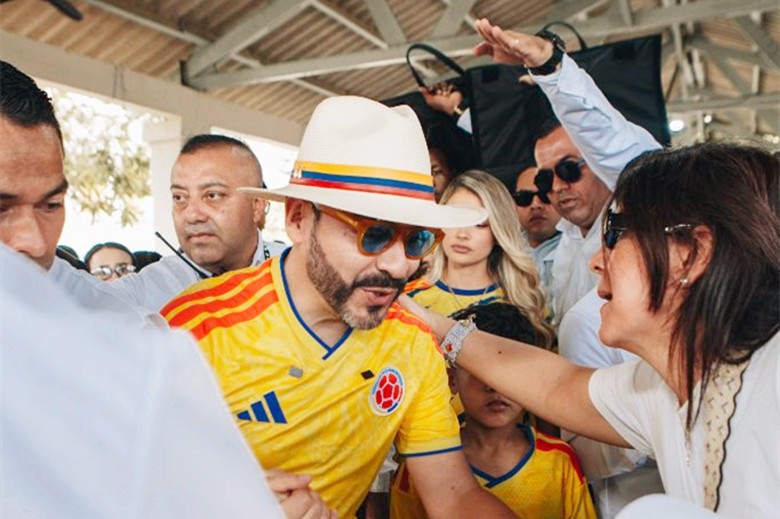
Colombia's National Electoral Commission confirmed on June 24, 2026 that the far-right candidate de la Espledam elected the country's new president. This photo shows de la espriea communicating with voters at a polling station in barranquilla, Colombia, on June 21, 2026.
Latin American countriesPresenting a "right-wing consolidation, left-wing ebb" trend
Since 2025, important elections have been held in Ecuador, Bolivia, Honduras, Chile, Costa Rica and Colombia, resulting in a trend of "right-wing consolidation and left-wing ebb. Experts pointed out that the power of right-wing forces in many Latin American elections is the result of a combination of internal and external factors.
From the perspective of internal factors, the relevant Latin American countries are generally facing problems such as weak economic growth, lagging improvement of people's livelihood, and deterioration of social security. The people are gradually disappointed with the left-wing ruling; in terms of external factors, the Trump administration of the United States openly supports the right-wing political forces in Latin America, and even directly interferes in some National elections.
Peruvian sociologist Jorge Martinez analyzed that some people in Latin American countries believe that left-wing governance has not improved people's livelihood and welfare, and gradually have expectations for right-wing governance. But he also pointed out that the "right turn" of the political pattern in Latin America is not irreversible. From the results of the Peruvian presidential election and the Colombian presidential election that just ended recently, it can be seen that the left and right presidential candidates of the two countries are evenly matched in the election, and the two right-wing presidential candidates both won the election by a narrow margin. This shows that the current Latin American politics is still essentially a game pattern in which the left and right are evenly matched.
Martinez believes that the overall ideological color of Latin American society is not strong, and most people do not have a solidified political tendency. The results of a series of recent elections in Latin American countries depend more on the performance of political parties, campaign strategies and political communication than on real ideological changes.
Recommended News
Contact Us
- Phone: 0017194050155
- Fax: 0017194050155
- 邮箱:gelcc1@outlook.com
- Mobile phone: 0017194050155
- Address: Room 500, 1234 International Avenue, Washington, D.C. 20001, USA