
news
The differences between the two sides in many areas remain, and the India-US trade negotiations have entered a "critical stage"
According to a report by The Times of India, a delegation of officials from the Office of the United States Trade Representative arrived in New Delhi, India’s capital, on June 1 local time, kicking off a new round of trade negotiations with India. Indian media report that this round of negotiations will focus on key minerals, rare earths, artificial intelligence, market access, tariffs, agricultural trade, energy, and technology, with the aim of finalizing a provisional trade agreement to lay the groundwork for a broader bilateral trade pact in the future.
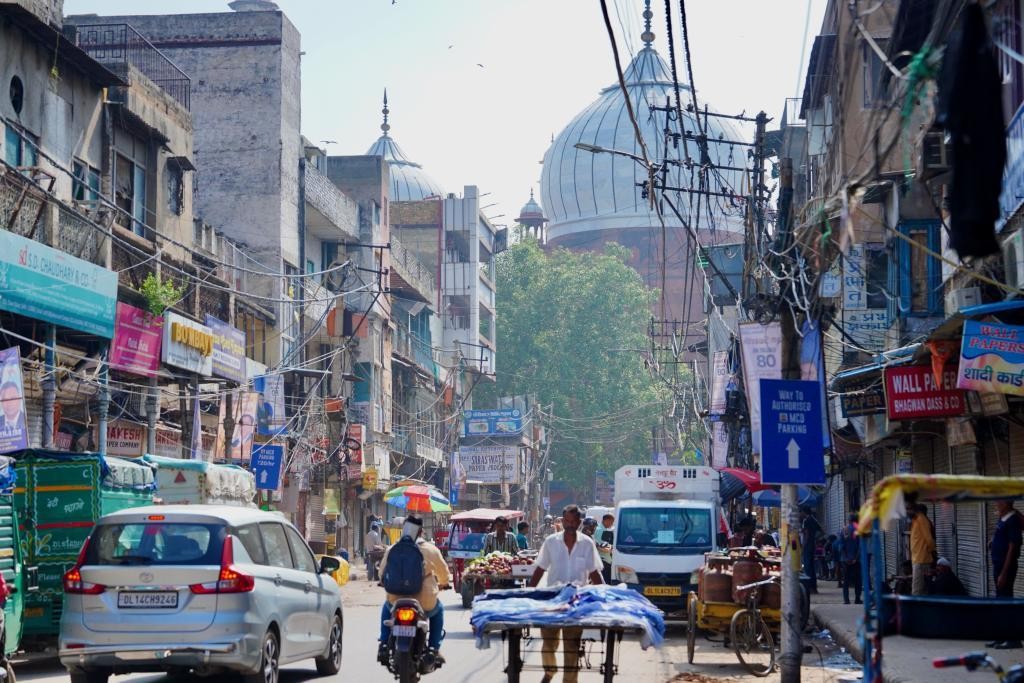
This is a street scene photographed in New Delhi, the capital of India, on August 21, 2025. Photo by Xinhua News Agency
According to the Global Times, in February this year, the United States and India reached a framework for a temporary trade agreement; however, over the following months, their bilateral trade relations once again faced uncertainty. NDTV believes that this visit by the U.S. trade delegation will inject new momentum into the India–U.S. Strategic and Economic Partnership.
The Indian Express also noted that U.S. tariffs have already led to a depreciation of the Indian rupee, a problem further exacerbated by energy supply disruptions stemming from the ongoing conflict in the Gulf region. India is hoping to strike a trade agreement with the United States in order to restore investor confidence.
On the U.S. side, Trade Representative Grulli stated last week that he hopes to meet with India’s Minister of Commerce and Industry Goyal as soon as possible to finalize the framework of a U.S.-India agreement. U.S. Ambassador to India Richard Verma recently stated that the United States hopes to conclude a bilateral trade agreement with India as soon as possible. He stated that only 1% of the issues remain to be resolved through consultation, and bilateral negotiations are currently focused on these outstanding matters.
Goyal also said on Monday that most of the agreement has been finalized and that “a few final details” are currently under discussion.
Indian officials believe that negotiations on the India–U.S. trade agreement are now at a critical juncture: following the U.S. Supreme Court’s February ruling this year that the Trump administration’s broad-based tariffs were unlawful, the United States has shifted to invoking specific statutory provisions, such as Section 301, to initiate investigations. In April, the United States launched two Section 301 investigations against India, focusing on “structural overcapacity” and “forced labor.” Indian officials responded that “surpluses” are a natural outcome of global trade and a byproduct of the overall economic situation, adding that India has ratified both the Forced Labour Convention of 1930 and the Abolition of Forced Labour Convention of 1957, which together prohibit all forms of forced labor.
An Indian source told the Indian website Moneycontrol that the two countries’ trade teams are expected to discuss tariff rates and the implications of the Section 301 investigation, with India seeking to secure more favorable tariff treatment than its direct competitors. The source also said that India may seek an exemption from U.S. Section 301 investigations.
According to Indian media analysis, the deadline for the end of these investigations is July 24, when the US government may announce new tariff rates. If India and the United States can reach an agreement before then, the United States may give up 301 tariffs on India in order to appease India.
An Indian official said that for India, the advantage of signing a trade agreement now is that even if the United States subsequently discovers that India has violated the terms of the 301, it may not impose tariffs on India as a result, and the Indian tariff rate will remain at the pre-negotiation level of 18%.
The Indian "Statesman" commented that the current round of trade negotiations has reached a critical stage because both India and the United States hope to reach an interim agreement before reaching a broader and comprehensive bilateral trade agreement. The focus of U.S. tariff policy is shifting, a factor that may affect the final framework and timetable for the agreement.
at present, india and the united states are in the stage of repairing bilateral relations. India's "First Post" stated that in addition to imposing a 50% tariff on India last year, the United States also favored Pakistan and accused India of buying Russian oil. According to the report, India and the United States were close to signing a trade agreement in July last year, but the US suddenly increased its demands, which directly undermined the negotiation process.
"Tensions between the United States and India have eased after the United States reduced 'reciprocal tariffs' from 50 per cent to 18 per cent in February this year. However, for India, the US-India trade negotiations remain extremely challenging." "India Express" reported that an informed Indian official revealed that the United States made "extraordinary demands" during the negotiations ".
The First Post also stated that although Goyal claimed that India and the United States are expected to reach an agreement as soon as possible, differences between the two sides still exist in many areas. India has stated that it will defend domestic sensitive sectors such as agriculture and dairy products in any agreement. Interests, it is not clear what concessions the United States also requires India to make.
Ahead of the India–U.S. trade negotiations, India has been actively signaling its commitment to trade cooperation. Last week, Goyal led a delegation of 100 business leaders on a visit to Canada, aiming to reach a trade agreement with the Canadian side by the end of the year. In addition, the India–Oman Free Trade Agreement will also come into effect on June 1.
Recommended News
- government approval 2026-04-17
Contact Us
- Phone: 0017194050155
- Fax: 0017194050155
- 邮箱:gelcc1@outlook.com
- Mobile phone: 0017194050155
- Address: Room 500, 1234 International Avenue, Washington, D.C. 20001, USA