
news
Japanese media: Australia imports the first number of Chinese cars more than Japanese cars
Hong Kong News Network, May 21. The Nikkei Asian Review reported on the 19th that in the first four months of this year, Australia imported a total of 107200 Chinese-made cars, an increase of 60% over the same period last year; at the same time, Australia imported Japanese-made cars. About 94500 vehicles, a decrease of 23% from the same period last year. The aforementioned data indicate that, for the first time this year, Australia has imported more automobiles from China than from Japan.
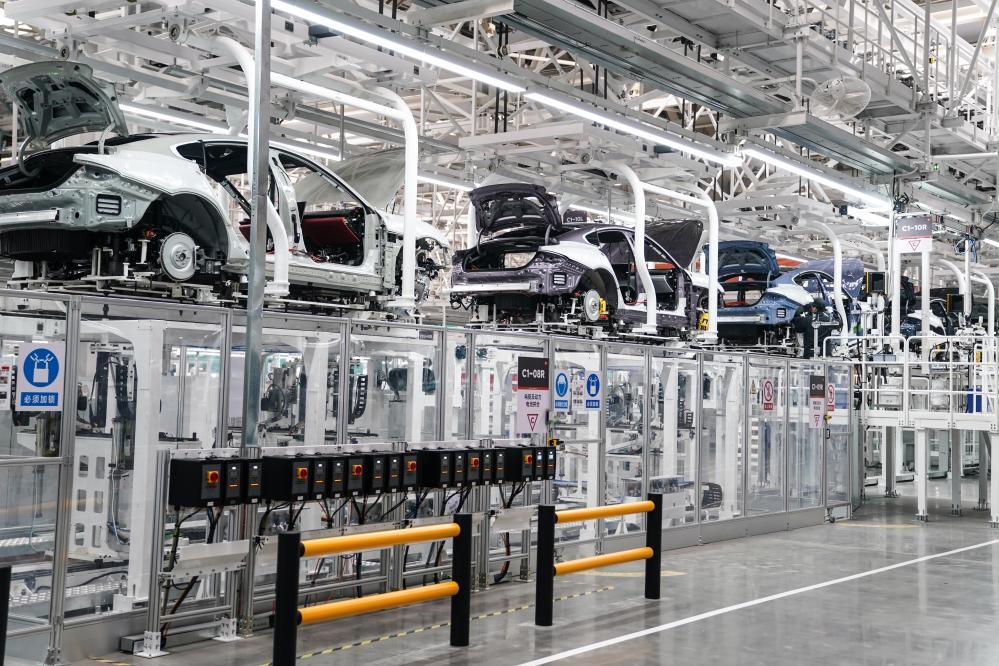
Xinhua News Agency Information Picture of China's Automobile Production Line
According to the "Global Times" report, from January to April this year, the five major brands with the most sales growth in the Australian auto market were all Chinese brands, followed by BYD, Chery, Geely, Great Wall and Jieku. During the same period, Japanese automaker Toyota recorded the largest decline in sales in the Australian market. On the list of brands with declining sales, the second through fifth-ranked brands are Mitsubishi, Nissan, and Mazda from Japan, followed by Ford from the United States.
The Australian automotive market has undergone profound changes in recent years, with Chinese brands achieving a significant leap forward. In 2017, Australia’s domestic automobile manufacturing industry came to an end, and since then the country has been entirely reliant on imports. In 2009, Great Wall Motors became the first Chinese automaker to export its vehicles to the Australian market. Subsequently, more and more Chinese brands followed suit; however, by 2019, Chinese cars still accounted for less than 2% of Australia’s automotive market. Last year, although Japan remained the largest source of imported new vehicles in Australia (358,900 units), China surged to second place (252,700 units). Costello, a commentator on the well-known car buying platform, said bluntly when commenting on the current situation of the Australian car market: "What we are seeing now is' rising in the middle and falling in the day '. "But at the same time, it should be noted that despite the impact on the market position, Japanese brands still occupy a large share of the Australian auto market. Toyota remains Australia’s best-selling automotive brand, and in the first four months of this year, Japanese brands collectively accounted for 40 percent of the country’s total vehicle sales.
When looking solely at the performance of the electric vehicle market, China’s automotive industry stands out even more prominently. From January to April this year, Tesla’s Model Y was Australia’s top-selling single electric‑vehicle model, while BYD’s Dolphin, launched for the Australian market, ranked second. However, in terms of overall brand performance, BYD leads all electric-vehicle brands in Australia by a wide margin, with sales exceeding 14,000 units from January to April this year, compared to just over 8,400 units for second-place Tesla.
Previously, the adoption of electric vehicles in Australia has been relatively slow. However, with oil prices rising recently, electric vehicles have become increasingly popular among Australian consumers. In March of this year, the sales of electric vehicles in Australia increased sharply, accounting for nearly 20% of all passenger cars and SUVs that month; the sales of electric vehicles in Australia this year are expected to reach 150000. Waltman, CEO of the Australian Automobile Dealers Association, stated that many Australian consumers have come to realize that electric vehicles do not necessarily come with a high price tag, and the rise of affordable Chinese EVs has played a pivotal role in this shift. (The End)
Recommended News
- government approval 2026-04-17
Contact Us
- Phone: 0017194050155
- Fax: 0017194050155
- 邮箱:gelcc1@outlook.com
- Mobile phone: 0017194050155
- Address: Room 500, 1234 International Avenue, Washington, D.C. 20001, USA