
news
The United States has dominated military action against Iran and threatened retaliation, but the Pentagon has exposed its "empty assets"
Hong Kong News Network, September 1 — One month later, the U.S. military launched another large-scale offensive against Iran. According to a report by China Central Television News, on the night of August 30 local time, the U.S. military launched an attack on Larak Island near the Strait of Hormuz in Iran. Approximately two hours later, in the early hours of the 31st, the Iranian military announced that it had launched missiles at U.S. military bases.
On the evening of the 31st, U.S. President Trump responded to the attack on U.S. forces, vowing to “strike Iran hard.” However, at the same time, the Pentagon itself has “exposed” its own shortcomings, issuing a warning that the U.S. war in Iraq is unsustainable.
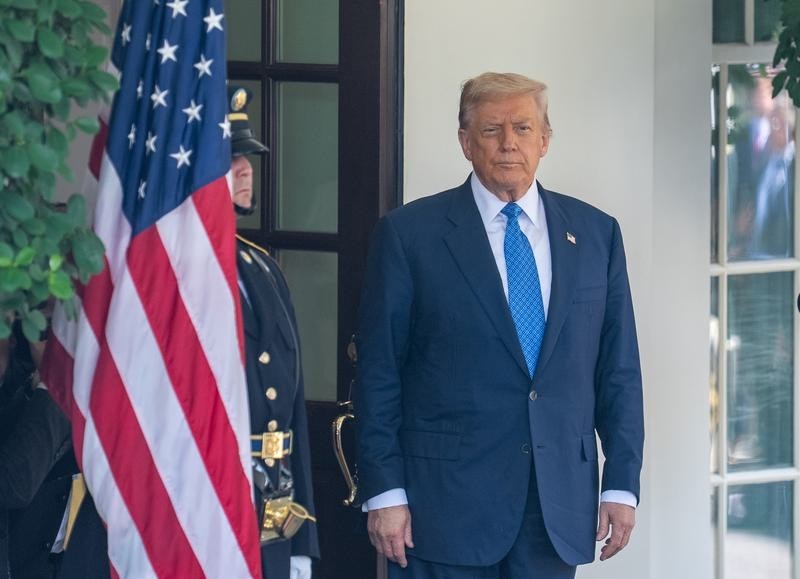
Archival photos show U.S. President Trump. (Image source: Xinhua News Agency)
One month later, the U.S. military launched another offensive against Iraq, but was swiftly counterattacked.
The first report of a U.S. strike on Iran’s Larak Island was initially disclosed by a senior U.S. official late on the night of August 30, Tehran time. According to the official, the U.S. military bombed two Islamic Revolutionary Guard Corps weapons facilities on Larak Island, marking the first military action against Iran in a month.
However, approximately two hours after U.S. officials announced the attack on Iran’s Larak Island, the Iranian military swiftly responded with force.
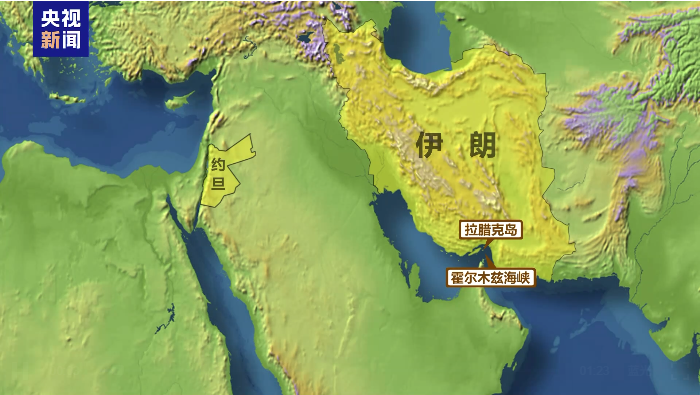
(Image source: CCTV News)
In the early hours of the 31st, Iran launched a retaliatory strike against U.S. military bases in the Middle East.
In the early hours of the 31st, Tehran time, the Islamic Revolutionary Guard Corps of Iran issued a statement saying that it had launched missiles at U.S. military bases. According to multiple statements released by the Iranian military late on the 31st, Iran’s operational targets included several U.S. military bases in the Middle East, particularly missile strikes against two U.S. bases in Jordan; the use of drones to strike the Al Minhad Air Base in the United Arab Emirates; and the downing of a U.S. MQ-9 “Reaper” drone with a missile while it was flying over the Strait of Hormuz, among other actions.
The Jordanian military has now confirmed the attack, stating that it intercepted eight incoming missiles. According to the U.S. side, nearly all of the missiles that struck the U.S. military base in Jordan were intercepted, and no significant damage was caused. The UAE Ministry of Defense confirmed only a drone attack and denied reports of a missile strike on the Minhad Air Base.
Iranian President: In the face of aggression, Iran will respond with resolve.
So far, Iranian reports indicate that the U.S. attack on Larak Island has resulted in two deaths and multiple injuries. Late on the 31st, Iran’s Foreign Ministry emphasized that its strike on a U.S. military base in Jordan was in response to the U.S. attack on Larak Island. The Iranian Foreign Ministry also accused the U.S. military of using Jordanian military bases to launch an attack on Larak Island, resulting in casualties among Iranian soldiers and civilians.
On the same day, Iranian President Pezeshkian further stated that Iran does not seek war, but will never stand by idly in the face of aggression and will respond resolutely.
Rough estimates indicate that, following the disclosure of strike-related information targeting Iran by U.S. officials, the Iranian military announced its counterattack within approximately two hours. According to observations by a CCTV reporter, Iran’s swift retaliatory strike indicates that the Iranian military had anticipated the current regional situation and maintained a high state of alert.
Trump: Will deliver a heavy blow to Iran.
In contrast to Iran’s repeated statements that its strikes on U.S. military bases in Jordan were in response to the initial U.S. attack, U.S. President Trump emphasized in a statement on the 31st that the United States will take a strong retaliatory stance against Iran’s attacks on U.S. bases.
On the same day, Trump stated that in the latest round of U.S.-Iranian clashes, he would retaliate against Iran’s attack on a U.S. military base in Jordan. According to Trump, “We will deliver a powerful blow against them (Iran).”
U.S. Treasury Secretary: Iran has taken military action due to sanctions pressure.
Regarding Iran’s strike on U.S. military bases, U.S. Treasury Secretary Janet Yellen stated at the G20 Finance Ministers and Central Bank Governors Meeting on the 31st that it was U.S. sanctions that have exerted economic pressure on the Iranian regime, prompting Iran to take military action.
In an interview, Besant also stated that the United States’ goal in imposing economic pressure is to create a situation that will compel Iran to come to the negotiating table. Besant believes that the United States’ “economic isolation campaign” will compel Iran to seek a deal, and when combined with blockade measures, it will leave Iran isolated and without recourse.
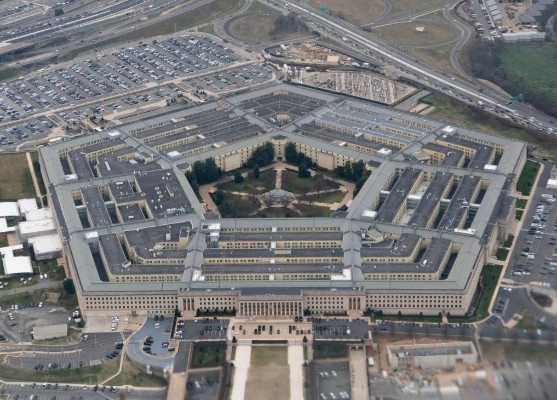
The U.S. Pentagon.
The Pentagon unveils its “air assets.”
However, in contrast to President Trump’s hardline stance and Treasury Secretary Mnuchin’s confidence, the U.S. military appears unable to continue pressing ahead with the war in Iraq.
U.S. military leadership: A large-scale military operation in Iraq is unsustainable.
A Pentagon internal document released on the 30th reveals that several senior U.S. military commanders have warned Defense Secretary Lloyd Austin that continuing large-scale military operations against Iran would be unsustainable, as it would weaken the U.S. military’s ability to conduct global operations and defend the American homeland.
The relevant warning appeared in the Secretary of Defense’s Directive Manual on August 14; the document is classified as internal Pentagon confidential. It consolidates information on the global deployment of U.S. forces and the readiness status of their equipment, gathers input from the military services and combatant commanders, and provides a basis for the Secretary of Defense to issue military directives.
A large number of U.S. military leaders oppose continuing operations against Iran.
According to the document, the United States plans to extend the deployment of some U.S. forces in the Middle East through September of this year, with certain units potentially remaining in the region until 2027. The commanders of U.S. European, Pacific, and Southern Commands, as well as the Chief of Naval Operations, opposed the deployment plan, arguing that current U.S. military operations against Iran have been “protracted,” with many ships and aircraft reassigned to U.S. Central Command, which is responsible for operations in the Middle East, thereby diverting resources from U.S. military training and homeland defense.
In addition, currently only about one-quarter of the U.S. Navy’s destroyers are combat-ready. If other conflicts erupt in the future, insufficient ship maintenance capabilities could lead to a shortage of warships. Without a clear timeline for ending the conflict, the Navy cannot sustain its current level of operational intensity against Iran.
Air defense interceptor missile stockpiles are dwindling; the Pentagon has signed a contract to expand production.
On the other hand, the U.S. side has disclosed new information regarding the reduction in its inventory of air defense interceptor aircraft resulting from the Iraq War.
According to a statement released by the U.S. Department of Defense on August 31, it has signed two key framework agreements with General Dynamics Ordnance and Tactical Systems and Lockheed Martin to increase production capacity for the Patriot Advanced Capability-3 missile and the THAAD missile defense system. According to the Pentagon, these two agreements will significantly boost the production capacity of key U.S. air defense interceptors: the segment enhancement capability of the Patriot Advanced Capability-3 missile will be tripled from its current level, and the production capacity of THAAD missile defense system interceptors has been increased to four times its original level.
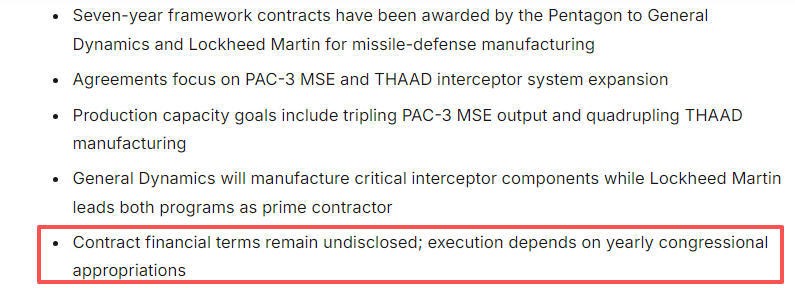
△ Analysts believe that the specific financial terms of the interceptor production agreement signed by the U.S. Department of Defense have not yet been disclosed, and its implementation still requires congressional appropriations.
According to earlier reports from insiders, since the outbreak of the conflict in Iran, the U.S. military has already used nearly four-fifths of its THAAD missile defense system’s missiles and about half of its Patriot air-defense interceptor missiles. However, according to industry insiders, the U.S. Department of Defense has so far only placed orders with arms manufacturers, and the financial terms of the contracts have not yet been disclosed. As for the expansion of production lines and the actual manufacturing of ammunition, further implementation will still require time, with the specific timeline contingent on annual funding approvals from Congress. Therefore, the shortage of U.S. interceptor munitions may persist for quite some time.
This time, the mutual attacks between the U.S. and Iran do not signify a resumption of full-scale war.
Li Zixin, a Middle East expert at the China Institute of International Studies, stated that the current resource constraints faced by the U.S. military, as well as Iran’s long-standing blockade and suppression by the United States, both serve to limit the resumption of large-scale hostilities between the two sides. Although this round of U.S.-Iranian military exchanges has broken the month-long temporary military standoff, it also indicates that, as tensions in the military confrontation escalate, conflict could reignite at any moment. However, given the current realities between the United States and Iran that are unlikely to change anytime soon, Li Zixin believes that this round of mutual attacks is more of a limited escalation within a “no war, no peace” stalemate than a full-scale resumption of hostilities. (End)
Recommended News
Contact Us
- Phone: 0017194050155
- Fax: 0017194050155
- 邮箱:gelcc1@outlook.com
- Mobile phone: 0017194050155
- Address: Room 500, 1234 International Avenue, Washington, D.C. 20001, USA