
news
Why is Singapore's Prime Minister calling on citizens to speak more Mandarin?
ChineseSingaporeans make up more than 70 percent of the resident population, but most Singaporean Chinese are now more accustomed to using English. Recently, the new Prime Minister Huang Chaohua emphasized the importance of Putonghua at a National Day mass meeting, calling for the study of Putonghua (modern standard Putonghua and Mandarin) to maintain Singapore's cultural roots and bilingual advantages.
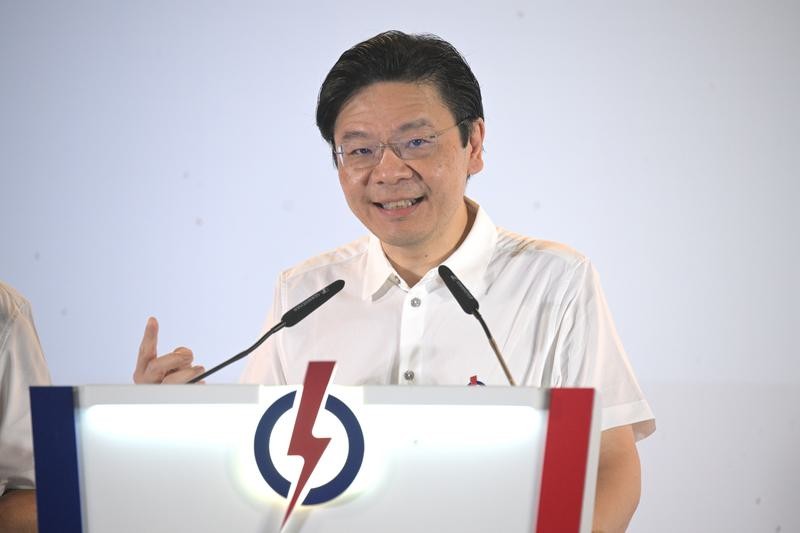
File photo: Singapore Prime Minister Huang Yuyu
This year marks the 61st anniversary of Singapore's independence. On August 23, Huang Zhiming delivered part of his speech in Chinese at a large-scale National Day rally, emphasizing the importance of Chinese. He said that Singapore must not become a monolingual society and must adhere to the bilingual policy to consolidate the status of Mandarin as the common language of the Chinese. He also pointed out that two years ago he said, "We don't just need 'elite, 'we need 'elite'.""
Singapore uses English as the common language and is often regarded as an English-speaking country. So why is the Singapore government suddenly proposing to step up Mandarin learning at this time?
In this regard,Zhang Li, Vice President of the "the belt and road initiative" and Global Governance Institute of Fudan University in ShanghaiHuang Xuncai's return to Mandarin at this time is not a sudden change in policy, but a "calibration" of changes in the language ecosystem, he told China News Service ". According to the 2025 survey, English has become the most commonly used household language by 58.1 per cent of residents, and about 1/3 of Chinese households mainly speak Chinese. Thus, Singapore's concern is not that English is too strong, but that Mandarin is gradually disappearing from daily life and even part of the work environment, causing the long-standing bilingual tradition to be reduced from "real ability" to "classroom label". It's not that young Singaporeans don't like to speak Chinese, but that they use less. So the key now is to reintegrate Mandarin into family, film and social life.
Zhang Li further pointed out that if Singapore became a fully English-speaking country, its Chinese cultural heritage and family memories would weaken, intergenerational communication would become alienated, Chinese media and knowledge ecosystems would shrink, and understanding of Chinese and Asian societies would be more dependent on translation. What is lost is not a single language, but Singapore's remarkable development opportunities, cultural depth, regional awareness and strategic recognition, which make it different from the typical English speaking countries.
It is reported that the "Speak Chinese Campaign" was launched by Singapore's then Prime Minister Lee Kuan Yew in 1979 to encourage Singaporean Chinese to use Mandarin. Huang Mingming said that the hard-won achievements of the promotion of the Chinese language movement should be cherished and protected. He encouraged him to say: "speak more Chinese, I can speak, everyone can!""
Singapore is a multi-ethnic country with bilingual education, which requires students to learn not only English, but also their mother tongue. The Straits Times quoted Singapore's 2025 population trends report as saying that the country's ethnic composition has remained largely stable over the past decade. As of June 2025, 73.9 per cent of Singapore's resident population was Chinese, 13.5 per cent Malay, 9 per cent Indian and 3.5 per cent other ethnic groups.
The survey shows that most Chinese families in Singapore now mainly speak English at home; only about 1/3 of the mainly Chinese-speaking families.
Outside Singapore, the global craze for learning Chinese is also growing. According to data from China's Ministry of Education, by the end of 2025, international Chinese language education has covered 212 countries and regions around the world. By the end of March 2026, 90 countries have incorporated Chinese into their national education systems, and about 0.21 billion people have learned and used Chinese.
Recommended News
Contact Us
- Phone: 0017194050155
- Fax: 0017194050155
- 邮箱:gelcc1@outlook.com
- Mobile phone: 0017194050155
- Address: Room 500, 1234 International Avenue, Washington, D.C. 20001, USA