
news
White House plans to invest another $3 billion in aggressive attacks on key minerals
China News Service, Hong Kong, Aug. 10-President Donald Trump recently convened a roundtable at the State Department, bringing together executives, academics and officials from major mining companies to discuss issues such as securing critical mineral supplies for the United States and its allies.
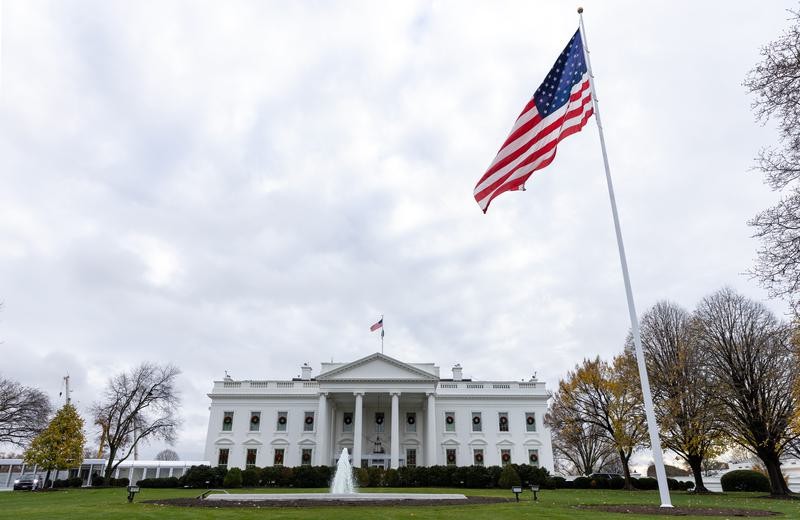
File photo: White House (USA)
At the meeting, Trump said, "We are reclaiming America's rightful place as the world's mineral superpower.""
Industry giants and global mining giants Rio Tinto, BHP Billiton of Australia, Freeport-McMowron Copper and Gold of the United States, Pass Materials of the Mounting Mountain of the United States, Rare Earths of the United States, Energy Fuel of the United States and Canadian Metals participated in the meeting.
At the meeting, Trump revealed that the US federal government will invest 3 billion US dollars in a number of key mineral and battery projects to increase domestic production capacity and serve national security and industrial policy goals. Similar to other tariff policies, he also wants these key products to be mined, refined and manufactured in the United States.
Specifically, related projects include a $1.4 billion conditional loan from the U.S. Department of Defense to Sila Nano Technologies, a manufacturer of lithium-ion battery components; a $0.4 billion conditional loan to Energy Metals, a Sunrise of scandal mining company; a $0.15 billion loan to Niren Magnet; and loans from the Export-Import Bank to various companies.
In addition, the U.S. Department of Energy convened representatives of 14 accredited mining schools across the country to announce a $0.1 billion million grant with the goal of doubling the number of mining-related graduates in the United States over the next two years. The Pentagon announced a total of $80 million in project funding for three U.S. mining agencies.
Prior to this, the current government has promised to invest more than $10 billion to activate the domestic rare earth and permanent magnet industry. In February, Trump officially launched the Critical Mineral Reserve Project, which includes private capital and a loan from the Export-Import Bank. The goal is to establish an emergency reserve of rare earths, gallium, cobalt and other key minerals that can be used for 60 days. General Motors, Boeing, Google and others have participated. Three months later, the Department of Energy further announced that the funds will support 19 projects to fill gaps in the domestic supply chain of key minerals, focusing on solving the lack of domestic smelting and separation capacity.
The unique layout of the key mineral supply chain has been formed, with a clear division of labor and close interests. Core resource allies such as Australia and Canada, downstream technology allies such as Japan and South Korea, as well as from Africa and Japan, play a key role.
Industry insiders pointed out that the United States still faces severe challenges in supporting domestic key minerals, which are difficult to overcome in the short term. These obstacles include the fact that it will take years rather than months for large investment commitments to translate into actual supply, the severe talent gap that severely limits capacity expansion, and the insufficient scale of investment to build a full-chain industrial system. Some of these policies will affect global supply chains, leading to a complete restructuring of competition rules, changes in pricing logic, and accelerated capacity shifts.
Recommended News
Contact Us
- Phone: 0017194050155
- Fax: 0017194050155
- 邮箱:gelcc1@outlook.com
- Mobile phone: 0017194050155
- Address: Room 500, 1234 International Avenue, Washington, D.C. 20001, USA