
news
Yen plunge tears Japan: stock market carnival, small and medium-sized enterprises have become the "price"
In 2026, a magical scene is playing out on the streets of Japan: luxury stores in Ginza, Tokyo are crowded, and the Nikkei index has repeatedly hit record highs; but the century-old ramen shop on the corner has put up "transfer" notices one after another. Behind all this is the same push-the yen, which has fallen to the bottom of nearly 40 years.
The depreciation of the yen is a feast for giants such as Toyota and Sony, which have huge overseas businesses. The dollars and euros they earn overseas are 20 to 30 percentage points more in return for yen. According to data from the Ministry of Finance of Japan, the income surplus of Japanese companies through overseas investment in 2025 hit a record high of 26 trillion yen.
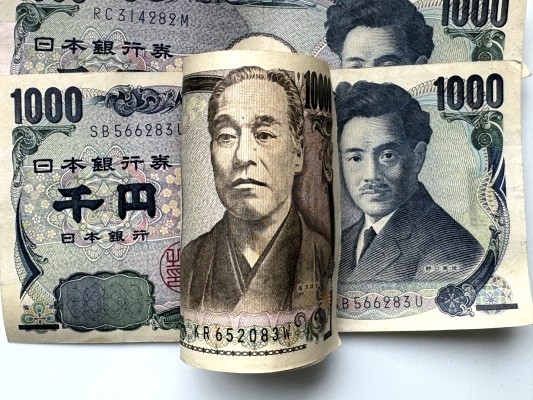
The picture shows the Japanese yen Hong Kong China News Agency
At the same time, the spread of up to 250 basis points between Japan and the United States, inducing international hot money to borrow low-interest yen, into the dollar after a portion of the return to the Japanese stock market, further pushing up the Nikkei 225 index. According to data, the Nikkei 225 index has doubled since last year, and the MSCI Japan Index constituent stocks are expected to increase their earnings by as much as 18% in 2026. The more the yen depreciates, the more crazy the Japanese stock market becomes. This boom is essentially a boom driven by the "exchange rate differential" of large corporations and foreign capital, rather than by endogenous growth.
However, the boom has been concentrated in large giants with large overseas assets and multinational operations. Export-oriented companies such as semiconductors and machinery have benefited from the increase in book profits from the depreciation of the yen. However, this has not benefited the majority of small and medium-sized enterprises and ordinary people. Different from large enterprises, the income of ramen shops and small manufacturers all over the country is entirely in Japanese yen, but the cost side is closely tied to the US dollar-flour, edible oil and energy are all imported. The yen fell below the 162 mark against the dollar, meaning an instant spike in the cost of incoming goods. Even more deadly, many companies have purchased "reverse knockout options" to hedge their risk ". When the exchange rate falls below the "red line" set by the contract, the umbrella instantly fails, and companies are forced to snap up dollars at extremely high levels, falling into a death spiral of "devaluation-option failure-concentrated buying of dollars-further devaluation. In the first half of this year, the number of bankruptcies of enterprises with debts of more than 10 million yen in Japan reached 5346, an increase of 7% over the same period last year, which not only increased year-on-year for five consecutive years, but also broke through the 5000 mark again after 12 years, which is the epitome of this mechanism.
This "stock market carnival, entity whine" situation, exposed the structural cracks in the Japanese economy. Small and medium-sized enterprises contribute 70% of Japan's employment and more than half of Japan's GDP. Their batch failure not only impacted the ecology of the manufacturing supply chain, but also cut off the virtuous circle of "corporate profitability-wage increase-consumption recovery. In the face of soaring prices, ordinary people have to cut back on spending, leading to a sustained downturn in consumption.
The Japanese government tried to cover up this contradiction through a large-scale fiscal expansion (370 trillion the yen investment plan), but this weakened the central bank's confidence in raising interest rates and made it more difficult for the yen to return. Wang Jia, an assistant researcher at the Shanghai Academy of Social Sciences, pointed out that although the Bank of Japan's interest rate hike is aimed at curbing inflation, it has also pushed up financing costs. Coupled with the pressure of wage increases caused by labor shortages, multiple burdens have formed a "snowball" effect.
Recommended News
Contact Us
- Phone: 0017194050155
- Fax: 0017194050155
- 邮箱:gelcc1@outlook.com
- Mobile phone: 0017194050155
- Address: Room 500, 1234 International Avenue, Washington, D.C. 20001, USA